Fall beach fishing is like a good short story you can’t put down. There is the rising action, the climax, the falling action and the end. Some times it’s fast, other times it’s measured, but at all times it’s a page-turner.
When fall actually starts depends on who you ask. My calendar tells me that fall begins on the Autumnal Equinox, the 22d of September. The significance of that day is that the day and the night photo periods are nearly identical in length. Yet for most, Labor Day triggers the beginning of fall. During this pivotal weekend, summer beach shacks get boarded up, Tevas get traded in for textbooks, and vacationers reluctantly return home. Seasonal hotels and restaurants respond by shortening their work week and their hours. It gets progressively harder to get a cup of coffee, but I take comfort in my quiet town without bumper-to-bumper traffic.
I am a fisherman and for me fall begins with the Striper Moon, the first full moon in September. It’s the first major push of the striped bass migration. Some front-runners trickle south sooner, but the first big body of bass moves on the Striper Moon. Some years it is early, some years it is late. Regardless, one thing is for sure: the biggest shore-caught bass of the year are landed around the Striper Moon. I used to think that there were three phases of fall: early, middle and late.
I used to think that the early phase was warm, the middle phase was cooler, and the late phase was the coldest. I no longer think that way because there are too many nuances to keep track of.
On some days the winds blows WSW. Winds from that direction are summer winds, warm and welcoming, a little Southern hospitality coming from far below the Mason-Dixon line. The cloud ceiling is high, and the eggshell-blue sky is dappled with puffy, white cotton balls. Sometimes when the winds shift around you’ll see mares tails splashed around the blue like a painter gone mad. On other days the wind blows WNW. Winds from that direction bring the Canadian chill. They’re the winds that move ducks and geese and woodcock down the Eastern Flyway, and they are the culprits that change the color of the sea from green to gray. On a few days, northerly winds make swells and flotsam clutters the beaches. I never know what the day will hold until it is upon me and I look out my window.
Somewhere in the middle of the ever changing winds is an oasis known many centuries ago in Europe as Saint Luke’s Summer. In our modern day we call it Indian Summer, the time in October when the fall feels like summer. History alleges that this two-week warm spell was the time when American Indians harvested the bulk of their crops. The first person to coin the phrase Indian Summer was a Frenchman writing in 1778 in rural New York named St. John de Crevecoeur. As I walk around the beaches once inhabited by Wampanoags, I wonder when the tribe marked the beginning of fall?
Fishing a beach in the fall is as much a part of fishing as catching a fish itself, I like how hazy, hot and humid becomes clear, cool and dry. I like the sand under my feet. I like the solace of the beach, my only companion being the birds. And I watch them; big flocks spread out for what seems like miles. I watch the terns repeatedly dive on small bait, the gulls shriek and pick up scraps, and the gannets plunge-dive 50 feet from the sky to grab a herring. When I learned that gannets have air sacks to cushion them from the impact with the surface I lost respect for them. I regained it when I considered that they swim with their long wings to catch a meal. They’re tough birds, even with air bags.
Fall on a beach means lots of bait that stages and gathers on the various moons. Silversides, sandeels, glass minnows, herring, peanut bunker, anchovies, mullet and butterfish pack up their bags and start heading south for the winter. Their cycle predicts good fishing. I follow the advice of anglers who came before me: “Fish the points on full and new moons, and fish coves on the quarters.” Bait stages in coves during half moons and moves on full moons. Bass and blues lie in wait to corral them against structure, on the surface, or wherever they can. Every living thing needs to store fat for the winter and the fish are no exception. Plus they need some gas for the long swim home.
A beach serves as a corridor for migratory fish, and so I love fishing the bars the best. My favorites are the offshore bars that run parallel to the beach. Offshore bars are not connected to land, and have hard-running currents blowing through on both sides. They are like small islands, with fish on both sides. Sometimes I find that the stretch between the beach and the bar is chock-a-block full of bass. Other times the fish are on the outside edge of the bar. Regardless, there is something wild about standing on a bar with water all around and the promise of big schools of stripers at my feet. On a calm day I’ll paddle a kayak out to the bar and get out and wade. On a rough day I’ll pass. Swimming back to shore in the fall isn’t too appealing.
I like onshore bars, but they are more civilized. Onshore bars connect with the beach and wading out is easy. They typically run at an angle based on the dominant current. I start to work my way out to the point an hour or two before low tide and keep going as far as I can. The fish may be up current from the bar, they may be at the point of the bar, or they may be down current from it. I never know until I fish them. Once the tide turns, I’ll work my way back toward shore. I’m comforted knowing that Land Ho isn’t faraway, but I always out longer than I should . . . just because.
Bull-nose bars are rounded and look like an upside-down letter U. I find them easy to fish, as they typically don’t go very far out into the ocean. Sometimes the fish hold in the lee, other times they feast on the windward side. I smile when I see the trough where the rounded edge of the bar connects with the beach. I always make my first cast onto the bar and let my fly sweep over the edge into the hole. I catch enough fish there to make it worth a cast, but I really like the sweep of the fly over the sand and into the deeper water. And when the fish are tight to the beach, I don’t have to cast much further than my feet.
I find it incredibly frustrating when a large school offish is a few hundred yards offshore. I feel stranded on my beach. I lose my mind when they are ten feet beyond my furthest cast. On those days the sparkling water or having the beach to myself isn’t much of a consolation prize. All that is left for me to do is wait for the wind to blow the fish closer or to look for washed up lobster buoys and nail them to a tree in my front yard.
With the bad comes the good, and some anglers are fortunate enough to encounter pelagic species on the beach in the fall. Anywhere the Gulf Stream pushes close to shore, fast fish like bonito, false albacore, bluefish and Spanish mackerel appear. When I see a school of blues or albies racing down a beach spraying silversides all around I feel like I’m in Vegas. And when I land a fish with my feet planted on terra firma, I feel like I hit the jackpot.
An oddity happened on a Massachusetts South Shore beach a few years ago when the water was warm and there were lots of school bluefin tuna around. A fellow was casting when he got a tug on his 1ine. A fish made a long-as in 300 yard or more-run down the beach, past rocks, kelp and mussel beds before it tired. After the fight he rolled the fish on its side, moved it into a cresting wave and walked backward up the beach. As he surfed it onto the sand, he saw a tuna laying at his feet. I’d have hoped it were an 80-pound bass on steroids.
In the fall it’s easy to get caught up in the action as the fishing heats up. And then suddenly, like the good short story it ends. The ice that formed overnight on my boat deck no longer melts in minutes after the sun clears the horizon, and the fish have moved on.
At High Lonesome Ranch, after a few busy days of gunning birds and catching trout, you’ll probably need a vacation from your vacation.
Dinner at the High Lonesome Ranch in Debeque, Colorado, is typically served following a brief wine-tasting. Lucky for me, I arrived at the ranch just when a selection of cabernets, red zinfandels and merlots were being poured, each produced and bottled from one of the 18 Grand Junction-area vineyards.
While savoring a vintage wine, I learned that two men from a group of Texans had opted to hunt some fields of wheat, sudan grass and milo, where they gunned a mixed bag of pheasants, chukars and Huns, along with scaled and Gambel’s quail. Midway through a milo field one of the ranch’s pointers locked up, and as the hunters moved into position, three pheasants and a single quail flushed at the same time. A pheasant/quail double doesn’t happen all that often.
Their companions, meanwhile, headed to more rugged terrain covered in scraggly sagebrush where they pursued native sage grouse. But before the dogs found any grouse, they pointed two coveys of chukars and two of the gunners doubled on the hard-flying birds.
The stories continued when we sat down for dinner prepared by Chef Jordan Asher. He was an up-and coming chef in Houston when he decided to scrap big city life for the opportunity to refine the ranch’s culinary program. Asher favors locally grown ingredients, many of which are harvested from the ranch’sVictoryGarden. From wood-fired, cowboy ribeyes with red chili steak butter, to oak-roasted pheasant breast with habanero-peach chutney, Asher’s presentations are extraordinary.
I had timed my visit in October so I could run a full day of both hunting and fishing. Hunting season at the ranch runs from September 1-March 31, and the fishing is good through the end of November. The western slope of Colorado doesn’t get nearly as much snow as the rest of the state and December through February is a perfect time if you don’t get enough bird hunting during your local season.
My second choice would have been September. Afternoon temperatures can be quite warm, so the guides run their hunts in the morning and take clients fishing in the afternoon. The cooler morning temperatures make for better scenting conditions and the dogs don’t overheat. After lunch, an afternoon breeze typically shakes hoppers from the hay and grass into the water. There are so many hoppers that after a strong gust of wind the fish will start rising aggressively.
The Texans had filled up both the Guest House and Pond House, so I stayed in a cabin at the upper end of Dry Fork Valley. On my drive up the mesa I could see the cabin tucked into the mountainside where it overlooked three big ponds. With a trout pond in my front yard and a bull elk bugling in back, falling asleep was becoming increasingly difficult.
My wake-up call came in the form of high-pitched yelps from a flock of Merriam’s turkeys, and it wasn’t long before the sun’s yellow and purple hues washed over the valley. From the living room I could see a few trout rising, and despite my lack of sleep, I was tempted to sneak in a few casts before heading down to breakfast.
I made a strong pot of coffee, then sat back to survey my digs. The ranch staff refers to the authentic log cabin as the Homestead House, which I assumed was in honor of the original settlers. I doubt they had a three-bed/three-bath cabin with a full kitchen, dining room and living room, but I’m sure they enjoyed the stellar views of the valley and the mountains embracing it.
I finished my coffee and headed down a graded dirt road through a series of smaller valleys. Scattered throughout the nearly 300-square-mile ranch are wild horses, elk, mule deer and untold numbers of gamebirds. A woman named Marty Felix is the Jane Goodall of wild mustangs that still survive in the Book Cliff mountains. Her search for the horses – buckskins, paints and duns – began in 1969, and she didn’t find them until 1973.
The normally ten-minute ride to the ranch headquarters took me nearly a half-hour, mostly because I kept stopping to gaze at either the breathtaking scenery or the wildlife. At one point I watched a pair of bald eagles riding the air currents above the mountaintops. Then, rounding a sharp curve I came upon several brightly colored pheasants busily pecking for gravel.
Finally, I pulled up in front of the second pioneer homestead, complete with a long porch, hitching post and tin roof. I wondered what Aunt Linda had in store for breakfast. The Louisiana native can whip up a Southern breakfast of biscuits and gravy just as easy as she can make French toast, blueberry pancakes, homemade muffins and pastries, all from scratch, of course. Top off the wonderful breakfast with a cup of High Lonesome’s special-blend coffee and you’ll be set until lunch.
If you love to shoot clays like I do, a quick warm-up is definitely in order before your hunt, and the 5-stand course at High Lonesome is possibly the prettiest I’ve seen. The clays ranged from high-incomers launched from the top of the ridge to crossing pairs that exploded from the sagebrush. It’s a great combination of technical and hunting shots, and odds are that once you’ve shot a round, you’ll want to do it again.
We continued on to the Quail and Pheasant Walk, which replicates a walk-up hunt. A report double that broke to my right made me want to get the dogs and head straight to the bird fields, but we still had to shoot the Flurry. This series of high overhead shots is launched from a hilltop trap. Between 20 and 60 clays per minute come off the hill, just like a driven pheasant hunt. By the time you’re done with the Flurry, you’ll be as sharp as you’re going to get.
After lunch I joined Brett Arnold of High Lonesome Ranch Kennels, who drove me to the Schoolhouse Cover, just a stone’s throw from the breakfast table. The field comes by its name honestly as it’s situated by the remains of an old school.
Brett began working a pair of pointers named Cool and Parker When a pointer gets a snootful of feathers and locks up, it’s always a pretty sight. When a second one backs, it’s picture perfect. The two gundogs did exactly that, time after time.
As we stepped in front of Cool, two chukars flushed. I swung on the first bird and dropped him with the snow-capped mountains as a backdrop. Brett released Cool and he fetched up the dead bird, then went on point with the chukar still in his mouth. Parker repositioned and backed, and as I walked forward a cock pheasant erupted and I took him going straight away. Cool dropped the chukar and fetched the ringneck. All was good with the world.
We hunted a wide variety of bird cover that day – grassy fields, oak and aspen stands, and creek bottoms. Some of the bottomlands were open, but much of our shooting was in tight cover. The fall colors were just starting to pop, and if you didn’t snap-shoot quickly, then you’d wind up cussin’.
After my hunt I went back to the cabin for a shower. There was a good brown rising under a willow tree overhanging the pond and I couldn’t resist throwing a Goddard Caddis his way. When he rose to the fly, I thought of a comment I’d read in the guest book. Sandy Moret, permit angler extraordinaire and owner of Florida Keys Outfitters in Islamorada, had written: “Over-fished and over-fed to perfection.”
At breakfast the next morning, I sat down with Buzz Cox, my fishing guide and manager of the K-T Ranch, and he suggested we try a few of the 18 ponds scattered throughout the ranch, each with a different feel, but all addictive. There were plenty of blow-downs, weedbeds and overhangs to challenge even the most experienced angler.
My favorite was an O-shaped pond cut in half by a dirt bank. In mornings and evenings trout would move out of the darker water and into the shallows adjacent to the bank. These fish, mostly rainbows but some browns, were big, and when they rolled I could see the sun flashing off their sides. For a moment I thought they were bonefish.
While we were rigging up, Buzz spotted a big rainbow cruising the bank. “I think that’s a two-footer,” he said. “That’s a nice fish,” I agreed. “Yeah, but look at the brown just underneath him!”
I could easily see the brown’s kipe, a good indication of an old fish. He had broad shoulders laced with bright
red spots that looked as big as silver dollars. It’s tough to guesstimate a fish’s size when it’s underwater, but this brown looked all of 28, maybe even 30 inches.
I tied on a small bead-head damselfly nymph, waited for the brown to get ahead of the rainbow, then dropped the fly about four feet ahead of him. But it was the rainbow who darted ahead, picked up the nymph and headed for a fallen pine. The water was so clear I could see his every move, which enabled me to keep him out of the branches. About the time he came to hand, the big brown started to feed.
On my third day I was scheduled to fish the White River, about an hour away in Meeker, where I’d be staying at the High Lonesome’s sister property, the K-T. Situated a few hundred yards from the river, the K-T is an 1880’s ranch house that can accommodate eight anglers. Some say fall is the best time to visit Meeker and to fish the White because dramatic temperature changes cause a thick mist to rise from the water. More than a century ago the Ute Indians called this misty stretch the “Smoking Earth River.”
Lots of seeps in the fields made for perfect haying and grazing, but it was too wet to get a truck through. Instead, Buzz and guide Ted Relihan pulled up in a 4-wheeler to zip me to the river. It would have been enough to start fishing the White, for there were rising trout in nearly every feeding lane. Instead, we violated the “never leave fish to find fish” rule and waded past them. We hiked through a cottonwood grove for about 20 minutes before arriving at a medium-sized spring creek, where big browns and rainbows were drifting in and out of the watercress. Trout in the spring creek were big and bold. I suppose they knew winter was approaching and they were rising all across the surface to feed. When the wind gusted, hoppers would drop into the river, drift downstream a bit, and the trout would rise to eat them. The water was so slow-moving the trout would create big wakes as they inhaled the insects.
With all eyes on one huge brown and the pressure on, I got lucky and floated a good-enough cast into range. The brown veered away when it landed, but quickly came back and hit the fly like a percussionist crashes a cymbal.
Hooking fish was easy on this spring creek, but landing them . . . well, that was a different matter. The brown made a snook-like beeline for the weeds. If he got in them, I’d probably have so much lettuce on my leader that either the hook would come out or I’d break him off. I pulled as hard as I dared on the 6-pound tippet and gradually steered him into deeper water. He thrashed wildly on the surface, then turned and ripped right at me. I stepped backward to keep the hook in his mouth, but then he darted toward the bank where I couldn’t see him.
Ted called out the next series of moves: “Rod to the left, less pressure, rod up, more pressure.” It was like driving while blind, but soon enough we got the 26-inch fish in the net.
I didn’t know how I could possibly upstage a fight that dramatic, so we returned to the main river. There, I worked the foam-lines along back-eddies fringing small pools. I drifted a Stimulator in the faster riffles, with the aspens along the edge and the mountains behind. Soon, maybe only a month from now, it would all be frozen and cold. The trout would still feed, but not aggressively.
For now, I’d savor the green hayfields and listen to the geese honking as they landed in the winter rye. I’d catch a few more fish and then get ready for another day of bird hunting. I’d probably need a vacation from my vacation, but getting over-fished and over-fed? Add hot upland hunting and you get perfection. Just as Sandy Moret said.
You use dropper rigs for trout all the time, so why not try multi-fly setups in salt water, as well? You may be surprised by what you catch.
Over the past decade or so, dropper rigs have become ubiquitous on trout streams all over the country. For that reason, it has always surprised me that saltwater fly rodders rarely cast more than one fly at a time. The number of anglers who fish droppers for stripers, bluefish, and squeateague is so small that the group is often referred to as a cult. Fellow fly fishermen beware. The cadre of saltwater dropper fisherman is growing, and these anglers have discovered what trout bums have known all along: You can catch more fish with multiple-fly rigs.
What’s the Point(s)?
Compared with a trout stream, the ocean is a dynamic environment. Its complexities include migratory fish species and their unique behaviors, changing tides, lunar phases, and fish movement. Add a dozen types of bait in the water at all times, and it’s easy to get overwhelmed by the problem of fly selection. Using a dropper rig will help you find which bait the fish want and then get on with the catching.
When you scan or seine the water for baitfish clues, you discover what is going on in the water for several feet around you. But it’s tough to tell what’s happening between you and where your fly lands, some 40 to 80 feet away. Sand eels, for instance, can be mixed with silversides, clam worms, shrimps, squids, menhaden, and herrings, among others. You can’t really trust your eyes, either. While you may think a pod of striped bass is feeding on the silversides you see spraying out of the water, the bass may be gorging on drifting shrimps, and the silversides may simply be moving out of harm’s way. If you throw a silverside pattern, an occasional aggressive bass or two may whack the fly, but your total catch numbers will be much lower than if you’d been casting a shrimp pattern.
The only way for you to find out what the fish really want is to get consistent strikes or hookups. Droppers improve your odds of putting the right pattern in front of a fish, and such a system allows you to run through a variety of patterns before the school splits. You gain an edge, as well as a deliberate style of fishing that quickly converts hunches into facts.
Even when you already know what kind of bait the fish are eating, droppers also answer the question of what patterns or styles of fly work best in a given situation. Every angler has experience with a “hot” fly, the specific pattern that outperforms any others—even those that imitate the same forage—on a given day. If you keep changing the flies on your dropper rig, you can run through size, silhouette, and color options faster, which helps you pinpoint what the fish want. Test out Flatwings and Deceiver-style flies, streamers and bucktails, or flies constructed of natural or synthetic materials. Vary topwater with subsurface patterns, attractors and imitators, or large flies with small. Let the fish decide.
Follows and short strikes are clues that you’ve just about got the right pattern. You’ve captured the fish’s attention enough to make it follow or nip, but something minor keeps the fish from committing to your fly. Your fly is a bit too something: too bright, too dark, too much flash, not enough flash, a bit too big or a tad too small. Stay within that fly group, but change slightly until you get the fish to eat.
If the fish ignore all the patterns, first change your approach. If they still refuse, change one or two flies, and resume fishing. Keep changing patterns until you find one the fish like. Sometimes, one fly consistently gets all the attention. In this instance, add more of that pattern to your rig.
Knot-to-Fly Rigging
There are two easy ways to rig droppers: knot-to-fly and fly-to-fly. In the knot-to-fly rig, each fly swings independent of the others, for each one is connected directly to the leader via the tag end of a blood knot. In the fly-to-fly rig, you’re attaching the flies directly to each other in a series. The method you use should be determined by the effect you want to achieve.
The knot-to-fly method allows you to simultaneously drift several flies, each of which imitates a different kind of bait. The largest and longest fly should be tied on as the last fly—also known as the point fly—on your leader rig. The smaller, less wind-resistant flies are spread throughout your leader and are known as droppers.
A large point fly adds balance and movement to your leader. It’ll imitate larger bait, such as herrings, alewives, or menhaden. The direct connection between your leader and the point fly is important; if the large fly attracts a big fish, you’ll have plenty of strength to put him on the beach. The droppers are attached to the tag ends of each knot in your leader and should mimic smaller bait, such as silversides, sand eels, clamworms, and shrimps.
There are two way to tie a knot-to-fly rig: using blood knots or five-turn surgeon’s knots. The blood knot forms a 90-degree angle between the leader and the fly, which keeps the fly from twisting around your leader during the cast. As you tie each leader knot, be sure to leave a 12-inch section of monofilament as a tag, and tie your fly to the tag with an improved clinch knot or a surgeon’s loop. Some anglers like to attach two flies to the same blood knot (one to each tag end), but this arrangement can cause tangles, so use a heavier and stiffer mono and a six-inch tag.
The five-turn surgeon’s knot has tag ends that are on a 45- degree angle to the leader. The surgeon’s is far easier to tie than the blood knot, particularly with heavier mono. While the standard surgeon’s knot calls for two turns, go to five for additional breaking strength. Attach your fly to the tag end that points toward the end of the leader, and you’ll get fewer break-offs. I like to use very stiff leader material—such as Maxima, Trilene XT, Stren Original, or Bass Pro’s Excel Trophy—because the stiffness maintains distance between the fly and the leader.
Fly-to-Fly Systems
A fly-to-fly rig can serve two purposes: You can easily create a school of baitfish, and you can employ a topwater-and-subsurface approach, in which you simultaneously fish a popper with a streamer (or several). Here, the topwater fly is the point fly, with the dropper tied directly to the eye of the point fly. This approach covers two different parts of the water column and creates a disturbance at the surface to attract fish, which often then eat the second food option. A fish that is attracted to the popper’s commotion may hit the droppers that look more natural.
To make a standard fly-to-fly rig, start with your favorite knot from your tippet to your fly. Since loop knots add more movement, a Surgeon’s loop or aDuncanloop (also known as a Uni- Knot) are good choices. For a fixed knot, nothing beats an improved clinch. Once your first fly is attached, cut about a 20- inch section of tippet material and tie an improved clinch knot to the bend of the hook. Tie on the next fly with either a loop or a fixed knot, and repeat. If you’re certain which fly is working, create a rig with all the same patterns. In a fly-to-fly rig, the point fly is typically the one that gets hit first. As other fish watch the thrashing of the hooked fish, they’ll hit the top fly, and then start to take the middle flies.
For the popper-and-streamer setup, attach the popper to the end of the leader with an improved clinch. Then, take a 12-inch section of 20-pound monofilament, and tie another improved clinch knot to the eye of the popper and attach a dropper. If you want to get really elaborate, you can add droppers to the tag ends of your leader knots, as well.
Casting and Fishing
Casting a multi-fly rig is a lot different from throwing a single fly. The same high line speed that forms a beautiful loop with a single fly will create a mare’s nest if your flies aren’t rigged perfectly. An easy way to avoid frequent tangles, and the accompanying frustration, is to use a more open, traditional cast. Relax your casting stroke, decrease your speed, and open up your loop. A long, medium-action rod works better than the fast-action sticks most saltwater anglers use. A line with a heavier front taper, such asRio’s Outbound, reduces the number of false casts you’ll need for long-distance casts.
Your fishing techniques should match the relaxed style of your casting stroke. Notice the way the current moves, and work with it. Cast up-and-across, add a mend or two as necessary, and swing your fly down to your target. Then strip the flies back in. It’s a lot like swinging streamers or wet flies for steelhead.
Oftentimes, when you’re fighting a fish, you’ll witness several others circling around their hooked compatriot. It seems as if they are curious, trying to see if the hooked fish is feasting on a meal—and they want some. Pause for a moment, and there’s a good chance one of the following fish will drift up and aggressively smash a dropper, regardless of pattern.
You can learn a lot about fish behavior while fishing droppers, particularly when you’re fishing in clear water. Most of the time, the first fish will rise and take the fly gently and deliberately. The fish will look at all flies and pick the one that is most appealing. Juvenile fish aren’t so deliberate: if one is hooked, others jump into line and will oftentimes take the remaining flies indiscriminately. Of course, deliberate takes are far more educational, for you can build on that information when you select additional patterns.
But sometimes you’ll see things that are just downright bizarre. One time, I was fighting a small bass that had taken a sand-eel dropper, when a decent bluefish whacked the point fly, just behind the schoolie. Suddenly, I wasn’t fighting just two fish, but two species at once. Another time, I hooked an 18-pound bass on the point fly and then a schoolie drifted up to try to take a dropper…but wound up foul-hooked instead. Both fights resembled two cats in a bag until the one fish broke off.
Next time you hit the salt, twist up a dropper rig. Fish two, three, or even five flies at a time and see what the fish have to say. These rigs are a great way to learn about feeding fish. Let’s say you find the perfect fly and put a half dozen fish in the boat. Now that you know what is working, try out different patterns or techniques. See if swimming the fly differently will get strikes, or see what a bigger fish will take. You can always go back to what’s working, but you can learn an incredible amount about your fishery by experimenting with different flies or techniques.
The bluefin bite was as perfect as I had ever seen it.
Thirty- to 6o-pound fish were so close to shore I could have paddled a kayak to reach them. The seas were flat, the wind was light, and the fish ate any fly landing within 10 feet. My back liked the fact that I didn’t have to log countless hours on the pounding sea looking for them and my wallet breathed a sigh of relief since I could forgo six-buck-a-gallon gas on the docks.
The quarter moon meant the fishing would remain consistently hot for a week. It did for the three consecutive days I was there. I’d catch and release one or two, poke around a bit, and then catch and release one or two more-you know how it goes. After battling these tough fish, I needed a day off so I took it. When I returned, I found nothing. There were no breaks, no tails, no boils, and certainly no fish. They were all gone.
In the Pilgrim State of Massachusetts and the Ocean State of Rhode Island, a few grandfathered permits allow commercial outfits to net tuna and the word about a hot tuna bite close to shore, the same bite I just fished, was the topic of conversations on websites, blogs, online forums, and even in the newspapers. Captains referenced it in code speak on their radios, but make no mistake: the word was out. It just happened the commercial boats arrived and filled their holds with netted fish during my 24-hour sabbatical. Just like that, the tuna bite in this area was over. The fish I released were netted anyway.
Fishing continues as it always does, and I shifted my focus to striped bass and bonito. I caught enough to suit me as a sport fisherman, but it made me question the situation at hand. Where do we stand with the catch-and-release ethic?
It seems that catch and release grew out of centuries of sustenance-fishing pressure from both the recreation and commercial sides. Combined with dams built on rivers for hydro-power and pollution caused by industrialization, fish stocks depleted. The spirit of the 1960s motivated many anglers to follow Lee Wulff’s mantra of “a good game fish is too valuable to be caught once.” The fish that were typically caught for the table lived to be caught another day.
The ideology of catch and release may also have been part of a British Invasion. I’ve heard the movement began across the pond with a group of coarse fishermen who returned their landed carp to avoid overfishing the coveted big-lipped fish. Regardless, we anglers entered a new era of fishing, one that continues to arouse a tremendous amount of heated discussion to this day. It’s evolved to a point where often, if an angler kills a fish, there is a public outcry.
Perhaps the boundaries of catch and release blur because what was once an ethic now carries legal implications. Take the striped bass, for example. In my home state of Massachusetts, the legal length for keeping a striped bass is 28 inches. You can keep two fish per day for table fare. If an angler kills his two bass, he may continue to fish provided he releases all other fish. These are Massachusetts’ rules, and when I run my boat across state lines, there are different rules to follow. When the commercial side says a species is “recovered” and the recreational side says it’s not, then a moderator needs to make a call that is fair and equitable to both sides. My vote? A single policy that protects breeding fish would be a good idea, but that’s a different subject.
Anglers test the ethics of catch and release every June when the sand eels arrive. This long, thin baitfish moves onto the flats, along the beaches, and into the coves in virtual abundance. Bass go on the feed in skinny water, but they don’t crush and swallow the baitfish headfirst like they do pogeys or buckeyes. Instead, they inhale the entire water column and the fish, purging water through their gills and swallowing the bait whole. Stripers constantly repeat this behavior because they not only get a meal, but they also get an incredible shot of oxygen before pursuing dessert.
Flyrodders catch these bass by mimicking the bait with small patterns. Unfortunately, stripers suck in the flies with such force the hooks frequently stick in the fish’s gills (and it happens a lot with small, top-water patterns). The fish bleeds, no matter how carefully an angler extracts a hook and releases the fish, and fish frequently turn belly up.
In this instance, the legal law is quite different from moral and ethical law, because a conflict stems from releasing a sub-legal fish knowing it’s going to die. Releasing a mortally wounded fish, particularly those that make such excellent table fare, makes about as much sense as socks on a rooster, but by doing so, we follow Johnny Law’s rules. There is some comfort knowing the crabs, eels, and lobsters feast well that night, but the real question is, can we find a balance between the legal law and an ethical law? Is there a catch-and-release middle ground?
The Swiss took a stab at this very dilemma. They decided that fighting and releasing fish was torturous and immoral. So, beginning in 2009, the law required anglers to properly dispatch any Swiss fish caught. In addition, the law set specific limits by species, and if someone reached the bar for a particular species game over, pack up and go home.
This year, Canada took a different approach when responding to poor Atlantic salmon return rates. In order to improve egg deposition in the Northwest Miramichi and Little Southwest Miramichi rivers, the lower portion of the Little River and up to and including Catamaran Brook and all tributaries on the system became mandatory catch-and-release until July 31st, for the next three seasons. I wonder if the netters at the mouth of the river have any thoughts on the subject?
Conservation is critical to our way of fishing. While A River Runs Through It increased fly-fishing participation, conservation created the initial wave of interest several years earlier. In the 1980s, blackened redfish was on the menu from five-star gourmet affairs to fish shacks. Coastal Conservation Association (CCA) efforts in Florida resulted in the restoration of the species. The same holds true for striped bass along the Eastern Seaboard. Some fish die upon release, but all fish die when we don’t.
Many outstanding U.S. fisheries developed from contaminated watersheds. Some of the best trout fishing in the Northeast is on catch-and-release stretches, and these stretches were previously closed due to high levels of mercury and PCBs deposited by upstream factories. Mandatory catch and release works for increasing fish stocks, but plan on burgers for dinner.
When Peter Harrison caught a world-record steelhead on Feb. 20, 2009 onWashingtonState’sHohRiver, the certified weight was 29.5 pounds. He dispatched the fish in keeping with the state’s one-fish law. A year and a half later, on June 25, 2010, someone caught a state-record steelhead in Ohio. Jason “J.W.” Brooks’ 21.3-pound Lake Erie fish edged out the previous state record by a third of a pound, and he also dispatched the fish, legally. Harrison took more grief from the masses over killing his fish, while Brooks became a hero. Jim Holland, Jr.’s 2001 world-record 202.5-pound tarpon and the accompanying photo of the behemoth hanging from a scale on a tree brought a similarly mixed message to his doorstep. And with dwindling brood stocks of the biggest, most-thriving specimens in clear decline among native steelhead and striped bass populations, it’s not hard to see why.
Are catch-and-keep anglers heroes or villains? Depends which side of the argument you’re on. Some anglers are proud they “haven’t killed a fish in 20 years.” Others aren’t afraid to put a meal on the table.
Most fishermen want legendary encounters, and the fish caught by Harrison, Brooks, and Holland, Jr., provided an out-of-body experience. By keeping their catch, I hope they can savor the moment time and time again. Maybe that’s what we need to draw more blood into this sport’s dwindling ranks. Maybe loosening up our thinking would lead to more out-of-body fishing experiences.
Fellow anglers who keep fish aren’t the sole problem. Commercial fishermen aren’t the sole problem, either. Maybe the blame for decreasing fish stocks rests on the refrigerator/freezer that decommissioned the 1900s salt works and canneries and made fish preservation universal. Perhaps the solution is to return to the traditional Native American ethic of “harvest only what you can eat.” If we didn’t have freezers to fill, wouldn’t the problem solve itself? There would be no need for catch and release, and there would be no need for slot or size limits on striped bass. What we would have is a self-regulating system that follows natural order.
Catch and release makes us feel good about helping our fisheries. That said, many of us like to eat fish, and when we catch a particularly big one, we might want to hang it on the wall. “Limit your kill, don’t kill your limit” seems about right. It’s close enough to the Native American attitude to work. Maybe this is the middle ground that will help us get done with the fightin’ and get on with the fishin’. The fishin’ is a lot more fun.
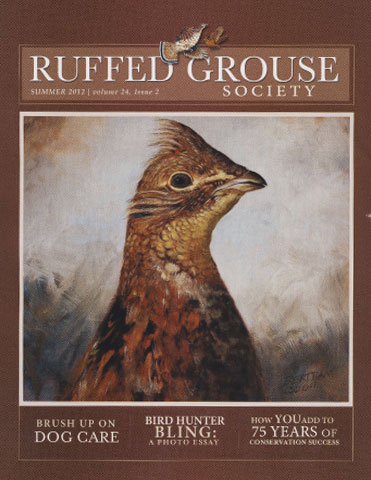
Parts of our country are a natural fit for game birds and bird dogs.
Richmond County, North Carolina, is one of them. Robert Ruark, widely known for a career of outstanding writing including The Old Man and the Boy, worked as a newspaper stringer in the town of Hamlet. The nearby town of Hoffman is the home of the J. Robert Gordon Sandhills Field Trial Ground, a 58,000 acre tract of longleaf pines, lovegrass, and a bobwhite quail course.
For decades, some of the most famous bird dogs have run the course, and many a young pup has come into his own here. Even New Englander Corey Ford headed to North Carolina in the winter when his grouse and woodcock coverts were frozen solid. Richmond County is more coastal plains than Piedmont which makes it to birds and bird dogs as George’s Bank is to fish and fishermen.
I had come to the town of Ellerbe to visit my wife’s family, which is big enough for me to wish that they all wore numbered jerseys and that I had a team roster. On this February trip we kept dinner to a short list of Uncle Herbert, Aunt Annette, and Pastor Wayne, another uncle. After dinner we headed across town to visit with our good friend Bill Webb, who was going to let us run our setters on his farm.
The best way to describe Bill Webb is to borrow the description usually reserved for Mark Twain; “known to everyone, like by all.” He’s a lawyer by trade. A long time ago, Bill’s grandparents raised peaches, tobacco and a wide variety of crops that ranged from sweet potatoes to peanuts. Through traditional farming practices Bill has transformed the farm, and created a quail Valhalla in the process. There are coveys of wild birds scattered throughout the fields of Egyptian wheat, milo, wiregrass, broomsedge, Johnsongrass, and bicolor lespedeza. The Webb Farm is so perfect it causes the heart of even the most discriminating quail hunter to flutter.
At the Webb Farm there are dogs, lots of dogs. Most are muscular pointers but there are setters, too. Head guide and dog trainer Wade Meachum trains them all, and he comes by his love of bird dogs honestly. His father, in addition to being the pastor of the Methodist Church was a renowned bird dog man. That meant when Pastor Meachum stepped into the pulpit on Sunday mornings it was common for parishioners to hear a sermon liberally sprinkled with bird dog, quail, and gunning references.
When W.H. Auden said, “in times of joy, all of us wished we possessed a tail we could wag,” I am positive he was describing my wife perfectly when she met Albert, an English Setter, during our visit. Albert was Bill’s stately five-year-old tricolor, and he could barely walk. A torn ligament in his front leg confined him to hobbling about in a knee-to-foot cast. It’s always a difficult decision of what to do when a working dog comes up lame, but in this case Albert was well cared for by Bill and Wade.
It’s a good thing my wife doesn’t play poker because she’d lose every hand she was dealt. It was all over but the shouting when she laid eyes on old Albert. There are points in life that just stand out from all others, and this was one of them. Angela was smitten.
That feeling is probably what prompted Bill to recommend that we bring Albert home to Massachusetts, and expose him a softer, gentler life. Bill thought it might be good if Albert enjoyed the cool ocean breezes in the summer, and became part of a covert rotation for grouse in the uplands and for woodcock in the lowlands. We could return in the winter for bobwhite. Compared to the long days that he’d become accustomed to, Albert would a dog of leisure.
I was flattered by Bill’s generosity. What a kind thing to offer, and it made some sense. Then I ran some quick numbers. Two female setters, two heat cycles each per year, three weeks at a clip and it all adds up to 12 weeks of madness. With a busy career and two kids in middle school the last thing I needed was to spend a Friday nigh apologizing to the neighbors for a dog barking non-stop. It’d be easier to breed our dogs with someone else’s male and forgo the stress and strain. Call me a stick in the mud, but I said no. We went on with the hunt and had a great time. And while nobody said boo about my decision, I could tell that there was a pall in the air.
A few months passed and Bill called with an update. The vet had give Albert a clean bill of health. His cast was removed and the new project for Bill and Wade was to rehabilitate old Albert. The setter was six years old now and, since he was hobbling, they started with short conditioning sessions which involved a lot of swimming in the ponds. Bringing him back was a slow project, but after being cooped with a cast in the kennel Albert was a good student and happy to be liberated.
While Albert was rehabilitating in Ellerbe, North Carolina, there was a parallel change and development going on in our Massachusetts home. My daughter Morgan had taken quite a liking to bird hunting. Her interest piqued in the summer when I began working out the dogs for upcoming season. Morgan was fourteen, a perfect time to get fully involved. She joined me in working them out three times a day, cooling them off in the ponds, and feeding and grooming them. Our dogs were seasoned veterans, and it was a good place for her to start learning.
In October we went to our New Hampshire grouse and woodcock coverts. Every weekend, Morgan was awake and ready in the predawn darkness way before her alarm clock rang. She neither complained about the challenges of a grouse and woodcock covert, nor bemoaned water going over the top of her boots while fording a seep. She remembered her riding gloves for when the temperatures dropped and an extra pair of socks when her feet got wet. She fit her hunters’ safety course in after soccer practice and before homework, and by the end of the season she had borrowed one of her mom’s shotguns to carry unloaded through the woods. Some more practice on a skeet field and she was good to go.
All the while there was something that kept nagging at me. Truth be told, I liked Albert too. He was growing on me. I wouldn’t say that I was sold on the idea, but I wasn’t as closed off to it either. Maybe that’s all it took, seeing him one time. Maybe Albert was just that kind of dog.
Well, grouse and woodcock season ended up north and in December we were ready to head back to North Carolina. We decided that Morgan was going to accompany us on her first quail hunt. I thought she’d enjoy hunting with Bill and Wade, and take special comfort in hunting an area where her family grew up. She’d get to see a professional kennel with dozens of dogs, and different breeds, too. I figured she’d enjoy hunting without getting all tangled up, and bombing around in a quail wagon is always great fun. Within a half hour of arriving she asked to see the famous Albert that her mom raved about.
Bill and Wade introduced Morgan to Albert. He was fit and trim, moving all around and wagging his tail. Setters as a breed are biddable dogs, and he was happy to get a pat. Maybe he was thinking that he was going to load up and go hunting. Or maybe he had a good sense about Morgan.
Like bees and honey, peas and carrots, and cookies and milk, so it was with Morgan and Albert. Morgan loves dogs, but there was something about old Albert that just clicked. It was love at first sight, just like it had been with Angela.
A little time passed fussing over the dog before we regrouped to hunt some birds. I had loaded our dogs into the kennels on the mule and Wade added a few of his pointers and his favorite Irish lab, Finn. Then I surprised even myself and said, “I’d love to see Albert work. Can we take him out this morning?”
“Albert? He’s already loaded up. It’s his day to work.”
When Wade smiled I laughed. What are the odds of our arriving on a day when it was Albert’s turn to run? Clearly it was my lucky day, and I vowed to buy a lottery ticket on the way home. I just knew I would win big.
Bill let us put our dogs down first. They found and pointed a bunch of birds. The heat was about 45 degrees warmer than what they were used to, and after an hour they started to tire. We watered them, and it was Albert’s turn. He was paired with a good looking all white setter named Bubba. They worked well as a team, and I watched closely as Albert worked the fields. His focus was sharp, his drive was intact, and he put on a half dozen miles of running without so much as a limp. I liked the way he quartered, he was patient around birds, and his points were staunch. All of Bill and Wade’s dogs are good, and Albert was really good.
After our hunt, Bill pulled me aside and asked again if I would like to take Albert home. It was a cause for celebration when I said yes.
I had changed my mind for a variety of reasons. A third dog, and a male, would make life around two unspayed females a ruckus for a few times a year. Retooling vehicles to accommodate additional dogs would be a shift, too. Expanding a kennel would require time that we didn’t have, but we would make it.
What made the decision finally is that faith, hope, and charity overruled logic and practicality. I had faith that when Morgan told me she was going to rise to the challenge and take total care of Albert that she would follow through. She was like her mom, committed, and for me that was a conviction without fact.
I had hope. I tossed out any of the doubts or worries that come from another dog because I knew that after the initial adjustment everything would work out just fine. People don’t always get what they want, but they get what they need. The magic is when what you get what you need which is also what you want. That was the case with Albert.
And that charity didn’t just come from Bill giving Albert to us. It came from his understanding that there was a much bigger purpose at hand. It came from feeling that it wasn’t just the right thing to do – for a girl just getting into bird hunting it was about as warm, generous and joyful a gift as a gift could be. I’m just glad Albert wasn’t a Tennessee walker.
I know I’m not the guy to try and work with old Albert. He’s got a way of doing business just as I have a way of doing business. I don’t have the aptitude to change the old boy from a professional hunting dog who runs 13 miles a day into a house dog who lives in a kennel and hunts aggressively for a few months of the year. That job is best done at the hands of someone far more capable than me, I can think of no one better suited to the task than Morgan.
We left Bill Webb and the farm, and Albert for that matter, too. Not for good, just for a while. We had some prep work to do before bringing Albert home. There was a yard to clear and some land to level. A concrete foundation needed to be poured. We’d need to re-engineer the truck with kennels so that we could accommodate all the dogs.
A dog box would go in Morgan’s room, and there would be new collars to buy. The owner’s name on the brass plate would not be mine. It would be Morgan’s. Well be picking up Albert soon and I can’t wait.