Every Dog Has His Day, Sometimes Two

Every Dog Has His Day, Sometimes Two

P arts of our country are a natural fit for game birds and bird dogs. Richmond County, North Carolina, is one of them. Robert Ruark, widely known for a career of outstanding writing including The Old Man and the Boy, worked as a newspaper stringer in the town of Hamlet. The nearby town of Hoffman is the home of the J. Robert Gordon Sandhills Field Trial Grounds, a 58,000 acre tract of longleaf pines, lovegrass, and a bobwhite quail course.

For decades, some of the most famous bird dogs have run the course, and many a young pup has come into his own here. Even New Englander Corey Ford headed to North Carolina in the winter when his grouse and woodcock coverts were frozen solid. Richmond County is more coastal plains than Piedmont which makes it to birds and bird dogs as George’s Bank is to fish and fishermen.

I had come to the town of Ellerbe to visit my wife’s family, which is big enough for me to wish that they all wore numbered jerseys and that I had a team roster. On this February trip we kept dinner to a short list of Uncle Herbert, Aunt Annette, and Pastor Wayne, another uncle. After dinner we headed across town to visit with our good friend Bill Webb, who was going to let us run our setters on his farm.
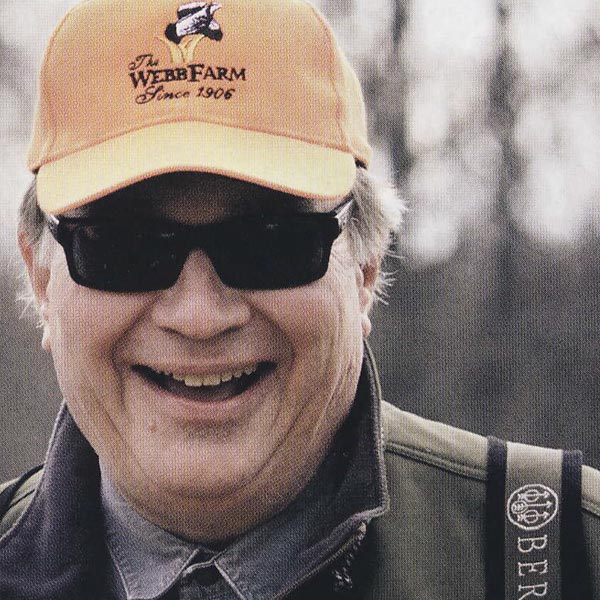
Bill Webb of The Webb Farm

Bill Webb of The Webb Farm

The best way to describe Bill Webb is to borrow the description usually reserved for Mark Twain; ”known to everyone, liked by all.” He’s a lawyer by trade. A long time ago, Bill’s grandparents raised peaches, tobacco and a wide variety of crops that ranged from sweet potatoes to peanuts. Through traditional farming practices Bill has transformed the farm, and created a quail Valhalla in the process. There are coveys of wild birds scattered throughout the fields of Egyptian wheat, milo, wiregrass, broomsedge, Johnsongrass, and bicolor lespedeza. The Webb Farm is so perfect it causes the heart of even the most discriminating quail hunter to flutter.

At the Webb Farm there are dogs, lots of dogs. Most are muscular pointers but there are setters, too. Head guide and dog trainer Wade Meachum trains them all, and he comes by his love of bird dogs honestly. His father, in addition to being the pastor of the Methodist Church was a renowned bird dog man. That meant when Pastor Meachum stepped into the pulpit on Sunday mornings it was common for parishioners to hear a sermon liberally sprinkled with bird dog, quail, and gunning references.

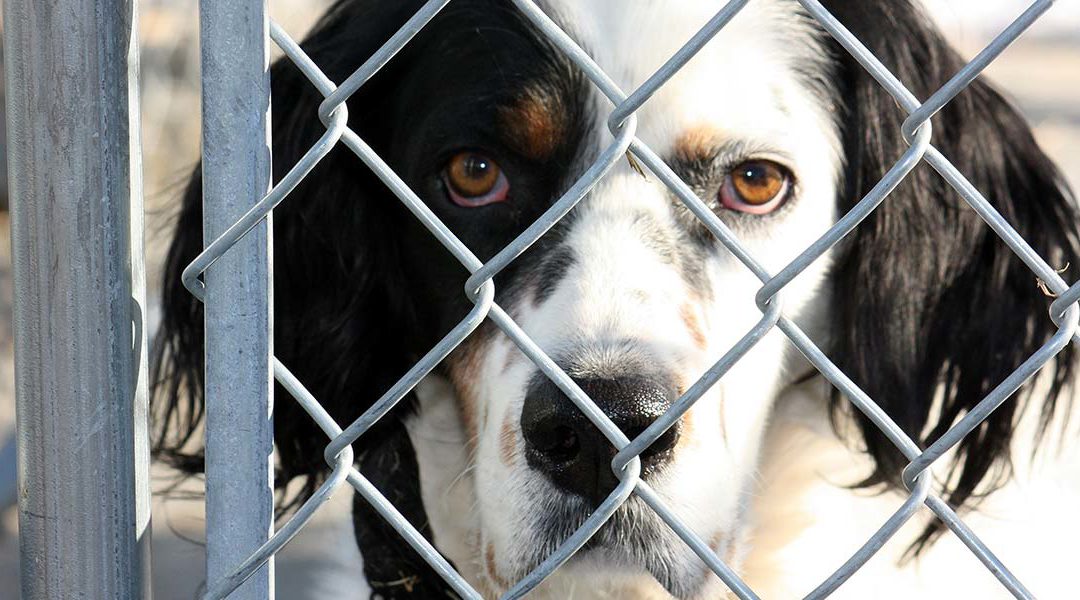
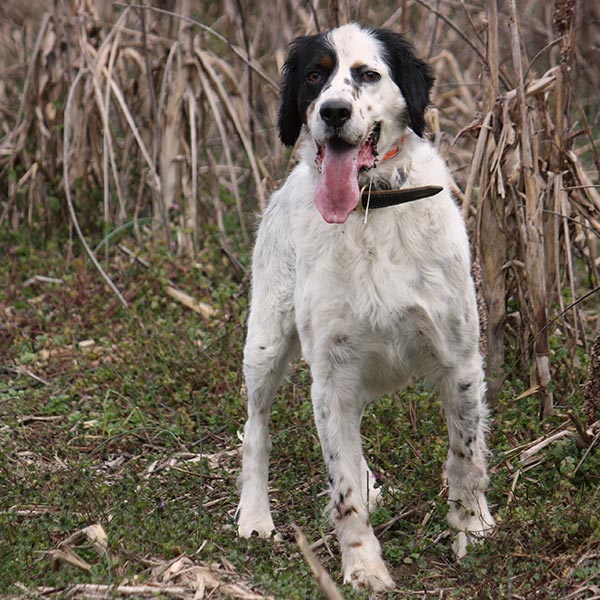
When W.H. Auden said, “in times of joy, all of us wished we possessed a tail we could wag,” I am positive he was describing my wife perfectly when she met Albert, an English setter, during our visit. Albert was Bill’s stately five-year-old tricolor, and he could barely walk. A torn ligament in his front leg confined him to hobbling about in a knee-to-foot cast. It’s always a difficult decision of what to do when a working dog comes up lame, but in this case Albert was well cared for by Bill and Wade.

“It’s a good thing my wife doesn’t play poker because she’d lose every hand she was dealt. It was all over but the shouting when she laid eyes on old Albert. There are points in life that just stand out from all others, and this was one of them. Angela was smitten.”
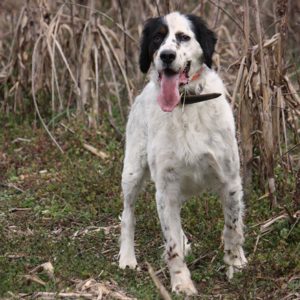
english-setter-albert-restored-to-good-health

English Setter Albert getting some exercise at The Webb Farm

That feeling is probably what prompted Bill to recommend that we bring Albert home to Massachusetts, and expose him to a softer, gentler life. Bill thought it might be good if Albert enjoyed the cool ocean breezes in the summer, and became part of a covert rotation for grouse in the uplands and for woodcock in the lowlands. We could return in the winter for bobwhite. Compared to the long days that he’d become accustomed to, Albert would be a dog of leisure.

I was flattered by Bill’s generosity. What a kind thing to offer, and it made some sense. Then I ran some quick numbers. Two female setters, two heat cycles each per year, three weeks at a clip and it all adds up to 12 weeks of madness. With a busy career and two kids in middle school the last thing I needed was to spend a Friday night apologizing to the neighbors for a dog barking non-stop. It’d be easier to breed our dogs with someone else’s male and forgo the stress and strain. Call me a stick in the mud, but I said no. We went on with the hunt and had a great time. And while nobody said boo about my decision, I could tell that there was a pall in the air.
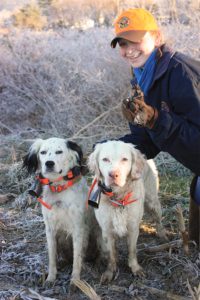
morgan-wolfe-woodcock-hunting

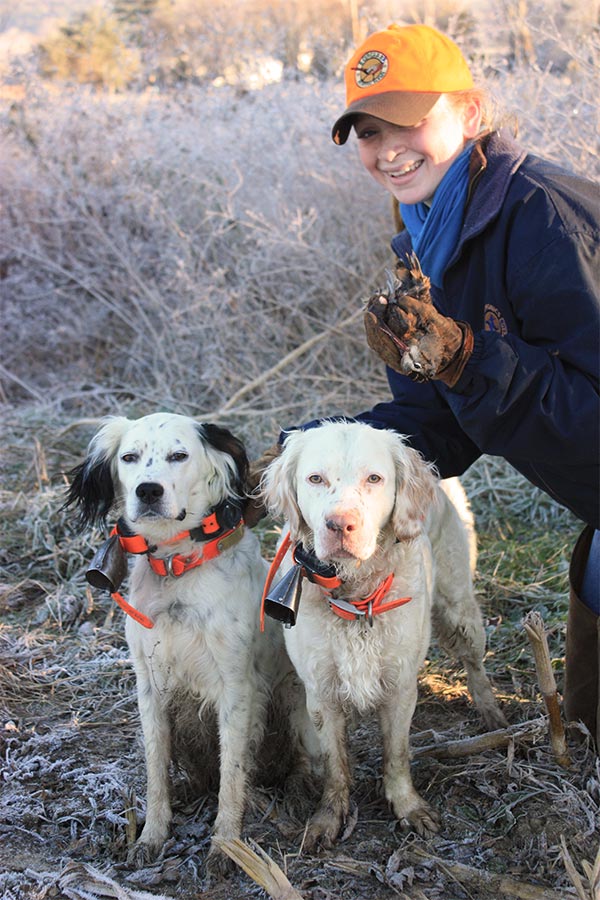
Morgan on a New England woodcock hunt with English Setters Ocracoke and Rowdy

In October we went to our New Hampshire grouse and woodcock coverts. Every weekend, Morgan was awake and ready in the predawn darkness way before her alarm clock rang. She neither complained about the challenges of a grouse and woodcock covert, nor bemoaned water going over the top of her boots while fording a seep. She remembered her riding gloves for when the temperatures dropped, and an extra pair of socks when her feet got wet. She fit her hunters’ safety course in after soccer practice and before homework, and by the end of the season she had borrowed one of her mom’s shotguns to carry unloaded through the woods. Some more practice on a skeet field and she was good to go.

All the while there was something that kept nagging at me. Truth be told, I liked Albert too. He was growing on me. I wouldn’t say that I was sold on the idea, but I wasn’t as closed off to it either. Maybe that’s all it took, seeing him one time. Maybe Albert was just that kind of dog.

Well, grouse and woodcock season ended up north and in December we were ready to head back to North Carolina. We decided that Morgan was going to accompany us on her first quail hunt. I thought she’d enjoy hunting with Bill and Wade, and take special comfort in hunting an area where her family grew up. She’d get to see a professional kennel with dozens of dogs, and different breeds, too. I figured she’d enjoy hunting without getting all tangled up, and bombing around in a quail wagon is always great fun. Within a half hour of arriving she asked to see the famous Albert that her mom raved about.

Bill and Wade introduced Morgan to Albert. He was fit and trim, moving all around and wagging his tail. Setters as a breed are biddable dogs, and he was happy to get a pat. Maybe he was thinking that he was going to load up and go hunting. Or maybe he had a good sense about Morgan.
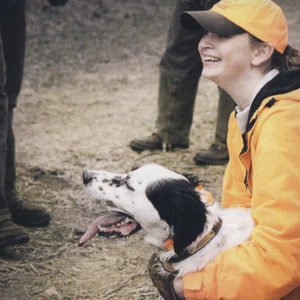
Morgan Wolfe with English Setter Albert

Morgan Wolfe with English Setter Albert

Like bees and honey, peas and carrots, and cookies and milk, so it was with Morgan and Albert. Morgan loves dogs, but there was something about old Albert that just clicked. It was love at first sight, just like it had been with Angela.

A little time passed fussing over the dog before we regrouped to hunt some birds. I had loaded our dogs into the kennels on the mule and Wade added a few of his pointers and his favorite Irish lab, Finn. Then I surprised even myself and said, “I’d love to see Albert work. Can we take him out this morning?” “Albert? He’s already loaded up. It’s his day to work.”

When Wade smiled I laughed. What are the odds of our arriving on a day when it was Albert’s turn to run? Clearly it was my lucky day, and I vowed to buy a lottery ticket on the way home. I just knew I would win big.

Bill let us put our dogs down first. They found and pointed a bunch of birds. The heat was about 45 degrees warmer than what they were used to, and after an hour they started to tire. We watered them, and it was Albert’s turn. He was paired with a good looking all white setter named Bubba. They worked well as a team, and I watched closely as Albert worked the fields. His focus was sharp, his drive was intact, and he put on a half dozen miles of running without so much as a limp. I liked the way he quartered, he was patient around birds, and his points were staunch. All of Bill and Wade’s dogs are good, and Albert was really good.

After our hunt, Bill pulled me aside and asked again if I would like to take Albert home. It was a cause for celebration when I said yes.
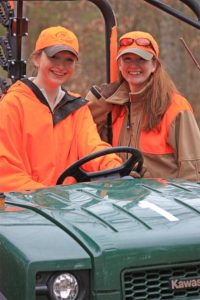
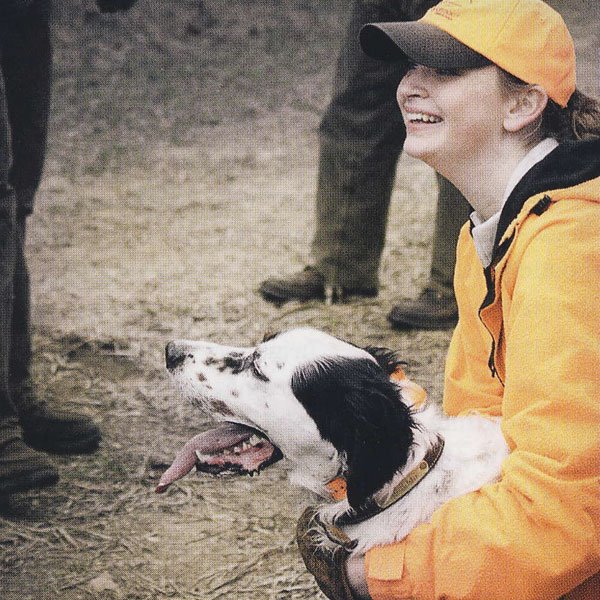
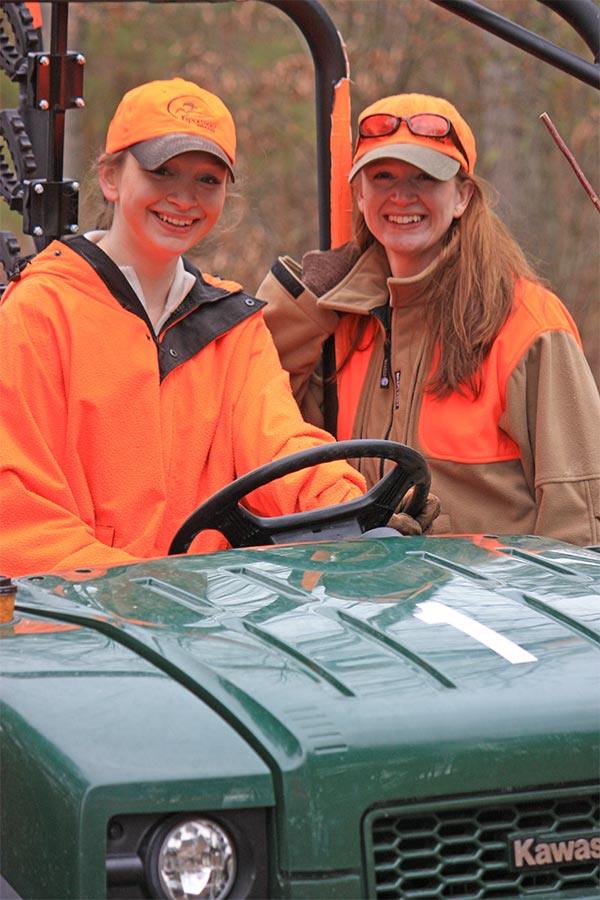
Angela and Morgan smiling from ear to ear after the author agrees to bring Albert home.

Angela and Morgan smiling from ear to ear after the author agrees to bring Albert home

I had changed my mind for a variety of reasons. A third dog, and a male, would make life around two un-spayed females a ruckus for a few times a year. Retooling vehicles to accommodate additional dogs would be a shift, too. Expanding a kennel would require time that we didn’t have, but we would make it.

What made the decision finally is that faith, hope, and charity overruled logic and practicality. I had faith that when Morgan told me she was going to rise to the challenge and take total care of Albert that she would follow through. She was like her mom, committed, and for me that was a conviction without fact.

I had hope. I tossed out any of the doubts or worries that come from another dog because I knew that after the initial adjustment everything would work out just fine. People don’t always get what they want, but they get what they need. The magic is when what you get is what you need and also what you want. That was the case with Albert.

And that charity didn’t just come from Bill giving Albert to us. It came from his understanding that there was a much bigger purpose at hand. It came from feeling that it wasn’t just the right thing to do – for a girl just getting into bird hunting it was about as warm, generous and joyful a gift as a gift could be. I’m just glad Albert wasn’t a Tennessee walker.

I know I’m not the guy to try and work with old Albert. He’s got a way of doing business, just as I have a way of doing business. I don’t have the aptitude to change the old boy from a professional hunting dog who runs 13 miles a day into a house dog who lives in a kennel and hunts aggressively for a few months of the year. That job is best done at the hands of someone far more capable than me, I can think of no one better suited to the task than Morgan.

We left Bill Webb and the farm, and Albert for that matter, too. Not for good, just for a while. We had some prep work to do before bringing Albert home. There was a yard to clear and some land to level. A concrete foundation needed to be poured. We’d need to re-engineer the truck with kennels so that we could accommodate all the dogs.

A dog box would go in Morgan’s room, and there would be new collars to buy. The owner’s name on the brass plate would not be mine. It would be Morgan’s. We’d be picking up Albert soon and I can’t wait.

This story originally appeared in the Summer 2012 issue of Ruffed Grouse Society. To see the original story as it appeared in the magazine, click on the image.
Hunting with Kids – Ruffed Grouse Society

When my daughter and son were younger, they both wanted to be firemen. Those convictions came about after our local Fire Chief Joe and his crew visited their school. The demonstration included an inspection of the fire truck, helmets, axes, pike poles and the siren. I thought about the impact the firemen’s visit had upon them, and the revelation came to me to break down that visit and incorporate a similar series of demonstrations into my hunting tutorial . Several years later, it’s been working like a charm.

Summer 2013, Flushes – Upland Almanac

According to the Billings Gazette, 80 Montana Sage Grouse might find themselves relocated to North Dakota in 2014 and 2015. Two batches of 40 female sage grouse are being considered to help supplement the dwindling populations in southwestern North Dakota.

Every Dog Has His Day, Sometimes Two

P arts of our country are a natural fit for game birds and bird dogs. Richmond County, North Carolina, is one of them. Robert Ruark, widely known for a career of outstanding writing including The Old Man and the Boy, worked as a newspaper stringer in the town of Hamlet. The nearby town of Hoffman is the home of the J. Robert Gordon Sandhills Field Trial Grounds, a 58,000 acre tract of longleaf pines, lovegrass, and a bobwhite quail course.

For decades, some of the most famous bird dogs have run the course, and many a young pup has come into his own here. Even New Englander Corey Ford headed to North Carolina in the winter when his grouse and woodcock coverts were frozen solid. Richmond County is more coastal plains than Piedmont which makes it to birds and bird dogs as George’s Bank is to fish and fishermen.

I had come to the town of Ellerbe to visit my wife’s family, which is big enough for me to wish that they all wore numbered jerseys and that I had a team roster. On this February trip we kept dinner to a short list of Uncle Herbert, Aunt Annette, and Pastor Wayne, another uncle. After dinner we headed across town to visit with our good friend Bill Webb, who was going to let us run our setters on his farm.

Bill Webb of The Webb Farm

The best way to describe Bill Webb is to borrow the description usually reserved for Mark Twain; ”known to everyone, liked by all.” He’s a lawyer by trade. A long time ago, Bill’s grandparents raised peaches, tobacco and a wide variety of crops that ranged from sweet potatoes to peanuts. Through traditional farming practices Bill has transformed the farm, and created a quail Valhalla in the process. There are coveys of wild birds scattered throughout the fields of Egyptian wheat, milo, wiregrass, broomsedge, Johnsongrass, and bicolor lespedeza. The Webb Farm is so perfect it causes the heart of even the most discriminating quail hunter to flutter.

At the Webb Farm there are dogs, lots of dogs. Most are muscular pointers but there are setters, too. Head guide and dog trainer Wade Meachum trains them all, and he comes by his love of bird dogs honestly. His father, in addition to being the pastor of the Methodist Church was a renowned bird dog man. That meant when Pastor Meachum stepped into the pulpit on Sunday mornings it was common for parishioners to hear a sermon liberally sprinkled with bird dog, quail, and gunning references.

When W.H. Auden said, “in times of joy, all of us wished we possessed a tail we could wag,” I am positive he was describing my wife perfectly when she met Albert, an English setter, during our visit. Albert was Bill’s stately five-year-old tricolor, and he could barely walk. A torn ligament in his front leg confined him to hobbling about in a knee-to-foot cast. It’s always a difficult decision of what to do when a working dog comes up lame, but in this case Albert was well cared for by Bill and Wade.

“It’s a good thing my wife doesn’t play poker because she’d lose every hand she was dealt. It was all over but the shouting when she laid eyes on old Albert. There are points in life that just stand out from all others, and this was one of them. Angela was smitten.”

That feeling is probably what prompted Bill to recommend that we bring Albert home to Massachusetts, and expose him to a softer, gentler life. Bill thought it might be good if Albert enjoyed the cool ocean breezes in the summer, and became part of a covert rotation for grouse in the uplands and for woodcock in the lowlands. We could return in the winter for bobwhite. Compared to the long days that he’d become accustomed to, Albert would be a dog of leisure.

I was flattered by Bill’s generosity. What a kind thing to offer, and it made some sense. Then I ran some quick numbers. Two female setters, two heat cycles each per year, three weeks at a clip and it all adds up to 12 weeks of madness. With a busy career and two kids in middle school the last thing I needed was to spend a Friday night apologizing to the neighbors for a dog barking non-stop. It’d be easier to breed our dogs with someone else’s male and forgo the stress and strain. Call me a stick in the mud, but I said no. We went on with the hunt and had a great time. And while nobody said boo about my decision, I could tell that there was a pall in the air.

Bill Webb of The Webb Farm

A few months passed and Bill called with an update. The vet had given Albert a clean bill of health. His cast was removed and the new project for Bill and Wade was to rehabilitate old Albert. The setter was six years old now and, since he was hobbling, they started with short conditioning sessions which involved a lot of swimming in the ponds. Bringing him back was a slow project, but after being cooped up with a cast in the kennel Albert was a good student and happy to be liberated.

While Albert was rehabilitating in Ellerbe, North Carolina, there was a parallel change and development going on in our Massachusetts home. My daughter Morgan had taken quite a liking to bird hunting. Her interest piqued in the summer when I began working out the dogs for the upcoming season. Morgan was fourteen, a perfect time to get fully involved. She joined me in working them out three times a day, cooling them off in the ponds, and feeding and grooming them. Our dogs were seasoned veterans, and it was a good place for her to start learning.

In October we went to our New Hampshire grouse and woodcock coverts. Every weekend, Morgan was awake and ready in the predawn darkness way before her alarm clock rang. She neither complained about the challenges of a grouse and woodcock covert, nor bemoaned water going over the top of her boots while fording a seep. She remembered her riding gloves for when the temperatures dropped, and an extra pair of socks when her feet got wet. She fit her hunters’ safety course in after soccer practice and before homework, and by the end of the season she had borrowed one of her mom’s shotguns to carry unloaded through the woods. Some more practice on a skeet field and she was good to go.

All the while there was something that kept nagging at me. Truth be told, I liked Albert too. He was growing on me. I wouldn’t say that I was sold on the idea, but I wasn’t as closed off to it either. Maybe that’s all it took, seeing him one time. Maybe Albert was just that kind of dog.

Well, grouse and woodcock season ended up north and in December we were ready to head back to North Carolina. We decided that Morgan was going to accompany us on her first quail hunt. I thought she’d enjoy hunting with Bill and Wade, and take special comfort in hunting an area where her family grew up. She’d get to see a professional kennel with dozens of dogs, and different breeds, too. I figured she’d enjoy hunting without getting all tangled up, and bombing around in a quail wagon is always great fun. Within a half hour of arriving she asked to see the famous Albert that her mom raved about.

Bill Webb of The Webb Farm

Bill and Wade introduced Morgan to Albert. He was fit and trim, moving all around and wagging his tail. Setters as a breed are biddable dogs, and he was happy to get a pat. Maybe he was thinking that he was going to load up and go hunting. Or maybe he had a good sense about Morgan.

Like bees and honey, peas and carrots, and cookies and milk, so it was with Morgan and Albert. Morgan loves dogs, but there was something about old Albert that just clicked. It was love at first sight, just like it had been with Angela.

A little time passed fussing over the dog before we regrouped to hunt some birds. I had loaded our dogs into the kennels on the mule and Wade added a few of his pointers and his favorite Irish lab, Finn. Then I surprised even myself and said, “I’d love to see Albert work. Can we take him out this morning?” “Albert? He’s already loaded up. It’s his day to work.”

When Wade smiled I laughed. What are the odds of our arriving on a day when it was Albert’s turn to run? Clearly it was my lucky day, and I vowed to buy a lottery ticket on the way home. I just knew I would win big.

Bill let us put our dogs down first. They found and pointed a bunch of birds. The heat was about 45 degrees warmer than what they were used to, and after an hour they started to tire. We watered them, and it was Albert’s turn. He was paired with a good looking all white setter named Bubba. They worked well as a team, and I watched closely as Albert worked the fields. His focus was sharp, his drive was intact, and he put on a half dozen miles of running without so much as a limp. I liked the way he quartered, he was patient around birds, and his points were staunch. All of Bill and Wade’s dogs are good, and Albert was really good.

After our hunt, Bill pulled me aside and asked again if I would like to take Albert home. It was a cause for celebration when I said yes.

I had changed my mind for a variety of reasons. A third dog, and a male, would make life around two un-spayed females a ruckus for a few times a year. Retooling vehicles to accommodate additional dogs would be a shift, too. Expanding a kennel would require time that we didn’t have, but we would make it.

What made the decision finally is that faith, hope, and charity overruled logic and practicality. I had faith that when Morgan told me she was going to rise to the challenge and take total care of Albert that she would follow through. She was like her mom, committed, and for me that was a conviction without fact.

I had hope. I tossed out any of the doubts or worries that come from another dog because I knew that after the initial adjustment everything would work out just fine. People don’t always get what they want, but they get what they need. The magic is when what you get is what you need and also what you want. That was the case with Albert.

And that charity didn’t just come from Bill giving Albert to us. It came from his understanding that there was a much bigger purpose at hand. It came from feeling that it wasn’t just the right thing to do – for a girl just getting into bird hunting it was about as warm, generous and joyful a gift as a gift could be. I’m just glad Albert wasn’t a Tennessee walker.

I know I’m not the guy to try and work with old Albert. He’s got a way of doing business, just as I have a way of doing business. I don’t have the aptitude to change the old boy from a professional hunting dog who runs 13 miles a day into a house dog who lives in a kennel and hunts aggressively for a few months of the year. That job is best done at the hands of someone far more capable than me, I can think of no one better suited to the task than Morgan.

We left Bill Webb and the farm, and Albert for that matter, too. Not for good, just for a while. We had some prep work to do before bringing Albert home. There was a yard to clear and some land to level. A concrete foundation needed to be poured. We’d need to re-engineer the truck with kennels so that we could accommodate all the dogs.

A dog box would go in Morgan’s room, and there would be new collars to buy. The owner’s name on the brass plate would not be mine. It would be Morgan’s. We’d be picking up Albert soon and I can’t wait.

This story originally appeared in the Summer 2012 issue of Ruffed Grouse Society. To see the original story as it appeared in the magazine, click on the image.
If you enjoyed this story about author Tom Keer’s English Setter Albert, be sure to check out other stories about him:

Behind the scenes of this story…

Take Your Show on the Road – Ruffed Grouse Society


Of all the activities I do in the outdoors, be it dog training, shooting, trout fishing, turkey hunting, waterfowling, striper fishing, horseback riding, or anything else, grouse and woodcock hunting ranks first. I count down every day until the season begins like a kid counts down days until summer vacation. I anticipate opening days, and cannot wait to get into the field.

Still, every year around the third week in October I begin to get mixed emotions about pursuing my favorite game birds in my coverts. Around that time I experience a profound change that slows me down. I don’t spring out of bed in the pre-dawn darkness. I walk through the alders and white birch runs more leisurely. Sometimes I take a break and just stop and sit a while.

At about that time my dogs wonder just what the heck is wrong with me. When I pull out a collar with a bell they claw at their kennel doors like caged lions, and to them my lack-luster condition is unbecoming. It’s really a simple thing that is my cross to bear: I’m sad.

I’m sad because I know that the end of the season is near. Think about it. A 45-day woodcock season is about 12% of the year. That means I have another 88% to go until opening day. To me that’s a long time. Don’t get me wrong, I totally enjoy my other sporting activities and the folks I share them with. But compared to grouse and woodcock hunting which occupies my top slot, the rest are sort of a consolation prize. I still enjoy an ice cream sundae even though I really want a piece of double-chocolate cake.

Initially I thought that I would follow the woodcock flights and hunt them along their southern route. For a while I hunted grouse in the winter but then decided they were having a hard enough time finding food in the snowy uplands. Upon closer reflection I felt that I had harassed the birds enough during October and November and that I would leave them alone. Instead, I’d pursue a species native to my home hunting grounds in coastal Massachusetts, the bobwhite quail.

Trading my beloved alder runs and poplar stands is something that is not done very easily. When we get used to bull briars, raspberry thickets, and thick cover with narrow shooting windows we can sometimes get lost in the wide open fields and the softness found in wiregrass, lovegrass, and broom sedge. Pines like loblollys, slash, and longleaf grow tall and majestically.

Most dyed-in-the-wool grouse and woodcock hunters need a few flights to adjust to the open space. At least I do. A snap shot in thick covert on a grouse contrasts sharply with the openness of the quail terrain. At first blush I count them all as gimmees. After a few easy misses I sharpen my focus and bear down to give the dogs a few feathers in their mouths.

I stumbled upon Southern quail hunting naturally. My Tennessee-born and North Carolina-raised wife has a family large enough to fill 15 long tables at an after-church bar-be-que. At the last gathering the count was about 100. Visiting family always made for a few easy sorties to the quail fields, and most of her family helped with introductions to landowners.

In recent history, populations of wild bobwhites have been impacted like many other of our favorite game birds. Southern quail hunting is an incredibly strong tradition no different than Northern ruffed grouse hunting. Long-time quail hunters remember the days that Robert Ruark chronicled in The Old Man and the Boy. Ruark believed that hunting bobs between Christmas and New Year’s was the ideal time. “By this time the birds are steadied down and the dogs have had a lot of practice and they’ve steadied down, too.”

When his New England uplands and lowlands were frozen solid, Corey Ford headed to North Carolina, and he gave pause to running his grouse dogs on quail. “Take a northern-trained setter out of his native alder coverts and put him down in a southern environment of sand and sedge and honeysuckle tangle, I wondered what would happen?” So, too was the fact that most grouse hunters run one dog at a time while quail dogs are run as a pack. Add to the mix the lack of bells on a Southern dog and you’ve got some more differences. Ford goes on to talk about a dog’s thick, winter coat being a handicap with the heat, and combined with pulling a wad of hitchhikers from a long-haired setter you’ll know why pointers are so well received.

My easy acceptance of hunting quail in the winter was unique to me, but it wasn’t new to the world. The Red Hills region in South Georgia and North Florida has attracted New Englanders and Midwesterners for over a century. I wasn’t creating a new movement by any stretch of the imagination. Instead, I was just falling into line with the great ideas that were set forth ahead of me.

I no longer get sad in the third week of October. As I’ve had a goal of hunting grouse and woodcock in all of their reaches, I’ve now added a goal of hunting bobwhites in all of their native lands. Their terrain is expansive and the environments diverse. For now I’ll focus on Virginia, North and South Carolina, Georgia, and Florida. Once I get a flavor for those areas I’ll gradually head further west. Nowadays I look forward to the winter. And my wait until grouse and woodcock season reopens at home is far shorter because of it.

This article originally appeared in the Winter 2012 edition of Ruffed Grouse Society.