Several years ago a fall hurricane dumped six inches of water in my basement. After ripping off a sequence of expletives that would rival those spoken by a stevedore, I attempted to save more than four decades worth of materials threatened by the rising indoor tide.
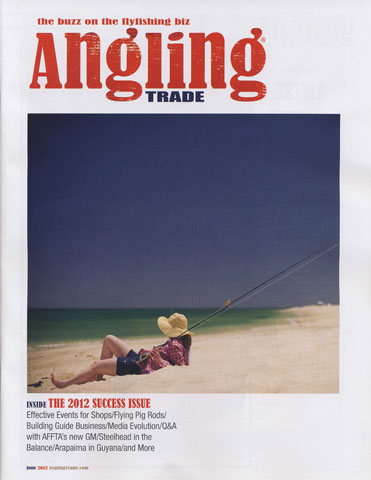
In one box I found the last catalog produced by the H.L. Leonard Rod Company (Johnson Wax owned them at the time), and there was also a receipt for a Hardy Featherweight that I bought after a summer of bailing hay (retail price $88.00). I found an early Thomas & Thomas catalog along with a lost pack of moose mane that cost 90 cents. Included, too, were very early issues of a new magazine called Fly Fisherman as well as the first copy of a magazine called Rod and Reel that was later renamed Fly Rod & Reel. There were a number of versions of Fly Tyer magazine from when they moved the magazine from a typed newsletter format to a glossy publication. And tucked within the early Gray’s Sporting Journals were vintage tackle newsletters offering Seamasters and Fin nor Wedding Cakes for $250. The magazines and catalogs made me smile as I remembered my early fly fishing days, and also lament the fact that they were longer ago than I cared to remember.
At the bottom of the box was a copy of The American Sportsman. Depending on one’s mood, the three-ringed red, white and blue O in the word “sportsman” may have resembled a perfectly aligned peep sight or a Patriotic Vietnam-era Bull’s Eye, take your pick. I remembered watching episodes of that show on a black and white television with tubes that required several minutes to warm up so as to properly display the picture. Sometimes I would head across the street to my friend’s house to watch the show because theirs was a family of sportsmen and they had a color TV.
The American Sportsman was the most interesting to me because it was a hardback magazine. It was published by The Ridge Press, Inc. and the American Broadcasting Company Merchandising, Inc. division to accompany the Curt Gowdy-hosted television show of the same name. The American Sportsman was wonderful to hold and to read, and its production quality meant it was not disposable; like a book its quality would stand the test of time.
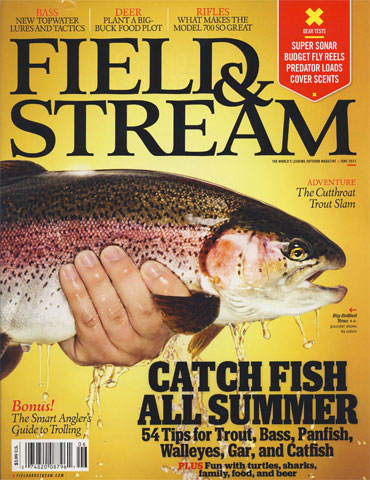
Our generation bears witness to the newcomer that is vastly different from traditional print media. Joining fly fishing books and magazines is a brave new world of digitally published blogs and ezines. In the past few years, many businesses have retooled their sales and marketing expenditures by reducing print advertising. In many circles, print is perceived as costly with no ROI while digital has gained favor because of its perception as “free.” In January, 2012, Business Insider reported that CEO Robert McDonald of powerhouse Procter & Gamble laid off 1600 marketing personnel and staff after finding out that Facebook and Google were either free or relatively free. There is a tremendous cost savings to the $10 billion annual ad budget, but are customers turning to social media for information on Old Spice or Tide laundry detergent? Mark Twain once said “common sense ain’t that common,” and with marketing budget-cuts occurring in such an expedient fashion, I beg the question: has digital replaced print in the fly fishing and sporting sectors?
With the increasing crop of fly fishing and sporting ezines, blogs, and social media threads it would seem so. The similarities are that print and digital are both for-profit business models that respond to a particular customer base. Historically, and as evidenced by the print Big Three sporting magazines (Field & Stream, Outdoor Life and Sports Afield), sportsmen were sportsmen. The lion’s share of the angling demographic favored conventional tackle and then gravitated towards spin tackle. FIy fishing was perceived as an elitist sport until Shakespeare’s Wonderrod, Pfleuger’s Medalist series, andCortland’s 333 reduced the financial entry point. Fishermen also were highly likely to be hunters and their diverse fishing methods were mirrored in their pursuit of big game, upland birds, and waterfowl. Fly fishing coverage was a small percentage of total editorial but that was destined to change.
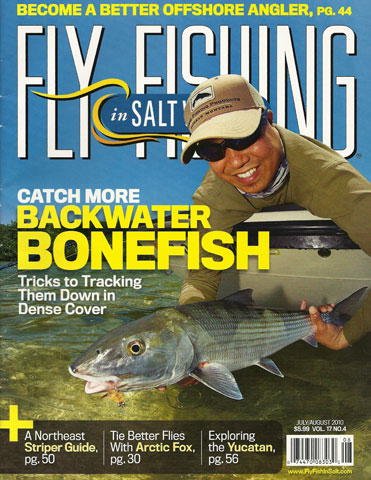
The first customer change occurred somewhere between the Summer of Love and Watergate, and it came with a quest for more and specific information. In certain sporting sectors there was a customer base that began to focus on specific sporting disciplines. The all-purposes sportsman gave way to narrowly aligned user groups who thirsted for greater coverage and more information about their favorite activities. The pattern is reflected across many sporting categories. With regards to fly fishing, Don Zahner lead the pack with the l969 launch of the niche publication he called Fly Fisherman. A number of start-up niche publications sprouted through the mid 1970’s and established a velocity of new magazines that continued to launch throughout the next few decades. Each new magazine had a particular focus, with some keying in on sporting art and literature, others with destination and how-to’s, and still others with techniques and products. Fly Fisherman, Fly Rod & Reel, and American Angler focused on all facets of fly fishing, while Wild Salmon and Steelhead or Warmwater Fly Fishing addressed a specific species or two. Saltwater Fly Fishing and later Fly Fishing in Saltwaters addressed an environment while others, like Eastern Fly Fishing, Northwest Fly Fishing and Southwest Fly Fishing provided a regional approach.
Fly fishing market retraction and the struggling domestic and world economies have caused many magazines to lose subscribers and advertisers. A number of publications have not survived. A new hurdle for print magazines to overcome comes back around to the emergence of digital publishing and social media. When I finished bailing water in my basement and returned to my office I was likely to find one of the newest fly fishing publications ready for my perusal.
So while the world continues to turn toward digital technology for their information, I wonder if sportsmen in general and fly fishermen in specific prefer print or digital as the way they’d like to receive their information. Digital publishing and social media have emerged as mainstays in our everyday world. But does that trend hold true for sporting activities in general and specifically fly fishing?
To answer that question I turned to publishers and editors who represent more than a century of experience. It goes without saying that each began their careers in print, but every one has significant experience in print and in digital and are able to provide an unbiased opinion on the values and limitations of each.
I first spoke with Ed Gray, the founder of Gray’s Sporting Journal. In recognition of the changing audience which led to ABC shuttering The American Sportsman in 1974, Gray launched a perfect-bound magazine of no less than 96 pages that was printed on 50-pound stock, and featured a 70/30 editorial-to-advertising ratio. His preliminary issue was launched on Halloween Night 1975, and nearly four decades later Gray’s Sporting Journal (now owned by Morris Communications) is thriving. Why? Gray focused on a special interest audience.
As businesses grow and expand, niche models increase,” said Gray. “A very specific audience of sportsmen exists and they favor print. Many will read digital, but the primary customer base who spends money on products and trips read print. The last century showed us a similar pattern in live theater, film and then television. As film and television emerged as new markets, live theater suffered a slight retraction. In our time, small movies have been replaced by those with tremendously large budgets. That said, live theater is still vibrant, and in many instances, actors are not considered “real actors” unless they have been on Broadway. It is a quality versus quantity issue, and customer buy quality magazines. Talented writers and photographers combined with quality print magazines properly address the sporting customer demographic. It might not hit the youthful sector, but it addresses the largest percentage of the total market, and that is what is important.”
Jim Butler, the former editor of Fly Rod & Reel, began working on Down East Enterprise’s fly fishing magazine in 1986, seven years after it was founded. “Historically, there was a tremendous spike in the sporting customer base after World War II,” he said. “Magazines expanded to cater to the growing niche-consumer demand, with Fly Fisherman being one of the front-runners to offer expanded fly fishing coverage. Fly Tyer came aboard in the 1970’s and regional magazines in the 1980’s through the 1990’s.”
“With all of the technological enhancements, digital has become more popular. An online magazine with a staff of one or tow and desktop publishing can produce a magazine that will service one niche of the niche market. To stay in business during this difficult climate, publishers need to study changes in how readers want to receive information as well as what type of information they want to receive. Fly rod 7 Reel has print and soon-to-be-launched digital platforms (and our sister publication, Shooting Sportsman, already boasts a digital-only pub called Sporting Shot). When we monitor successes and failures we find many clear examples of what works. Pure information like knot tying and the latest fishing conditions are great for the digital market. Videos explain knot-tying far better than print, and fishing reports reach more anglers more quickly on the web. But if a customer is looking to experience the sporting lifestyle then they are likely to find that level of quality in a magazine they can hold as opposed to view on a screen.”
Digital publishing guru Marshall Cutchin from MidCurrent doesn’t attach any perceived magazine subscription declines to digital. “Many magazines started to decline before Google appeared on the scene,” said Cutchin. “From an expense-side, magazines have always been big-budget projects that are content, subscription and advertising models. While I’ve seen consumers moving away from magazines that supply mass-market information they continue to find room for those that provide content for specialty subjects. Still, the challenges of the future for print are well known and scary. For digital? Their successes are becoming more apparent. Digital has the chance to embrace change in a way that print never did because it doesn’t rely on expensive production and distribution models.
“With digital comes an appealing low-entry cost which partly explains the dramatic increase in digital sporting publications. And with that low-entry cost comes a second issue, which is the vetting process. In the 1990s, bulletin boards were a tremendous vehicle for disseminating information, though much of it was suspect. Blogging software enabled publishers to produce and distribute content very inexpensively and it changed everything. But it also didn’t guarantee quality. The Internet has proven that the loudest people are often the least knowledgeable.”
Cutchin doesn’t think a shift to digital means the death of magazines, and he doesn’t think the “flipbook” concept answers an important need. “In some ways, a medium that allows anyone to assemble content works against information quality. Print gets more expensive all the time, so smart publishers are focusing on what print does best, which in my opinion is delivering a tactile experience—high-resolution photography and art on nice thick paper, for example. The look and feel of a magazine is distinct, and ‘flipbooks’ can’t replicate that electronically. On the other hand, subscription-based magazines can’t achieve the audience reach they once had, both because of competing channels and because consumer behavior is changing at an accelerating pace. Digital is learning to survive without print, I think, but print can’t survive without digital.”
John Frazier, editor of the niche of a niche Fly Fishing in Salt Waters represents an interesting twist. Before converting to digital, Frazier got his start in print. “Digital is a highly profitable endeavor, and the advertising revenues versus the cost centers are favorable to the publisher. Digital isn’t a fad, it’s here to stay.
“That said, the most important question is not what will the P&L look like or what will the accounting department say. The question is how do your readers want their content delivered? Web is great as it was intended, and that is to provide short, quick hits. But print has more longevity and quality attached to it. Fly fishing consumers favor quality over quantity, and while the younger market enjoys the social component delivered relatively immediately in a conversational tone, print is the dominant business driver.
“No one has cracked the digital code yet, so it’s wise to offer both versions to customers and to let them decide. But now that I’m involved in print magazine I’m in it to stay. And so are my readers.”
Kirk Deeter has an interesting 360-view of the fly fishing industry. Like Jim Butler before him, Deeter edits both a consumer trade magazine (TROUT and Angling Trade, respectively). Deeter also is a book author, a Field & Stream editor-at-large, a blogger for Field & Stream (“FlyTalk”) and for the RBFF’s Take Me Fishing program.
“The question of print versus digital reminds me of film,” he said. “I’ll watch some movies on an iPad, and others on a television. But them there are just some that I have to see on the big screen. And so it goes with digital and print applications.
“Simply put, good content sells. With that question answered, the real issue is what vehicle best matches the words and images? It’s a match-the-hatch of content, and the content is dictated by your audience. To simply take content that is best suited for a print publication and offer it in digital form doesn’t solve the issue.
“I think of blogs and social media like open-mic night. The quality of blogs and posts range from excellent to beyond the pale of acceptable. To think that a customer who spends $5,000 on a 5-night/4-day fishing trip or $750 on a fly rod is posting on Facebook or reading flipbooks is not likely. He’s probably working hard to be able to afford a quality trip or quality tackle. That demographic is likely to favor print. Products that appeal to a younger audience or are price-point driven may do well with digital. But each group must know their audience. TROUT magazine, for instance, consists of a 50+year old demographic. To shift from print to digital for a cost savings would be great for the P&L, but disastrous to all other facets. So by adding a digital application, I can disseminate information to a younger audience so as to increase their participation in Trout Unlimited while maintaining my core constituency. Again, it’s match-the-hatch for your customers.”
Ross Purnell, the editor of Fly Fisherman, the largest circulation fly-fishing print magazine for 40 years, actually began his publishing career in the digital world. Purnell was the first employee of the revolutionary website, The Virtual Flyshop (1996). Fly Fisherman magazine acquired The Virtual Flyshop in a strategic move designed to capitalize on the digital platform and to offer readers and advertisers a state-of-the-art publishing arm that was additional to the industry-leading print publication. Purnell joined the editorial staff of the print magazine in 2001.
“The reality is that nobody has to choose. Almost everybody I know takes advantage of both. You prefer digital if you need a fly recipe quick—you Google it. If you want to banter with fellow fly fishers on bulletin boards you know where to find it. Up-to-date industry news? The Internet wins. But sometimes you want to sit in a big easy chair and read a good magazine with quality editorial you can depend on. Some people keep their stack of magazines in the bathroom. Or they pick up a magazine before they get on a plane. There will always be a place for print magazines.
“We don’t expect consumers to have to choose. Fly Fisherman began publishing a website back in 1996, we’ve got the best fly-tying app in the iTunes store, we’re developing relationships with our readers through social media, and we’re working on the iPad version of Fly Fisherman right now. We listen to consumers and plan to provide the best fly fishing information however they choose to consume it. And right now, they want it all.
“Print publications have many advantages that ensure their longevity. I think the backbone of any good printed magazine is credibility. Readers trust what they read in Fly Fisherman because the information comes from a very select list of experts, the information has been vetted, and you don’t have to wad through millions of pages of garbage to find what you’re looking for. Trust is a big issue when you’re asking people to take out their wallet and buy something. According to a 2011 Southwick and Associates study, print advertising is still number one in terms of influencing purchasing decisions and that’s something smart advertisers are already aware of. Our readers paid money for the magazine which identifies them as not just serious fly fishers, but as serious consumers. And the way you consume a printed magazine—from front to back with no goal other than absorbing each page—assures advertisers that the ad has much great value. It’s being carefully read by the right people. It’s not just flashing by on a computer screen.”
Sporting businesses in general and fly fishing businesses in specific do well to include a balanced marketing approach, loaded mostly for print and secondarily for digital. Oh, yeah, back to the basement. As I finished bailing water and set about to packing up my box I found several floppy discs from an old Mac 128, and it made me think. I sure wish I had printed the contents of those discs back in, how shall I say, 1984.
Everyone loved Nottman’s house, and it is one that I will remember forever.
His house was traditionally tasteful but classically understated so that it wouldn’t raise an eyebrow. The appointments and accouterments were comfortable instead of lavish, and the setting on the river estuary near the ocean was wild and natural. It stood several miles from the quaint downtown and was civilized, to boot. The house was big, maybe close to l0,000 square feet, but no one cared in the least about the size.
Nottman was a sportsman, and the modest 1200 square-foot cottage across the Belgian block driveway from his house was his castle. The single-floor dwelling had weather-beaten cedar shakes and a hunter green tin roof. In the carport garage sat a fully restored 1981 Jeep Scrambler. A five-station sporting clays course lay off the path that connected the cottage to its deep water dock. Here, Nottman had a choice between a 23-foot Sea Craft, a slew of kayaks and a cat boat for gunk-holing around. The boats blocked the duck blind, but when the birds arrived in the late fall the hulls would be put up on blocks. The main house may have been his wife’s, but the cottage and the grounds were most certainly his.
While everyone was in awe of the exterior and the grounds, it was hard to separate that from the cottage’s exquisite interior. A mahogany gun cabinet stood in a corner next to the fly-tying table, and both of those areas were next to the rod racks. There were dozens of fly rods, fall-run surf rods, offshore standup rods, and some thick, trolling meat sticks. Leather couches and chairs stood en garde in front of a big-screen television which was next to the bar. A wood-burning fireplace took the chill off the air that inevitably leaked through the leaded-glass windows.
The writer John Ed Pearce once said, “Home is a place you grow up wanting to leave and grow old wanting to get back to.” When they’re young, sportsmen want to travel the world and see all that their sport has to offer. After a while they miss home, that simple place of being surrounded by favorite gear and like-minded souls.
Nottman created his own oasis, and if you’re industrious, you can, too. And while you’re looking for that perfect place, consider that some may already exist. Some version of a sporting community or fractional opportunity may be just the ticket. Walking out your front door to go fishing, riding, or shooting is what it’s all about, isn’t it?
South Carolina Sporting Life at Brays Island Plantation
The Brays Island homeowners are living what would seem to be a bygone reality–the pastoral pleasures of a leisure class of Southern plantation owners. The 5,500-acre private residential community features 3,500 acres set aside as a nature and hunting preserve. Remarkably, the land is virtually unchanged from its earlier days when Brays Island functioned as a working plantation.
Whenever they like, the 325 co-owners of Brays Island Plantation can walk from their front porches into a private sporting playground to hunt and fish, ride horses, paddle kayaks, play golf and swing through a round of sporting clays. A spirited match of tennis or a workout in the fitness center is set in the quiet scenery of oak trees and camellia gardens, early 1900s farm buildings of whitewashed brick, bluff-edged river views, and native woodlands of pine and palmetto. When you’re refreshed, stop by the elegant owner’s Inn for lunch.
The mix of natural beauty and diversity of activities creates Brays rare and strong appeal. Situated in the South Carolina Lowcountry between Charleston and Savannah, this combination of amenities and location makes Brays Island Plantation more than a gated sporting community. Brays is a haven for those who appreciate both nature and a host of outdoor sporting pursuits. In fact, it’s a way of life (www.QuailAtBrays.com, 866-320-1201).
Tropical Paradise at the East End of Grand Bahama: Deep Water Cay
Island life in the Tropics revolves around the tides, and at Deep Water Cay it has never been better. Since 1958, Deep Water Cay has played host to some of the most famous names in angling history. A multimillion dollar renovation has poised the Granddaddy of Bonefish Clubs for a bright and vibrant future.
The 2.1-square-mile land is home to a mixed-use club where homeowners, club members, and visiting anglers become reacquainted with life’s simplicity. Activities range from sight casting to bonefish and permit on 250-square miles of flats; offshore fishing for wahoo, tuna, and mahi-mahi; and reef fishing for a wide variety of species. Scuba dive the blue holes, hookah dive or snorkel the reefs. Spend the afternoon paddling the turquoise water in a kayak, or come about in one of the club Hobie Cats.
Once on the island, everything is a walk or a golf cart ride away. The executive chef prepares a variety of day-boat seafood in the breezy ambiance of the Member’s Lodge. The Welcome Center the epicenter of activities, perched next to the marina, the Tiki Bar, and the floating docks. Play a match of doubles tennis or a workout in the Fitness Center. An afternoon perched in a teak steamer chair by the Infinity Pool or on the private beach is a great idea, too. An outdoor massage while you listen only to the waves lapping against the shore is a terrific way to end the day.
There are a limited number of lots where homeowners can build cottages to suit as well as turn-key properties. Members and guests select from two- and four-bedroom houses, complete with all the amenities of home. Seven cottages are available for smaller groups, and all buildings are waterfront and offer spectacular sunrise and majestic sunset views.
Deep Water Cay is 100 miles east of West Palm Beach (www.deepwatercay.com, info@deepwatercay.com, 888-420-6202).
Belt, Montana’s The Ranches at Belt Creek
The Ranches at Belt Creek is an 800-acre residential ranch community that is the vision of Mark E. Hawn and his son, developer Mark Christopher Hawn. Ranch lots are available for purchase, and 200 acres are maintained for outdoor recreation by members, their families, and guests.
A full-time ranch manager and club concierge oversee all facets of the club. The heart of The Ranches at Belt Creek is the Sportsmen’s Club. Members, their families, and guests choose between various activities. Fly fishing, horseback riding, kayaking, big-game and bird hunting, sporting clays, golf, ATV excursions, and a range of winter activities.
What makes The Ranches at Belt Creek appealing for many is the complete freedom that the club offers. Fly fishing equipment, shotguns, horses, kayaks, ATVs, snowmobiles and associated gear is available for use. There is zero upkeep, insurance, and maintenance to be handled by members. Pick your activity, grab your gear, and go.
In addition to the seemingly endless adventures to be shared on site, homeowners and members are provided with exclusive access to the Hawn’s family ranch. The 6,500 acres are located some ten minutes up the road from the residential ranch community. Big-game hunters particularly like the ranch because of its large populations of deer, elk, bear, turkey, and mountain lion. Bird hunters favor Montana for the pheasant, sharp-tail grouse, Hungarian partridge, sage grouse, ruffed grouse, blue grouse, and chukar partridge. Flyrodders like the nearly eight miles of Belt Creek that winds through the land and offers outstanding trout fishing. For more information contact The Ranches at Belt Creek at www.ranchesatbeltcreek.com.
Montana’s Bitteroot River: A Fractional Ownership Opportunity
Rather than buy and appoint a home onMontana’s Bitterroot River, why not buy in to an existing, fully appointed home? Windermere Real Estate is offering two of three shares in a turn-key, 2,300-square-foot ranch-style home. An opportunity like this is oriented for serious fly fishermen or for folks who are looking for a family retreat. The three-bedroom, two-bathroom home was completely remodeled and landscaped in 2009. Two of the bedrooms are master suites with private baths. A gazebo and hot tub are on the property, and the house won the 2009 Parade of Homes Award.
The main draw is walking out your back door to access 150 feet of private river frontage. For anglers who want to cover more water or to head to some of the other famous trout rivers in Montana there are two different boats parked on a trailer in the yard. The first is a Clacka-Craft Low Profile Drift Boat, and for streams with rocks and strainers there is an NRS Rubber Raft. Two vehicles are available for use: a Ford Excursion and a 450 GL Mercedes.
For someone who loves the Missoula area and wants to be done with the hassles and get on with the fishing, a fractional opportunity may be the very best bet. Anne Jablonski at Windermere Real Estate (www.movemontana.com, 406-546-5816) can make it happen.
Hey, I found the deep spot. During the short window for wadefishing the bayside flats near Wellfleet, Mass., one cloudy June afternoon, Tom Keer chased a striped bass off the edge of a sandbar into a neck-deep channel. “The 12-foot tides drop to less than 2 feet for just a few hours,:” Keer says. He had been sight-fishing a spot where stripers often go after sand eels when he hooked one on the fly. “It ran into deeper water where the current started to drag it, and I had to follow or risk losing all my backing.” Eventually the striper broke off.
Keer adds that there are ways to pass the time between wading opportunities on the Cape. “At slack tide, it’s all sand and we amuse ourselves digging for littleneck clams until the tide comes back up.”
Photographer: Barry and Cathy Beck
Location: Cape Cod, Massachusetts
Migratory fish get under your skin. They follow a lot of rules, but they break almost as many as they follow.
That makes them a lot like an outstanding novel, with a beginning, a peak and an end. The story line comes together on a beach in the fall. Fishing conditions improve considerably, peak and then gradually wind down. Anglers study tides, lunar cycles, wind and water temperatures to determine patterns. When something doesn’t add up, they play hunches and take educated guesses.
In the Northeast, the fall usually means striped bass and blues on the beach. But from Chatham, Massachusetts, and westward, the Gulf Stream pushes close to land. From July through October, you’ll find false albacore, green bonito and skipjack. The fall run is addictive. Sometimes you’ll find peace in your fishing. Other times the fish will drive you just plain nuts.
Weather and Moon
The fall run has been the subject of fishing lore for decades. From the 1940s to 1960s, the Cape Cod beaches were the places to be, period. From Nauset Beach in Orleans through Race Point in Provincetown, 40-pound bass were considered rats. Four-by-four campers with tin skiffs strapped atop them brought anglers who fished around the clock from shore or from beach launched skiffs.
This continues today, and hard-core anglers from Maine through New Jersey head to the beaches to get in their last licks of the season. Technically, the autumnal equinox, around Sept. 21, is when daytime and nighttime are nearly identical in length. In the fall, days grow steadily shorter, whereas they grow steadily longer in the spring. Sunsets come earlier, and fall winds shift from southerly to Canadian Maritime northerly. Cool, dry air with high cloud ceilings and mare’s-tail formations reflect the strong winds, and there is a greater difference between daytime and nighttime temperatures. Sunrise and sunset colors change too, from oranges and yellows to more purples, greens and blues.
Figuratively, fall begins with the “Striper moon,” or the first full moon in September. Kenny Abrames dubbed this time frame, as it represents the first major push of the striped bass migration. During some years, the striper moon is early in the month; other years, it is later. Regardless it is a great time to get out and fish. In New England, the biggest shore-caught bass of the year are landed around the striper moon.
October’s Indian summer, though, is a pleasant respite from September’s initial cold weather. It’s when the fall feels like summer. History alleges that the two-week warm spell was when American Indians harvested the bulk of their crops, hence the name. Most of the pelagic fish will follow the retracting Gulf Stream south at this time, so the end of Indian summer usually marks their departure.
Learn to Read the Birds
As in so many other fisheries, birds are hugely important to the fall run. But they don’t just indicate the presence of fish and angling opportunity—rather, they can tell an angler what kind of bait is in the water.
Terns hit small baits, mostly silversides, bay anchovies and sand eels. When they hover close to the water’s surface, they’re on a big pod of bait with predators underneath. If they’re winging it high, they’re looking for food. If they fly fast right above the surface, albies or bonito are probably in the mix (as opposed to the slower striped bass and bluefish).
Most gulls are scavengers, but they too can tell you what kind of bait is around. Herring gulls feed on herring, but they also love mackerel. When a flock of herring gulls works together, there is probably a school of big bass underneath the bait. Black-backed gulls are the most aggressive and basically eat anything smaller than them. Their value to anglers is similar to that of black-headed laughing gulls, as they love crustaceans, particularly crabs.
Shearwaters feast on squid but also follow schools of mackerel and menhaden. The Cory’s and the sooty are two popular shearwaters in the Northeast. Storm petrels, meanwhile, are skimmer birds that tiptoe their way across the water’s surface in search of plankton. Petrels follow bigger bait like the squid and mackerel that feed on the silversides and the anchovies that feed on the plankton. Petrels and stripers love shrimp.
Gannets are plunge divers that soar 50 to 70 feet high. When they get a clear view of their favorite food, herring, they crash into the water, with air sacs cushioning their impact. Gannets use their wings to swim to bait, which they either inhale or impale with their long, pointed beaks. When you see a flock of them diving along a beach, you’re in for a treat.
Sea ducks are common in the fall. Mergansers feed on small baitfish like silversides, sand eels and shrimp. Common eiders like small bait as well, and king eiders like squid. The oldsquaw feast on shrimp, while surf scoters target crabs. Diver ducks like tide lines and frequent Oceanside beaches with good current and tide seams, but they’ll move into the bays and estuaries with the bass and blues.
Belly Up to the Bar
Northeast beaches in the fall are ripe with bait that stages and then pushes on the various moons. If you’re in the wrong place at the wrong time, you’ll miss the silversides, sand eels, glass minnows, herrings, peanut bunker, anchovies, mullets and butterfish that head south for the winter.
Find the bait, and you’ll find the fish. Bait stages in coves during half-moons and moves on full moons, so you’ll want to fish points of bars on the full and new moons and coves on the quarter moons. If you go to an area and see a lot of bait but no fish, then switch spots. I guarantee that the fish found more bait somewhere else! The schools of fish move into either the wind or the tide, whichever is stronger, so you should pick your next spot with that in mind.
When you arrive at a beach at low tide, preferably at a negative tide, you’ll be able to see the terrain that will set you up for the moving water and an approach.
Onshore bars connect to shore. They typically run at an angle based on the dominant current. Start fishing at the drop, and work your way out to the point. As the tide begins to flood, fish your way back to shore. Fish the point and both sides, and watch the bowl along the leeward side, where the bar joins land. Bait and fish will gather in that bowl and move over the bar when the water is high enough.
Bull-nose bars are rounded and look like an upside-down letter U. Sometimes fish hold in the lee; other times they feast on the windward side. Watch the way the current moves over the bar, and cast your fly up and across, letting it swing into the adjoining deeper water. When the fish are tight to the beach, you won’t have to cast very far.
Parallel offshore bars are not connected to land and have hard-running currents blowing through on all sides. At low tide, they may be exposed or just slightly underwater. An easy way to find a parallel offshore bar is to look for a “tribe.” Surfers love a good beach break! Sometimes the back bowl between the beach and the bar is chockablock with bass. Other times the fish are on the outside edge. And still other times they’re working the currents on either end. You can wade to some offshore bars on the low tide, but wear a Farmer John wetsuit. As the tide comes up, you can float back to shore.
Points are spits of sand that jut out into the ocean, while bowls, or holes, are basins that have deeper water and lots of current.
Use ranges to mark mother lodes. Take a longitudinal point and match it with a latitudinal point, and X marks the spot. The right end of a cottage porch and a lobster buoy could be a coordinate in its simplest form. Other common structures are water towers, buoys, breakwaters, channel markers, rock piles and trees.
Northern New England and Massachusetts Bay
From August to mid-October, Dave Gibson, of Great Bay Rod Co., fishes beaches in the fall from Maine through northern Massachusetts. He doesn’t see lots of birds marking fish in Maine and New Hampshire, but instead he drives along Route 1A looking for beachfronts that are sandwiched between the rocky coastline.
He typically searches for those spots around low tide and returns to fish them during the last few hours of the food through the first few hours of the drop. Because of the cold water, he likes Monic intermediate lines and adds a variety of lengths of lead-core lines for additional depth.
Running the beach at Plum Island,Massachusetts, is the easiest way to find fish. Because of the usually present sand eels, Gibson sees more bird activity there. Still, he’ll tie longer flies because of the diverse baitfish that dump out of the river systems.
In Massachusetts Bay from September to October, schools of striped bass split, with some migrating on the inside of the bay. With all of the river systems from the North Shore down through the South Shore, there is never a shortage of baitfish dropping out. The last beach on the South Shore is White Horse Beach, and it is just north of Cape Cod Canal, where all the bayside fish push through.
Cape God and Rhode lsland
In September and November, other fish follow the Labrador Current, which runs from Plum Island to Cape Cod’s Race Point. According to Capt. Dave Steeves, of Fishing the Cape, the fish seem to split.
“Race Point, in Provincetown, has historically been an exceptional spot,” he says. “Some of the fish will move along the bay side, and Sandy Point, on the outside of Barnstable Harbor, is excellent. We also find bass and blues along the outer beaches in Truro, Wellfeet, Eastham andOrleans. Reverse the spring patterns, and you’ll find them.”
Fishing the Cape owner Bruce Zeller reports that the number of bass on the Oceanside beaches is smaller, but the quality is outstanding. “This past year we saw a tremendous amount of bait right up on shore, and long casts weren’t necessary,” he says. ” As the water cools down, we change fly lines and favor the Cortland PE+ Crystal and the Airflo Cold Saltwater fly lines because they don’t kink up.”
Anglers consider Rhode Island, the Ocean State, the smallest state with the longest run. “As the migration starts, you’ll find fish dropping down from Upper Narragansett Bay,” says Peter Jenkins, owner of the Saltwater Edge in Middletown. “While most anglers think of fishing the beaches of South County, the Upper Bay beaches are great places to start to fish.”
As the fish drop down from Upper Narragansett Bay, the Saltwater Edge’s general manager, Arden Gardell, says he “finds fish spreading throughout Newport’s First, Second and Third beaches, from the cobble beaches around Narragansett down through the rocky and sandy Scarborough Beach and throughout South County. From the sandy Matunuck to the rocky Carpenters Bar to the expansive Charlestown Beach, Weekapaug and Napatree Point, you’ll find the bass and blues throughout all of the stages of the run.”
There’s always something to be found during the Northeast’s fall run. While the addictive quest can indeed drive you nuts at times, there’s plenty of peace to be found in this fishing.

A solitary fisherman shares his space on the flats as the sun rises over Chatham.
During the warmer months, I wake up every day before sunrise. One of my indulgences is to pour a thermos full of hot coffee, get into my barely running CJ5, and drive to a beach to see the sun come up. Not much inspires me more than the sun rising above the Atlantic Ocean, and when the light touches the water I am invigorated with infinite possibilities.
Just before the golden ball pops, there is a significant temperature drop, commonly noted as among fishermen and other hoot owls. It’s called False Dawn. If you’ve been fishing all night, odds are you’ve been warm and comfortable. Then you feel the chill roll in, like some foggy scene out of Macbeth. When the temperature drops, you know it’s approaching the magical time when the beautiful Cape Cod oranges, lavenders, magentas, and blues flood the horizon. It’s no small wonder that droves of artists summer here. The light is pure. Sometimes I even get out of my Jeep and go fishing.
One of my favorite places to see a sunrise is on Shore Road in Chatham. Chatham is at the elbow of the Cape, and the sun touches only the Atlantic Ocean before it hits land. It’s where the Chatham Bars Inn is located. The magnificent property harkens back to the turn-of-the-century when life was slower and more relaxed. The view of the sunrise from the Inn is among the best on the Cape.
People flock to Chatham from all points on the compass, and in the warm months, many are fishermen. Folks visit the quintessential seaside town to patronize the art galleries, unique retail stores, spas, and great restaurants. Anglers come for the white sand flats, long stretches of barrier beaches, and water so pristine you can see sand dollars while wading. Some fishermen love the shallow water sight fishing for striped bass and bluefish, while others jump aboard the Inn’s boat the Starfish for offshore angling adventures for tuna, mahi mahi, or swordfish. There is a time, a season, and a method that will suit the most discerning fishermen.
One June morning, I sat in my Jeep and drank my coffee. I came to fish, and scanned the water across from the Chatham Bars Inn. As usual, I was alone. The tide dropped and I studied the water pouring out of Pleasant Bay through Chatham Harbor for signs of life. Black-backed seagulls and terns cruised the shallows looking for herring, menhaden, silversides, or sand eels. Gulls haven’t earned my respect. They are indiscriminate at best, feasting as aggressively on washed-ashore horseshoe crabs as on bait. But the terns command my attention, and they seldom lead me astray. In the fall I pay the same level of respect to gannets and shearwaters.
As I planned my approach, I noticed a man on the CBI patio. He set down a coffee cup, walked across Shore Road, and headed toward the spot I had been scouting. Nothing motivates an angler more than seeing another fisherman heading toward his mother lode, so I ditched my coffee, grabbed my fly rod and kit, and snuck off through the bushes to beat him to the punch. He didn’t even see me.
Neptune was kind to me, and on my first cast I was into a good bass. Not to be outdone, Poseidon rewarded me with a better striper on my second cast. I looked up. There, about 75 yards away was the angler from the CBI porch watching me. I feared he would descend on me. Instead, he headed away toward Tern Island.
I figured since the tide was dropping, the fishing would be spotty up there. The grace and dignity of his action made me whistle to him. He turned around and looked, and I waved him over. No need to be paranoid any longer, I thought. He’s a fisherman who enjoys pre-dawn coffee, a sunrise on the beach, and striped bass.
“There are a ton of fish over here,” I said. “Take a cast.”
“Sure you don’t mind?”
“Not at all,” I said.
“I didn’t want to crowd you. There aren’t many people awake this time of morning, you know.”
“I appreciate that,” I said. “But there are lots of fish right here.”
We got to work, moving south as the tide dropped. His name was Nick and he was from Manhattan. He spends a week every year with his family at the Inn. “It’s perfect,” he said. “I can get up early while my family sleeps, catch some striped bass, and meet them for breakfast at a more civilized time. A few days ago we took the Inn’s Bartender to North Beach.”
“What were you angling for, free cocktails?”
He laughed. “The Bartender is a shallow-draft launch that ferries guests to the beach. I was able to fish some more while my wife read a book. The kids snorkeled nearby. They love the clear water and the white-sand flats. I trade them ice cream cones if they tell me when they spot a school of fish. It’s a win-win.”
“You might want to get a permit and dig some steamers at slack low tide,” I said. “Monomoy steamers are among the best on the Eastern seaboard. Because of the clean water and sand, their shells are white as snow. There’s seldom any grit.”
“We dug a peck yesterday,” Nick said. “The Inn prepared them for us as an appetizer. I just need to land a legal bass so they can grill that for dinner.”
The tide dropped quickly, and we moved down with the current. I didn’t realize how much we waded, but behind us was the Stage Harbor Lighthouse. The sun was up now, and several fly-fishing charter skiffs were out on the water. By Northeastern standards the boats they were using seemed out of place. Typically used in Florida or the Bahamas, these sleek boats have platforms on the stern so the captain can quietly pole them along the flats. They sneak up on the bass and blues just like they sneak up on tarpon or bonefish, oftentimes in less than a foot of water. Two anglers hooked up as quickly as Nick and I did.
“My wife and son are attending fly fishing school offered by Fishing the Cape. I participated a few years ago and the instructors are terrific. With luck we’ll all be out here tomorrow together. She’s not an early riser, though.”
“No worries there,” I said. “One of the reasons these flats are world-class is because it’s better to fish them with bright sun. It’s neat to cast to fish that you can see, and in the shallow water they fight like junkyard dogs.”
“I’ve never done that before,” he said. “Maybe we’ll try it later in the week.”
The sun was getting higher in the sky now, and I had to go. From the looks of it, Nick would have the beach to himself a while longer. Then he’d head back to the Inn for breakfast with his family. Just the way he liked it.