Your Money Is No Good Here
According to Mike Piccione of the Daily Caller, Bank of America no longer wants to do business with McMillan Firearms Manufacturing. The Phoenix, Ariz., company manufactures a wide variety of hunting, competition, and tactical rifles and has been banking with Bank of America for 12 years. Kelley McMillan, the Operations Director for McMillan Firearms, which also owns McMillan Fiberglass Stocks and the McMillan Group International, said McMillan has never been late on a payment and has never bounced a check. The outstanding debt on its line of credit is at 61 percent.
The company received a personal visit from a representative of the bank.
“A bank representative spent five minutes talking about how McMillan has changed in the last five years and had become more of a firearms manufacturer than a supplier of accessories,” McMillan said.
“At this point I interrupted him and asked, ‘Can I possibly save you some time so that you don’t waste your breath? What you are going to tell me is that because we are in the firearms manufacturing business you no longer want my business.”‘
The banker’s response according to McMillan? “That is correct.” The McMillan group of companies would soon be paying off its credit line and closing its accounts with Bank of America.
Conservation Efforts Benefit from Record 2011 Excise Taxes
The National Shooting Sports Foundation reports that wildlife conservation efforts got a boost in 201 I thanks to excise taxes paid byAmerica’s firearms and ammunition industry. Excise tax obligations for firearms and ammunition manufacturers were up 27 percent in the fourth quarter and up 14 percent for the 2011 calendar year when compared to the same periods the previous year. Obligations for the full 2011 calendar year were the highest for a calendar year to date. Excise tax collections are a key economic indicator for the industry. These 10 to 11 percent excise tax dollars, collected since 1937 under the Pittman-Robertson Federal Aid in Wildlife Restoration Act, are specifically designated to be used by state wildlife agencies for conservation. Collectively, purchasers of firearms and ammunition and hunters are the single- largest source of wildlife conservation funding.
Canadian Long Gun Laws Loosen Up
Overjoyed Canadians are celebrating the recent overturning of the Firearms Act. According to Tony Bernardo of the Canadian Shooting Sport Association, “The Firearms Act has been a thorn in the side of hunters, sport shooters, farmers, and heritage firearms enthusiasts for 17 years .” The law required Canadian citizens to register shotguns and rifles , which Bernardo said sportsmen considered to be frustrating to honest, law-abiding firearms owners. “The anti-gun fact ion had to torque statistics and align themselves with the unions and politically motivated left-wing advocates. We thank the Harper government and those who have worked tirelessly to put this legislative mess out to pasture.”
U.S.citizens entering Canada with a firearm will till need to get a temporary license, but they will no longer need a temporary registration for long guns. Canadian gun registration laws still allow American sportsmen to pre-register their shotguns and rifles. For advanced firearm registration info: http://www.rcmp-grc.gc/ca/cfp-pcaf/information/visit/index-eng.htm .
Pheasants Galore
Every cloud has a silver lining, and there is a big one for South Dakota pheasant hunters. While many hunters considered the 2011 hunting season to be poor by recent standards, more than 1.5 million pheasants were harvested. Those numbers are only down about 300,000 birds from the estimated I .8 million roosters that were taken by hunters in 20 10. South Dakota’s reputation as a leading state for pheasant hunting is still intact. According to the Game, Fish and Parks Commission’s Chad
Switzer, the smaller bag was expected for two primary reasons. First, the tough winter of 2010-2011 negatively impacted the birds. Second, there was a temporary loss of habitat as farmers converted grass acres to crops. Despite those two hurdles, the 2011 harvest was still the ninth highest in the past 20 years. “Even with that decline, things were still good from a large-scale perspective,” Switzer said. Hunters again turned out in large numbers despite the lower expectations. Non-resident hunters totaled 95,077, down from I 00,189 in 2010, while South Dakota hunters numbered 69,120, down from 72,465.m
Hunter-ed.com Seeks to Increase Hunting License Sales
Kalkomey Enterprises, the official provider of recreational safety education products for all 50 states and the parent company of hunter-ed. com, believes that fine-tuning hunter education programs could result in an increase in the numbers of licensed hunters.
According to Tammy Sapp, Communications Director, Kalkomey Enterprises, conducted a study to assess the best ways of encouraging hunter education graduates to become regular hunters and license buyers. Focus groups and pre- and post-hunter education course telephone surveys were conducted of students in Alabama, Georgia, and Kentucky.
The study revealed that between 85 percent and 94 percent of hunter education students across the three states said they were very likely to obtain a hunting license after their course. However, a series of follow-up studies indicated that only 30 to 47 percent actually purchased hunting licenses after the course.
As a way to boost the hunting license sales and time spent in the woods, Mark Duda, the executive director of Responsive Management, the assessment firm, suggested that state agencies responsible for hunter education explore ways to immediately get hunting licenses into the hands of course graduates. Doing that would mean hunter education graduates would face one less barrier to active hunting participation.
“One way of accomplishing that would be to include the fee of an annual hunting license in the overall price of course registration, thereby guaranteeing that students leave the course fully licensed to hunt in their state,” Duda said.
Another suggestion to increase the number of hunter education graduates who purchase hunting licenses is to offer optional follow-up courses. Seminars or distance-learning options could be an additional source of revenue for agencies as well as provide new hunters with more information on topics such as scouting, hunting strategies, or field dressing game.
The study also shows that hunter education graduates are open to the idea of receiving emails that offer key hunting information. Agencies that develop a mailing list can remain in contact with course graduates and target them with oppo1tunities, events, and news items throughout the year.
Lead Shot to Be Allowed for Iowa Mourning Dove Hunting Season
From radioiowa.com:
Governor Terry Branstad has used his authority to veto a state agency rule so dove hunters will be able to use lead ammunition in September when the dove hunting season opens.
The governor’s Natural Resources Commission, after its chairman checked with Governor Branstad, voted last summer to ban lead shot, as critics say the lead that doesn’t reach its target poses environmental harm to both animals and humans.
But then Branstad said he learned the Iowa House had voted against the idea of banning lead shot when the bill establishing a dove hunting season was passed in 2011. “The law, I think, is pretty clear is that the responsibility of the Natural Resources Commission was to set the seasons, not determine what kind of shot can be used in hunting,” Branstad said.
A legislative committee that reviews the regulations drafted by state agencies put a hold on the rule banning lead shot, giving the full legislature an opportunity to weigh in on the issue. The Iowa House voted to nullify the rule, but the Senate didn’t take up the issue – which means the ban on lead shot went into effect. Branstad used his authority to veto the rule.
“I believe it is important – not only on this issue, but on other issues – that we intend to abide by the law and not let administrative agencies exceed their authority and do something beyond what the legislature has delegated to them,” Branstad said. “The determination of whether hunters should be forced to stop using traditional shot is something that should be decided by the legislature, not by administrative fiat.”
Senator Dick Dearden, a Democrat from Des Moines, is a long-time backer of the move to allow dove hunting in Iowa. Dearden attended the ceremony Branstad held to sign the executive order vetoing the ban on lead shot.
”I’m just happy with the result, not necessarily the process,” Dearden told reporters.
The Iowa House voted this past February to allow lead shot for dove hunting but the Senate never took up the measure. Dearden is unwilling to say whether the Senate’s inaction on the issue was intentional or accidental. Dearden intends to hunt doves in Iowa this September, using lead shot.
“Absolutely,” Dearden said. “You know, if you’re walking across a field pheasant hunting and a dove comes over, you don’t have time to change shot. The lead thing is more anti-hunting. It’s a way of, ‘if we make it more and more difficult to hunt, there’s going to be less and less hunters.”‘
Earlier this year the Sierra Club’s Iowa chapter filed a lawsuit to try to get a court to uphold the Natural Resources Commission ‘s decision to ban lead shot and require “non-toxic” steel shot for the dove hunting season.
“Not sure you can air my thoughts,” Neilla Seaman, a spokeswoman for the group, quipped when asked by Radio Iowa for her reaction to Branstad’s decision. “I’m very disappointed that this is happening like this.”
Seaman said Branstad’s reasoning doesn’t make sense. “You know, he said it was up to the legislature to make the decision about how to proceed with this and when he didn’t like what the legislature did – which was the Senate did nothing – now he’s issued an executive order that rescinds the ban on lead ammunition for hunting mourning doves,” Seaman said.
Governor Branstad argues his veto of the Natural Resources Commission rule makes the Sierra Club’s lawsuit “moot.” Seaman says she’s consulting with a lawyer to determine what the Sierra Club’s next step will be.
H.R. 4089 Provides Fundraising Bonanza for Extremist Groups
From the U.S. Sportsmen ‘s Alliance:
Following in the footsteps of the nation ‘s most powerful anti-hunting organization, a quartet of environmental groups wasted no time firing off fundraising appeal to fight HR 4089. The bill, also called the Sportsmen ‘s Heritage Act of 2012, is the most significant pro-sportsmen legislation in 15 years. The funding requests are full of lies, mischaracterizations, and distortions.
Joining the Humane Society of the United States in this cynical attempt to cash in are the Center for Biological Diversity, Defenders of Wildlife, The Wilderness Society, and the National Parks Conservation Association.
Opponents falsely claim that the Sportsmen’s Heritage Act will:
– Allow motorized access, roads, logging, and oil / gas development in wilderness areas.
– Prohibit the use of the National Environmental Policy Act in making hunting and fishing management decisions on public lands.
– Mandate that hunting be allowed in National Parks. This could include hunting at historic battlefield, cemeteries, or other sensitive cultural sites.
– Remove protection from the Endangered Species Act and the Marine Mammal Protection Act for polar bears.
– Allow unregulated hunting on federal public land.
– Remove the authority of the U.S. EPA to regulate lead in ammunition and fishing tackle.
Bill Horn , federal affairs director for the U.S. Sportsmen’s Alliance (USSA), is one of the key contributors to the language in H.R. 4089. A former Assistant Secretary of Interior, Bill explains what is fiction and what is fact about the Sportsmen’s Heritage Act of 2012.
Fiction: “Provision undercuts the Wilderness Act: Section 104(e) should be called the ‘Motorize Our Wilderness Areas Provision’ because it could allow motorized access, road construction, and logging and energy development in wilderness areas.” – The Wilderness Society.
Fact: H .R. 4089 does not open designated wilderness to road building, motorized access, or oil/gas industry development. In reality, Section 104(e)(l) states: “the provision of opportunities for hunting, fishing, and recreational -shooting, and the conservation of fish and wildlife to provide sustainable use recreational opportunities on designated wilderness areas on federal public lands shall constitute measures necessary to meet the minimum requirements for the administration of the wilderness area.”
An additional subsequent clause in (e)(l) prescribes this language is “not intended to authorize or facilitate commodity development, use, or extraction or motorized recreational access or use.”
None of the language in this section would open designated wilderness areas to road building, motorized access, or oil/gas industry development. The “deem necessary” language was included to contravene three U.S. Court of Appeals rulings that ove1turned U.S. Fish and Wildlife Service and Forest Service determinations about the “necessity” of conservation activities and recreational access (via horseback) to satisfy the requirements of the Wilderness Act.
Section 104(e)(l) clarifies the interpretation of the Wilderness Act that the agencies had relied on for more than 30 years until the 9th Circuit stepped in. Just as was the case prior to these judicial actions, motorized access and road building would not be authorized in wilderness areas. The bill speaks of providing “oppo1tunities” for hunting, fishing, recreational shooting, and wildlife conservation, but does not reference ” motorized access opportunities” or “road access opportunities.” Land management agencies can satisfy the requirements of Section 104(e)( I) by making sure that traditional wilderness opportunities are available via access on foot or on horseback.
The allegations regarding section 104(e)(2) are even more off the mark. Please note that it merely reaffirms the ORIGINAL language in the 1964 Wilderness Act. Section 4(a) of the 1964 Act (16 USC 475; Pub.L. 88-577) provides the following: “The purposes of this Act (the Wilderness Act) are hereby determined to be within and supplemental to the purposes for which national forests and units of the national park system and national wildlife refuge systems are established and administered.” Pursuant to this 48-year old language – still in effect – wilderness areas are off limits to motorized vehicles, road construction, etc. However, the 9th Circuit (again) disregarded this language in a recent Arizona Refuge case holding that a wilderness area within a refuge unit had to be treated as a wilderness first and a refuge second; that elevated the plainly “supplemental” purposes of wilderness above the “primary” wildlife conservation purposes of refuges per the 1966 and 1997 Refuge Acts.
To correct the errant 9th Circuit, HR 4089 provides the following in 104(e)(2): “The term ‘within and supplemental to’ wilderness purposes in section (a) of Public Law 88-577, means that any requirements imposed by that Act shall be implemented insofar as they do not prevent federal public land management officials and state fish and wildlife officials from carrying out their wildlife conservation responsibilities or providing recreational opportunities on the federal public lands subject to a wilderness designation.”
This provision is also subject to the clause about no commodity development, extraction or motorized use. The language is limited to wildlife conservation and hunting/fishing recreational opportunities – nothing in it provides any authorization for oil and gas, mining, grazing, road building, logging, or motorized access.
Claims to the contrary are just a willful misreading of the language.
Fiction: “Provision provides an exemption from the National Environmental Policy Act (NEPA): Section 104(c)(l)(B) prohibits the use of NEPA in making hunting and fishing management decisions on our public lands and forests.” -The Wilderness Society.
Fact: Section 104(c)(l)(B) does not prohibit adequate NEPA review as wrongly alleged. Let me quote the provision itself: “No action taken under this title (i.e., to provide for fishing , hunting or recreational shooting) or section 4 of the National Wildlife Refuge System Administration Act of 1966 (16 USC 668dd) , as amended by the National Wildlife Refuge System Improvement Act of 1997, either individually or cumulatively with other actions involving federal public lands, shall be considered to be a major federal action significantly affecting the quality of the human environment, and no additional identification, analysis, or consideration of environmental effects, including cumulative effects, is necessary or required.”
Since HR 4089 establishes that BLM and Forest lands are “open until closed” to fishing and hunting, no agency “action” per se is needed to keep these federal public lands open to anglers and hunters . If there is no “action ,” there is no need to do an environmental impact statement (EIS). However, federal courts do not like implied amendments to NEPA (and the EIS requirement) so this provision makes it plain that when BLM or Forest Service comply with this bill to provide fishing/hunting/ shooting opportunities, no additional EIS or NEPA review is necessary. How this language could “actually result in less hunting opportunity” as some have stated is beyond me. That charge is just another specious red herring.
The Refuge Act references in section 104(c)(l)(B) are designed to correct another errant court ruling. The 1997 Refuge Act specified that the U.S. Fish and Wildlife Service (FWS) would prepare a Comprehensive Conservation Plan (CCP) for each refuge unit and make the decisions within the CCP to provide for hunting and fishing (which are designated “priority public uses” in the 1997 Improvement Act). Each CCP is accompanied by an appropriate NEPA document – an EIS or an Environmental Assessment (EA). Anti-hunters filed suit against FWS arguing that a series of CCP/EIS decisions to allow hunting on 51 refuge units were illegal because FWS had failed to consider “cumulative effects.” FWS defended its action saying that as there were no on-the-ground connections and no cumulative effects associated with deer hunting on the Bond Swamp NWR in Georgia, bird hunting on the Canaan Valley NWR in West Virginia, duck hunting on refuges in North Dakota, or caribou hunting on refuges in Alaska, a “cumulative effects” analysis was unnecessary and superfluous.
The court ordered this analysis anyway, and FWS spent hundreds of thousands of dollars and years of staff time producing this superfluous (but legally necessary) analysis. HR 4089 reverses the court decision, re-establishes the intent of the 1997 Refuge Act, and spares FWS from having to do costly, time consuming, factually unnecessary cumulative effects analyses regarding its decisions to open refuge units to hunting and fishing.
Most in the sportsmen’s community would rather have FWS spend finite dollars and personnel resources on genuine conservation work rather than useless paperwork. And by eliminating the court-imposed requirement to engage in useless paperwork, it facilitates action by FWS to open more refuges to fishing and hunting.
Fiction: “H.R. 4089 mandates hunting on public lands including National Parks.” – Humane Society of the United States. HR 4089 “could allow hunting at historic battlefields, cemeteries, or other sensitive cultural sites” according to the National Parks Conservation Association – E&E Daily, April19, 2012.
HR 4089 ignores “the millions of families who visit, value, and love experiencing and learning about our heritage in our National Park System, but its odd treatment of many National Park Service areas is highly arbitrary and wholly inappropriate.” – Craig Obey, National Parks Conservation Association senior vice president of government affairs.
Fact: It is evident that this is just more misreading of the bill ‘s actual text and willful disregard of existing (unamended) statutory authority and 35-year-old case law regarding hunting on NPS units. HR 4089 does not mandate hunting on National Parks, period. Nowhere can that language be found in the bill. In fact, section 104(h) specifies that nothing in the bill “requires the opening of national park or national monuments under jurisdiction of the National Park Service to hunting or recreational shooting.”
First, almost all designated National Park and Monument units are statutorily closed to hunting or closed in the Presidential Proclamation that creates the unit (in the case of monuments). Second, at the other end of the spectrum are statutorily designated Preserves in which Congress mandated in law that hunting be allowed. Third, in the middle are an array of NPS units that are not parks, monuments, or preserves including lakeshores, seashores, battlefield parks, historic sites , recreation areas, national rivers, etc.
In many of these units, Congress was never expressly clear about whether or not hunting was authorized on such units . In the late 1970s/early 1980s disputes arose regarding hunting and trapping on some of these units including a couple of lakeshores and a national river. NPS initially adopted a policy that units were closed to these activities unless the law creating the specific unit expressly mandated or provided for hunting and trapping.
NRA challenged this policy in federal court and lost the case – the court determined that general NPS law (i .e ., the 1916 Organic Act) and Congressional silence provided adequate authority for NPS to adopt and enforce this policy. Immediately following this court ruling, NPS promulgated a regulation to this exact effect- 36CFR 2.2(b) – which remains in full force and effect. The regulation states “hunting may be allowed in park areas where such activity is specifically authorized as a discretionary action under federal statutory law if the superintendent determines that such activity is consistent with public safety and enjoyment, and sound resource management p1inciples” (emphasis added).
Enter HR 4089. It provides as a general matter that on “federal public lands” – which include NPS units – the federal land managers “shall exercise their authority under existing law” to facilitate hunting (and shooting) “except as limited by (1) statutory authority that authorizes action or withholding action for reasons of national security, public safety, or resource conservation; … (3) discretionary limitations on recreational fishing, hunting, and shooting determined (by the land managing agency) to be necessary and reasonable …. “Section 104(a)(l), (3) .
In the case of NPS units , the early ’80s court decision (and the subsequent regulation) determined that NPS had “statutory authority” to withhold action (i.e., not act to open a unit to hunting) for reasons of public safety or resource conservation. HR 4089 does not change the law or the regulation or mandate NPS to take such action.
Fundamentally, the bill (and section 104) leaves intact established NPS discretion regarding these matters . The early 1980s court decision did not conclude that NPS was compelled or mandated to promulgate the rule at 36 CFR 2.2(b); the court held that the agency had the discretion to adopt the rule. NPS has the authority and discretion to revoke the 38-year-old rule, if it chooses, and adopt a different policy if it wants. NPCA (via the proposed Holt amendment) wanted to change this law and codify in statute the 36 CFR 2.2 rule. NPCA wanted to strip NPS of the retained discretion to change its mind regarding hunting on these non-park and non-monument units and is now declaiming that preservation of the legal status quo in HR 4089 constitutes some threat to these NPS units.
Bottom line, NPS could amend existing policy and regulations to allow hunting on a variety of its units. The agency has authority under existing law to do just that but has not taken such action for nearly four decades. HR 4089 does not change this law and emphatically does not mandate agency action to open these units – like Gettysburg or the Mall – to such activities. These charges are just one more red herring being peddled by HR 4089’s opponents.
Fiction: “H.R. 4089 puts polar bears at risk. It would undo protection for polar bears.” – Humane Society of the United States.
Fact: Title III in H.R. 4089 simply allows these 41 trophies to be brought into the United States. It does not re-open any additional polar bear importation. It does not remove current protections on polar bears. The 41 bears in question are already dead.
The U.S. Fish and Wildlife Service listed polar bears as endangered in 2008 over the objections of the Canadian government, American sportsmen, and native tribes in the Arctic. Prior to the listing taking effect, 41 Americans legally took polar bears in Canada. The trophies have been marooned in Canada since.
Fiction: “H.R. 4089 mandates that federal agencies open nearly all federal public lands to hunting without regard to the impact on hunting and other resources.” – Humane Society of the United States.
Fact: Hunting seasons and bag limits on Bureau of Land Management and Forest Service lands are set by the individual state wildlife agencies as part of their mission to manage wildlife.
H.R. 4089 does nothing to change that. The state’s authority to consider the impact of hunting is maintained entirely.
Fiction: “H.R. 4089 would strip the EPA of its ability to protect people, animals, and the environment from poisoning through toxic lead ammunition exposure.”- Humane Society of the United States.
Fiction: “H.R. would exempt toxic lead in ammunition and fishing equipment from regulation under the Toxic Substances Control Act.”- Center for Biological Diversity Aprill7, 2012.
Fact: The Center for Biological Diversity’s (CBD) attack on HR 4089 continues a pattern of disinformation and misrepresentation about what the bill does and what existing law actually provides. In this case, CBD misrepresents Title IV of the bill, which confirms very recent EPA decisions about the agency’s lack of authority under the 1976 Toxic Substances Control Act (TSCA) to regulate lead in ammunition and fishing tackle.
Congress passed TSCA 36 years ago to regulate hazardous chemicals. The law specifically exempts ammunition from this regulatory scheme.
Disregarding this plain language, in 2007 environmentalists petitioned EPA to use TSCA to ban traditional ammunition that uses lead and fishing sinkers and lures using lead. On Aug. 27,2010, EPA rejected the petition concluding the law does not authorize EPA to regulate or ban lead in ammunition . EPA also declined to regulate fishing sinkers or lures.
In March 2012 activists led by CBD filed a new petition with the Obama EPA looking for a different answer on ammunition. But the law is the law and on April 9, 2012, EPA reached the same conclusion: the March petition “provides no new information that would lead EPA to consider the 2012 submission to be a new petition under Section 21 , nor does it include information not previously considered by EPA that would warrant reconsideration of EPA’s conclusion that it does not have authority under the TSCA to regulate shot and bullets.” The EPA release can be found at http://www.epa.gov/oppt/chemtest/pubs/petitions.html.
Not willing to take “no” for an answer – twice – CBD filed suit against EPA arguing that TSCA does allow EPA to regulate and ban traditional ammunition.
Aware of this new suit, and not wanting some activist federal judge to overrule the EPA decisions handed down by two different Administrations, the House of Representatives included Title IV in HR 4089 confirming EPA’s reading of TSCA. CBD wants to change the 1976 law and opposes action by Congress to merely confirm what has been the basic understanding of TSCA for nearly 40 years.
The activist attack on fishing gear follows a similar pattern. As noted, EPA rejected in 2010 the first effort to regulate fishing tackle. CBD and company filed a new fishing tackle petition in November 2011. And EPA rejected it again in February 2012. Title IV of HR 4089 also confirms this action by the Obama EPA. Again, it is the activists seeking to change the law – HR 4089 maintains the TSCA as enacted in 1976 and continues to bar EPA from expanding its reach to regulate fishing tackle.
UA Contributor Exhibits at the Wildlife Experience
Eldridge Hardie – Art of a Life in Sport, a one-man exhibit of more than thirty original oil, watercolors, and drawings covering four decades of this preeminent sporting artist’s work is currently being displayed at The Wildlife Experience in Parker, Colo., a short drive from downtown Denver. The exhibit runs to Sept. 3. Hardie has long been well known to collectors of fine sporting art for his authentic portrayals of angling and hunting experiences. In 2011, he was the featured artist at the Southeastern Wildlife Exposition in Charleston, SC.
He was also honored with the first ever retrospective exhibit at The National Bird Dog Museum. He has exhibited at the Prix de West Invitational at the National Cowboy & Western Heritage Museum, Artists of America, Great American Artists, The National Museum of Wildlife Art, and the American Museum of Flyfishing. The Fresh Water Fishing Hall of Fame has named him a Legendary Artist. In addition to regularly providing artwork for covers of The Upland Almanac, Hardie has published his art in other magazines and has illustrated more 25 spotting books.
This is a unique opportunity to see paintings from the artist’s and other private collections as well as his workbooks and other artifacts of his long career. The Wildlife Experience hosts many outstanding traveling exhibits such as Birds in Art, The Society of Animal Artists, and Art of the Dive , and has an impressive permanent collection of major wildlife rut. It inspires an appreciation and respect for wildlife and the outdoors through adventure, experiences, and education. A unique blend of fine art, interactive exhibits, 1mge format film, natural history, and community educational programs provides The Wildlife Experience the opportunity to present information on the world’s wildlife and ecosystems that encourages discovery and understanding through fun and entertainment. For more information call 720-488-3300 or visit www.thewildlifeexperience.org.
Collegiate Sport Shooting Grows in Leaps and Bounds
A record 61 colleges and university competed at the ACUI Intercollegiate Clay Target Championships held in late March 2012 in San Antonio, Texas. The event has received a tremendous amount of support from the National Shooting Sports Foundation’s Collegiate Shooting Sports Initiative. Shooters competed across six different events, which included American Skeet and Trap, International Skeet and Trap, Five Stand, and Sporting Clays. For the second year, Missouri’s Lindenwood University took high overall team in Division I. And while the overwhelming number of student shooters came from schools located in hunting and shooting hotspots like the South and the Midwest, some surprises did exist. Two Ivy League colleges, Harvard and Yale, fielded teams, as did the University of Vermont and Richard Stockton College of New Jersey.
This article originally appeared in the Autumn 2012 Flushes & Noteworthy Points column of The Upland Almanac.
Quail Hunting is a treasured tradition in the Red Hills
Somewhere between the morning mist rising from the lake at False Dawn and the skeins of Spanish moss drooping from the cypress trees is a space of air where the quail fly hard. When a covey erupts from the broomstraw not far from a staunch pointer’s nose, the birds waste no time in making their escape. If they can slip past the bicolor lespedeza that favors the moisture in the draws, then they’ll sail past the slash and loblolly pines, finding safe haven near the bigger pines and live oaks. Not much will hassle them there, certainly not a pack of pointers and setters or a pair of bird hunters. When the commotion caused by the shooting entourage passes, they’ll come out of hiding and resume feeding. Bobwhite quail are a staple in the Red Hills region of South Georgia and North Florida. They always have been and my guess is they always will be.
February 16th was a vastly different day for me. I exchanged a Bay State winter sea duck hunt in my back yard for a mixed bag of quail, bass and bream at northernFlorida’s Honey Lake Plantation Resort and Spa. Instead of slip-sliding on the ice in my driveway as I hooked my truck to the boat trailer, I was enjoying a light breeze and 60-degree weather. The similarity is that I had awakened well before dawn, waiting on my friends to awaken at a more civilized hour. That time delay made my pacing around the Hunting Lodge living room akin to a long-tailed cat in a room full of rocking chairs. It’s a character trait that has been passed down to me, and it occurs only on days that begin with fishing or hunting.
I had time to kill and so I grabbed my camera and went for a walk. There was a winding boardwalk along 80-acre Honey Lake. The walkway zigged and zagged along the shore of what looked like a great bass lake. Steam rising from the surface reminded me of a cup of black coffee in my layout boat back home. I was in shirt -sleeves here, and just when I wished for that cup of coffee, I heard a loud boil erupt at the edge of some lily pads. It didn’t leave a dainty ring like a trout sipping a mayfly. It was a bulge of water made by a huge fish. The motion was deliberate, pre-meditated and perfectly orchestrated. I watched for a good 15 minutes but never saw another boil quite like it. That I did not was probably a good thing, or I would have missed breakfast and our morning hunt.
The morning light, a beautiful blend of pinks, blues and purples, illuminated the woods and waters, just as it has for more than a century.
The resort’s story began in 1896 when Melville Hanna of Cleveland, Ohio, purchased Pebble Hill Plantation in Thomasville, Georgia to escape the harsh mid-western winters. The Hanna family, among others, transformed old cotton plantations into magnificent winter retreats. They established a rich sporting legacy of quail, turkey and deer hunting, and equestrian activities galore. Golf and tennis were also introduced in the region, and an active social season finnly estabhshed the Red Hills as a premier winter destination for sporting families.
Over time, Hanna’s granddaughter, Elisabeth Pansy Ireland Poe, inherited Pebble Hill. An avid sportswoman, Miss Pansy created Honey Lake Plantation primarily for quail hunting and horseback riding. Before long the plantation was included in the prestigious Georgia-Florida Field Trial map. (Other marquee properties include Dixie, Pinckney Hill, Pinion Point and Avalon.)
Land that was home to Apalachee and Seminole Indians was soon hosting a veritable who’s-who of sporting dignitaries, including President William McKinley, Cornelius Vanderbilt, B.F. Goodrich and Alexander Graham Bell (who knew Bell was a hunter?). Whitneys, Mellons and Archibalds were frequent visitors, and notable sporting artists such as Ogden Pleissner and A. Lassell Ripley painted oils and watercolors after their morning hunts. In fact, the hunter featured in Ripley’s Turkey Shooting is none other than Pansy Poe who also commissioned the notable Clifton Sheppard to paint the museum-quality mural, Honey Lake Seminoles, which adorns nearly the entire upper wall in the Gathering Hall. Legend has it that following JFK’s assassination, Jackie Kennedy was secreted in the little cottage on the secluded shore of Honey Lake.
More recently, entrepreneur Bob Williamson expanded on the plantation’s rich outdoor legacy and created a not-to-be-missed sporting venue. Williamson’s remarkable life story (which he chronicles in his fascinating book, Miracle on Luckie Street) brought him in search of a plantation that would preserve an exquisite piece of land. Over a three-year period Williamson visited nearly three-dozen plantations, none of which resonated with him. But the first time that he toured Honey Lake Plantation, he knew he was home.
Bob Williamson’s original goal was to preserve and enhance the plantation’s grounds and waters. Entrepreneurs are seldom at rest, and little by little he began to expand upon the property’s rich sporting traditions.
Williamson brought in his son Jon to oversee the operation and to manage the wide array of sporting opportunities that now include hunting for quail, turkey, waterfowl and deer, horseback riding, fishing for trophy bass and bream, and kayaking. By adding a full resort and spa with conference center, the Williamsons now have a world-class venue that spares no detail when it comes to business, pleasure, or a combination of the two. In recent times, Honey Lake Plantation has served as a backdrop for weddings, celebrity sporting competitions and special culinary events.
A stately gate marks the entrance to the Gathering Hall, the plantation’s epicenter. To the left is the Equestrian Center, a newly built lodge overlooking a stable that’s home to a number of Tennessee walkers. Close by are two ponds, each chock-full of largemouth bass and big bream.
On that February morning I noticed the little lakeside chapel across the road bathed in golden sunlight. Bob Williamson transported the chapel’s iron bell and exquisite stained glass windows piece-by-piece to the plantation.
As I stood in the circular driveway by the Gathering Hall, a hunting vehicle rolled up, the likes of which I’d never seen on a quail plantation. It had a long front hood followed by a bench seat that staged up to a platform with four leather executive chairs. Underneath it all was a Suburban chassis and a Chevy 350 engine. There were two dog boxes in the bow and six more in the stem. Driven by hunt-master Rick Almarode, the vehicle contained a half-dozen English pointers and setters and a pair of English cockers.
Responding to my inquiring look, Rick said, “It’s called a Bird Buggy. We had it custom made. Check this out.”
Much of the buggy was self-explanatory style and comfort, with the captain’s chairs up high, coolers full of water and soft drinks, and bench seats, but there was a flip top on each side of the hood.
“Custom gun racks, velvet lined, protected by the steel lid,” he noted. “They’ll keep your shotguns safe from the bumps and clean from the dust.”
”What does one of these rigs cost?” I asked.
”You don’t want to know.”
There are other vehicles for carrying shooters through the quail courses at Honey Lake Plantation. Bird Buggy #2 is a custom-developed trailer pulled behind a Jeep and there are several Polaris six-wheelers, much like the de facto buggies on most plantations. A traditional option is to hunt on horseback and there is no finer Red Hills mount than a Tennessee walker. The horses are cool and calm, easy gated and demure in the line of fire. Ride in a vehicle or follow the dogs on horseback, take your pick.
During our stay we enjoyed the company of some truly interesting sportsmen. One was Steve Bartkowski, the former Atlanta Falcon quarterback. I remember the 197 4-75 pro draft like it was yesterday. I was in middle school playing linebacker and slot back when Bartkowski was drafted number one over Walter Payton. Seeing Bart walk down the front steps of the Gathering Hall wearing an orange vest and carrying a 20-gauge Beretta was about as much of a stunner for me then as it was when he beat out Sweetness back in the draft.
Another special guest was Bob Svetich, the former Pittsburg Pirate baseballer. My uncle lived in Pittsburg, and I remembered Bob and his twin brother Ron from the old Three Rivers Stadium days. Svetich now owns a company in Colorado called The Outdoor Group. His brother is a coach for the Colorado Rockies.
Sporting Classics Publisher Chuck Wechsler and Advertising Director Brian Raley had driven down from South Carolina with their vehicle loaded to the gills with fishing and hunting gear. Brian had brought his sweet little Brittany to complete some of the dog’s early training, and I was eager to see him work.
Rounding out the group were Richard Jordan, president of the Christian Sportsman’s Alliance; singer/songwriter Wayne Galloway; and Robbie Payne from Horizon Software in Atlanta. Robbie has an impeccable knowledge of sporting literature and can quote passages like a pastor references Bible verses. Michael Williamson, Bob’s second son, a software entrepreneur and an outstanding sportsman, played host to Bart’s group. It was about as interesting a team of men all pulled together for a walk in the woods as I’ve ever had the pleasure of meeting.
Bob Williamson stopped by to greet us before our hunt. Bob is a turkey-hunting fanatic, and with the upcoming season and a number of hunters already booked in, he was getting a jump-start on scouting.
“I heard a number of really good gobblers this morning,” he said. “‘I’m a little nervous about the mild winter combined with the early spring, and hope the season doesn’t kick off too soon.” (As it turned out, Bob didn’t need to worry because a number of 20-plus-pound birds were harvested in March.)
Running our hunt were guides and dog trainers Ed and Sheila Hart. The Harts manage the plantation kennels, and field trial enthusiasts will instantly recognize their names from the winners’ circles. Ed and Sheila are sticklers for developing top-notch dogs. If part of your reason for quail hunting is watching the bird dogs, then you’ll be in for quite a show.
Chuck, Brian and I loaded up in the Bird Buggy, with Ed and Sheila out ahead on horseback. Whenever the dogs pointed, Ed would raise his orange hat. Some things don’t need to be said twice, and not once did he need to repeat the movement.
A morning covey rise is one of the best ways to start the day, and we had our first point in a mix of loblollies and milo. A covey of some 15 birds rocketed out of the grass, followed by a few shots and a few birds.
“There was a genuine hat-blower right around here the other day,” Ed said.
“A hat-blower?”
”Yes sir,” he said. “A hat-blower is when we get two or three normal coveys that sort of merge together. Instead of a dozen or so birds we’ll see forty or fifty. The breeze coming from all of their wings can blow the hat off your head! I hope we see one of them this morning.”
“Me too.”
We followed up some of the singles and doubles, walking at a leisurely pace around a stand of pines and over to a planting of Egyptian wheat, wiregrass, lovegrass, broomsedge and Johnson grass. Oats, clover and soybeans rounded out the mix.
A setter pointed and a single bird went up and flew straightaway. There were a few shots and the bird continued flying away.
“A lollipop,” Ed said. “They’re the easiest shot in the book. A straight, going-away single. No explosion like you’d find in a covey rise … no confusion caused by birds flying across shooting lanes … and no trees to cloud your vision. Just a single bird flying away with no cover. It’s so easy that most hunters consider it a gimme and miss. Just last week there was a shooter who doubled a few times with a .410 and then whiffed on two lollipops. That’s how it goes sometimes.
“But y’ all shouldn’t worry. There’ll be more birds … many more in fact. You can trust me on that.”
Ed was right, and our morning hunt was filled with fast-flying birds in a variety of picturesque coverts.
After lunch, we stood on the veranda in the back of the Gathering Hall mulling over our afternoon plans. One option was to follow up our spectacular morning with quail, quail and more quail. Option two was to grab a case of shells and break some clays at the expertly manicured skeet, trap and 5-Stand courses. Option three was an afternoon duck hunt. Because of the warm winter along the Atlantic Flyway, ducks numbers were a little low for the Williamsons’ liking, but that’s more indicative of the high standards they’ve set for the plantation. There were lots of teal and woodies in the shallow-water ponds rimmed with soybeans and com, but the usual influx of ringnecks, baldpate, blue bills and redheads had yet to arrive.
As we gazed over the waters of Lake Hayhaylala, we suddenly saw a boil even bigger than the one I’d seen at first light, That did it! Quickly we gathered up our fishing gear and made plans to try several different ponds.
The water had warmed up to an absolutely perfect temperature, and while there were good bass and big bream breaking the surface, there were even more a foot or two below.
Honey Lake is best fished from the plantations Carolina Skiff, a shallow-draft boat that’s maneuverable yet stable. Lakes Obo, Hooking Bull and Hayhaylala can be fished from shore or by kayak. Angling aficionados instantly recognize the clusters of lily pads and flooded timber as meccas for bass and bream.
I fished with Bob Svetich and made a critical mistake. Bob made a cast while I was rigging up and instantly hooked up. I offered to release his plate-sized bream. He hooked up on his next cast, and then the next, and before you know it a bunch of time went by with me releasing his fish.
“You’re on your own now, pal,” I said and walked away. In short order I was having similar success on bream and bass.
Later that afternoon we met up with Chuck and Brian at Lake Obo. Chuck claimed that he’d hooked an astonishing 37 big bluegills on 37 casts, all from the same spot on a grassy bank, and Brian backed up his friend’s boast. Meanwhile, Bart put the ball in the end zone with 13 pounds of bass spread out across two fish.
A bright blue sky and outstanding fishing, what’s better than that? Ending the day with a culinary masterpiece and a good night’s sleep in amazingly comfortable guest suites, that’s what.
William Mann is the plantation’s executive chef, and if you’re not careful, his three decades of culinary experience will put a bulge in your waistline. He calls his style Plantation Elegant, which means a new twist to favorite Southern classics. Breakfast ranges from eggs any-style to omelets or French toast. At lunch, a pulled pork BBQ sandwich, southern fried chicken or a gourmet elk burger are a few options. And for dinner, by a bone-in filet mignon, andouille-stuffed chicken, lamb chops with a pomegranate reduction and smashed turnips, or an herb-roasted pork loin with roasted apples.
Chef Mann is a firm believer in the “direct -from-the-farm-to-table” concept, so guests will enjoy some of the freshest foods available. Quail, venison and fish are harvested as are five types of lettuce, two varieties of greens, vegetables like squash, carrots, turnips, potatoes and broccoli. A plethora of spices are homegrown as well, and eggs are gathered daily from the Honey Lake chicken coop. And we haven’t even talked about the delicacies coming from the smokehouse or his dessert menu.
After dinner, it’s off to socialize some more before bedtime. We stayed at the 3,600-square-foot Honey Lake Lodge, which has five luxury guest rooms, each with king-sized beds and private baths.
Bob Williamson designed every building himself, and he spared no details in the process. Heartwood pine floors and gorgeous cypress walls were milled from fallen trees on the plantation. The full kitchen, breakfast counter, wet bar, leather couches and fireplace add enough space and atmosphere for sports to end a perfect day in comfort.
There are other lodging options as well, including the 24-bedroom Equestrian Lodge in addition to Five Pines and Two Oaks Cottages, which offer two suites, each with private baths and a shared living room. And if you’re looking to tie into the Honey Lake Plantation tmdition, then stay at the Pansy Poe Cottage where Jackie Kennedy once stayed.
If you have an opportunity to walk along the quaint streets in Thomasville or around the energetic Florida State University in Tallahassee, you’re likely to find yourself thinking about things unrelated to quaint stores or cheering fans at an FSU home game. It might be the boil of a bucketmouth bass, a hat-blower of seemingly endless numbers of quail or the lollipop that you missed. When that happens, you can smile for you’ve just become part of the Red Hills legacy.
This article orignally appeared in the September/October 2012 edition of Sporting Classics.
Opening day is the one of the days we await all year long. Its the time when we gather family, friends, dogs, favorite shotguns, and trade in our everyday lives for the woods. If we’re lucky the day falls on a weekend and, we don’t need to make special arrangements; but if it’s during the week, many of us succumb to unforeseen illnesses. The country’s gross national product might drop a bit, but it’ll rebound. If we miss the opener, though, there is a good chance that our spirits won’t.
Belling the dogs and walking through our coverts is the start of something special. Bird hunting ain’t all that it’s cracked up to be; it’s much, much more.
As school kids count down the days until summer vacation, bird hunters count down the days until our seasons begin. Reloading shells is a great way to kill a few long winter days. We’ll make sure that we’ve got enough l ounce #9’s in 20-gauge to get us through even the worst string of misses that we’ve ever encountered. Then we’ll load a few more to pass around to our friends who haven’t yet tried them.
If we don’t have time to reload, then we’ll order a couple of flats of our favorite shells from an ammunition company. The nice thing about making a call like that is we usually engage in conversation with a fellow bird hunter. If you don’t know what I mean, then try having a meaningful conversation with someone at the end of the phone line when you order some kitchen glasses or a new pair of pants.
Dog work is a year-round endeavor. Like us, bird hunting runs in their blood. After the season ends we’ll give our dogs a well-earned break. But when mud season draws to a close we’ll start conditioning programs. Whether it’s running through coverts, field trialing, or roading them behind a 4-wheeler – we’re looking to help shake off their extra winter weight. Training seminars are great for dogs that have picked up bad habits that seem impossible to break. We pour through dog supply company catalogs and magazines for replacement gear, for new products, and for tips and tricks.
On a hot summer day we’ll place our waxed cotton jackets, vests, and chaps in the direct sun and let them heat up to perfection. While we’re waiting we’ll boil a can of reproofing in a pot of water. When the wax is soft and fluid we’ll buff the fabric to a nice finish. Well-worn areas get extra attention, and while we’re at it, it’s also a great time to waterproof our boots.
Some time around the middle of August we’ll see a new development in our own routines, and it’s oftentimes a reduction of food. To our family’s surprise we pass on the extra helping of dry-rub ribs and limit the number of scoops of ice cream at a backyard barbecue. Add, or increase, exercise programs and by the time opening day rolls around hopefully we’ll more closely resemble a running back than the Pillsbury Dough Boy. Dropping a few pounds and getting strong means only one thing: we can hunt longer without fatigue.
Fine-tuning our reflexes comes by popping caps at the skeet, trap, and sporting clays courses. Except for the first few rounds where we miss a bunch of gimmes, breaking clay is far more fun than pull-ups. After a round or two our reflexes come back. Shooting is like riding a bicycle, and in no time flat we’re back on track. When backyard songbirds flush from the bird bath in a left-to-right flight pattern we sometimes swing our empty hands to our cheeks. My family used to chuckle when they hear me say, “bang” but they understand. They’re even starting to do it, too.
My first day in the woods is always in Canada in mid-September, and on that day time stands still. I don’t sleep much the night before, and I awake without an alarm clock. A day without bird hunting is a gloomy day indeed, but on opening day the sky is the limit. I wonder how the dogs will work, if there are birds in my favorite coverts, if the new coverts are as good as they look. Dogs always seem to know that difference between opening day and general field work. They know it’s their turn to shine, and they willingly rise to the challenge.
It’s been a long time since I missed an opening day. Indian summer rules the roost on most opening days, and the best part is during the morning or later in the afternoon. Midday temperatures are often hot, and when combined with high humidity even the fittest hunters bog down. Dogs that normally shy away from water flop down in any stream, seep, pond, or mud hole. Just before I complain about the heat, I think about my quail hunting friends down south and my pheasant hunting compadres out west. They know what heat is all about more than me, but that doesn’t stop them from getting in a few licks. Tropical storms or hurricanes sometimes drop tremendous amounts of water, downed trees, or silt in the coverts. I’ve never seen a first frost before opening day, and the woods are chockablock with foliage. I’ll only get a glimpse of a flushing grouse as my friends and I break up a brood from the spring. Young of the year are not as wily as the elder statesmen, but the leaves and the branches keep us from getting off many quality shots. Woodcock are a bit more predictable, and if we move our shotgun through the tree tops after the bird has disappeared we’ll drop enough birds to make the dogs happy. I’ve never come close to filling a bag limit on opening day. Come to think of it, I’ve never much cared.
Opening day is about something quite different. It’s about the tremendous feeling of possibility. It’s the start of a magical season, one full of hope, opportunity, and certainly redemption. We trade in work clothes for brush pants and boots. There are no offices where we go, just coverts and fields. Meetings with colleagues are replaced by a day spent with family and friends. The lunch room is no longer on the second floor; it’s by the river or on the tailgate of a muddy truck loaded with dog boxes. Folks might be late for meetings, but they’re never late for opening day. And it’s coming up. Like you, I can hardly wait.
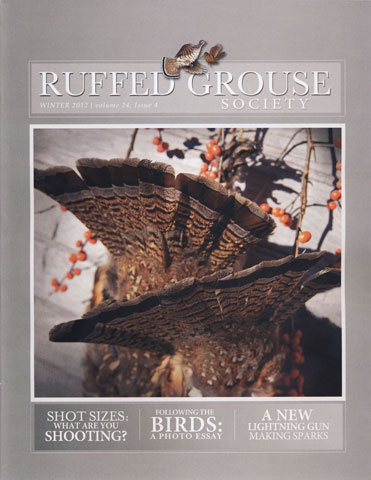
This article originally appeared in the Fall 2012 edition of Ruffed Grouse Society.
Nebraska Bird Hunters get Great News
According to Brian McClintock at www.gohuntn.com, Nebraska bird hunters received some great news about the pheasant and quail populations in their fair state. A survey sponsored by the Nebraska Game and Parks Commission reports a 2 percent increase in the ring-necked pheasant population. While that number is refreshing, the real story is in the 175 percent increase in the bobwhite quail population.
Harsh weather patterns during the past few years are the main reason that pheasant and quail populations have declined. While wet springs were partially to blame, the main culprit was the harsh winter in 2009 that devastated both species of birds, particularly the bobwhite quail that favor a more temperate climate.
Jeff Lusk, the Program Manager for Upland Game with the Nebraska Game and Parks cautions against misleading interpretations. The dramatic comeback in both species is in comparison to atypically low populations. That said, any increase in gamebird populations is welcome news and is a foundation on which to build.
Skeet Shooter Sets Olympic records, sponsored by Safari Club International
According to USA Shooting, Kim Rhode’s gold medal in women’s skeet shooting was one of the biggest days in Olympic shooting history. In winning the gold, Rhode became the first American to take an individual-sport medal in five consecutive Olympics. She also tied the world record and set an Olympic record with an impressive total of 99 points.
Rhode is no stranger to Olympic competitions. She collected two gold medals in the Women’s Double Trap event in 1996 and 2004 and a bronze in 2000. She also took silver in Women’s Skeet in 2008. With the addition of her 2012 gold in Women’s Skeet, Rhode is now the most decorated shotgun shooter in history.
According to Rhode’s comments on the official Olympics website, ” I do not see myself quitting any time soon. I’m looking forward to 2016 and a few more after that. The oldest Olympic medalist was a shooter and he was 72, so I still have a few more in me.” Rhode shoots between 500 and 1,000 shells per day and figures that she has fired two million rounds in her life.
Teammate Corey Cogdell did not receive a medal in the London Olympics, but she did receive death threats. Anti-hunters responded to the grip-and-grin images she posted to her website. Anti-hunters became outraged over her images posed with big game animals that she shot, and they voiced their threatening opinions via a number of social media sites. Cogdell was unflappable and responded appropriately. She also receive an outpouring of support from hunters, so much so that she trended as a top Twitter pick.
John Whipple, President of Safari Club International, is a proud sponsor of Rhode and Cogdell and oculdn’t be more pleased. “We could not be happier than to have these two Olympians as representatives of Safari Club International. Their ability to promote the organization’s advocacy and hunting heritage programs to millions of people worldwide is truly a gift for Safari Club International.
Men’s teammate Vincent Hancock made some noise of his own by becoming the first Olympic shooter to win consecutive gold medals in Men’s Skeet. His record-setting performance eclipsed the records that he set in 2008 in Beijing.
In his real life ,Hancock is a soldier in the U.S. Army marksmanship Unit stationed in Eatonton, GA. “This is what I love to do every single day,” Hancock said. “I wanted to come out here and win another gold medal and just keep going – win as many gold medals as possible.” Hancock will soon leave the Army and plans to open a shooting school with his father. Their focus will be on teaching kids to shoot.
The Rumor Mill Grinds to a Halt
Thanks to technology, rumors circulate faster than ever. Thanks to technology, too, rumors are clarified faster than ever. Information reported by the National Shooting Sports Foundation allows firearm owners to breathe a sigh of relief when they hear George Soros’ name as well as Senate Bill 2099.
Anti-gun financier George Soros was listed as having the controlling interest in the Freedom Group. Freedom Group owns a wide variety of firearms and shooting sports companies such as Remington, Bushmaster, Marlin and others. The thought that an anti-gun proponent owned those marquee companies was revealed as false information. Soros is neither connected to Freedom Group nor is he connected to Cerberus Capital Management, the firm that owns Freedom Group. Instead, the company is a privately owned corporation run by sportsmen, shooters and firearm enthusiasts.
Senate Bill 2099 was reported to require gun owners to list their firearms on their tax documents…and pay upwards of $50.00 per gun owned. This rumor, believed to have started back in 2009, has recently been disproved.
Tables Turned on Humane Society
Reported by Jim Matthews, Daily News, Los Angeles: The Humane Society of the United States (HSUS), an organization that does next to nothing for animal shelters but sues, badgers, and lobbies politicians and businesses into adopting its radical animals rights agenda, is getting a taste of its own medicine.
In a little-reported ruling by a judge in the District of Columbia, the HSUS is facing allegations under RICO statues on racketeering, obstructions of justice, malicious prosecution, and other claims for a lawsuit it brought and lost against Ringling Brothers Circus’ parent company Feld Entertainment, Inc.
After winning the case alleging mistreatment of elephants in its circuses brought by Friends of Animals (later merged into HSUS), the American Society for the Prevention of Cruelty to Animals )ASPCA) and the Animal Welfare Institute (AWI), lawyers at Feld filed a counter-suit with a litany of claims ranging from bribery to money laundering to racketeering. The attorneys for the animal rights groups asked the judge to dismiss all of the claims, but most survived.
District Judge Emmet G. Sullivan did dismiss allegations of mail and wire fraud, but he did so only because Feld didn’t have standing to file this charge. His ruling all but set the stage for a class action RICO lawsuit against HSUS for misrepresenting itself in its fundraising campaigns across the nation. This lawsuit easily could bankrupt HSUS, put it out of business, and send some of its top executives to prison.
For the first time, a group has fought back against the animal rights and environmental extremists who have been setting policy in this country for the past 20 years or more. Now, instead of getting rich off their lawsuits and fundraising schemes that misrepresent their efforts and accomplishments, they could be driven out of business. These groups have cost the farming and ranching industry jobs and raised the price of products we buy every day. They are behind the efforts to ban sport hunting across the nation. They have forced state wildlife and fishery agencies to waste countless millions of dollars on lawsuits and have spearheaded policies and legislation like the Marine Life Protection Act (MLPA), which has ruined livelihoods in recreational and commercial fishing without helping marine resources.
These groups operate with surly arrogance and believe they are above the law. Thankfully, that is not the case. Stay tuned.
Hunter Numbers Up 9 Percent Between 2006 and 2011
The number of hunters age 16 and older in the United States increased 9 percent between 2006 and 2011, reversing a previous downward trend, a preliminary report from the U.S. Fish and Wildlife Service (USFWS) and Department of the Interior shows.
Preliminary figures show an increase from 12.5 million hunters in 2006 to 13.7 million in 2011. Final data will be included the upcoming USFWS 2011 National Survey Report. USFWS has conducted a national survey every five years since 1955, with the last being the 2006 National Survey, released in 2007.
“This increase in hunters mirrors what our members are telling us – strong sales to an expanding consumer base,” said Steve Sanetti, president of the National Shooting Sports Foundation, the trade association for the firearms, ammunition, hunting, and shooting sports industry. “There is increased interest in firearm ownership – from customers new to the market to existing customers looking for the newest products. Purchases are being made for the enjoyment of recreational target shooting sports – such as sporting clays, IDPA and 3-gun competitions – as well as for personal protection, and, as these figures show us, for hunting.”
The preliminary report also shows that hunters pent an average of 21 days pursuing wild game in 2011. Additionally, the report shows that hunters spent $34 billion on trips, firearms and equipment, licenses, and other items to support their hunting activities in 2011.
The national survey is pad for by sportsmen through the use of Pittman-Robertson Federal Aid dollars. This year is significant as it is the 75th anniversary of the Pittman-Robertson Federal Aid in Wildlife Restoration Act.
This article orignally appeared in the Winter 2012 Flushes & Noteworthy Points column of The Upland Almanac.
Of all the activities I do in the outdoors, be it dog training, shooting, trout fishing, turkey hunting, waterfowling, striper fishing, horseback riding, or anything else, grouse and woodcock hunting ranks first. I count down every day until the season begins like a kid counts down days until summer vacation. I anticipate opening days, and cannot wait to get into the field.
Still, every year around the third week in October I begin to get mixed emotions about pursuing my favorite game birds in my coverts. Around that time I experience a profound change that slows me down. I don’t spring out of bed in the pre-dawn darkness. I walk through the alders and white birch runs more leisurely. Sometimes I take a break and just stop and sit a while.
At about that time my dogs wonder just what the heck is wrong with me. When I pull out a collar with a bell they claw at their kennel doors like caged lions, and to them my lack-luster condition is unbecoming. It’s really a simple thing that is my cross to bear: I’m sad.
I’m sad because I know that the end of the season is near. Think about it. A 45-day woodcock season is about 12% of the year. That means I have another 88% to go until opening day. To me that’s a long time. Don’t get me wrong, I totally enjoy my other sporting activities and the folks I share them with. But compared to grouse and woodcock hunting which occupies my top slot, the rest are sort of a consolation prize. I still enjoy an ice cream sundae even though I really want a piece of double-chocolate cake.
Initially I thought that I would follow the woodcock flights and hunt them along their southern route. For a while I hunted grouse in the winter but then decided they were having a hard enough time finding food in the snowy uplands. Upon closer reflection I felt that I had harassed the birds enough during October and November and that I would leave them alone. Instead, I’d pursue a species native to my home hunting grounds in coastal Massachusetts, the bobwhite quail.
Trading my beloved alder runs and poplar stands is something that is not done very easily. When we get used to bull briars, raspberry thickets, and thick cover with narrow shooting windows we can sometimes get lost in the wide open fields and the softness found in wiregrass, lovegrass, and broom sedge. Pines like loblollys, slash, and longleaf grow tall and majestically.
Most dyed-in-the-wool grouse and woodcock hunters need a few flights to adjust to the open space. At least I do. A snap shot in thick covert on a grouse contrasts sharply with the openness of the quail terrain. At first blush I count them all as gimmees. After a few easy misses I sharpen my focus and bear down to give the dogs a few feathers in their mouths.
I stumbled upon Southern quail hunting naturally. My Tennessee-born and North Carolina-raised wife has a family large enough to fill 15 long tables at an after-church bar-be-que. At the last gathering the count was about 100. Visiting family always made for a few easy sorties to the quail fields, and most of her family helped with introductions to landowners.
In recent history, populations of wild bobwhites have been impacted like many other of our favorite game birds. Southern quail hunting is an incredibly strong tradition no different than Northern ruffed grouse hunting. Long-time quail hunters remember the days that Robert Ruark chronicled in The Old Man and the Boy. Ruark believed that hunting bobs between Christmas and New Year’s was the ideal time. “By this time the birds are steadied down and the dogs have had a lot of practice and they’ve steadied down, too.”
When his New England uplands and lowlands were frozen solid, Corey Ford headed to North Carolina, and he gave pause to running his grouse dogs on quail. “Take a northern-trained setter out of his native alder coverts and put him down in a southern environment of sand and sedge and honeysuckle tangle, I wondered what would happen?” So, too was the fact that most grouse hunters run one dog at a time while quail dogs are run as a pack. Add to the mix the lack of bells on a Southern dog and you’ve got some more differences. Ford goes on to talk about a dog’s thick, winter coat being a handicap with the heat, and combined with pulling a wad of hitchhikers from a long-haired setter you’ll know why pointers are so well received.
My easy acceptance of hunting quail in the winter was unique to me, but it wasn’t new to the world. The Red Hills region in South Georgia and North Florida has attracted New Englanders and Midwesterners for over a century. I wasn’t creating a new movement by any stretch of the imagination. Instead, I was just falling into line with the great ideas that were set forth ahead of me.
I no longer get sad in the third week of October. As I’ve had a goal of hunting grouse and woodcock in all of their reaches, I’ve now added a goal of hunting bobwhites in all of their native lands. Their terrain is expansive and the environments diverse. For now I’ll focus on Virginia, North and South Carolina, Georgia, and Florida. Once I get a flavor for those areas I’ll gradually head further west. Nowadays I look forward to the winter. And my wait until grouse and woodcock season reopens at home is far shorter because of it.
This article originally appeared in the Winter 2012 edition of Ruffed Grouse Society.