
I have an unparalleled view from my captain’s chair high up on the quail buggy, but I am captivated by the long skeins of Spanish moss draping from a century-old live oak. The combination of a delicate, flowering plant and strapping tree is profound, and when a gust of warm, humid wind blows I’m reminded of a weeping willow in my yard back home.
In the past, Spanish moss was used for insulation, mattress stuffing and voodoo dolls, but now the Tennessee walking horses nick their heads and graze on it as if they were thoroughbreds nibbling bluegrass in Kentucky. Here, however, their worn McClellan-style saddles carry bird hunters instead of jockeys…
Pull out a sack full of ham and cheese sandwiches during a fishing trip on a boat and everyone wants one. Pull out a bunch of bananas on that same vessel and you’ll be lucky if you don’t get pitched overboard.

When I was a kid, it was easy to learn to hunt and fish. I had a constant supply of adult mentors who showed young kids like me the ropes, rarely bothered by the mistakes we made as we tagged along.
Once we learned our lessons, we had a tremendous amount of freedom to explore. Fishing was by far the easiest to practice. We’d dig worms in the backyard, grab some lures and a fly rod and be gone for the day.
Hunting was more complicated but not by much. We’d log some time at a shooting range under adult supervision. When we proved that we had mastered gun safety, we’d carry unloaded weapons through the woods with our mentors. After that, we’d get a handful of bullets or shells and shoot when appropriate.
The icing on the cake came when we were awarded the opportunity to hunt on our own. We’d buy a license, grab a 20-gauge and a pocketful of shells, bell a bird dog and head out into the woods.
While we live in a different world today, may folks still have an interest in learning to fish and hunt. To satisfy the demand, a number of fishing and shooting schools are flourishing throughout the country. They’re open to anyone with an interest, and they’re owned and operated by some of the biggest and best names in the outdoor industry…
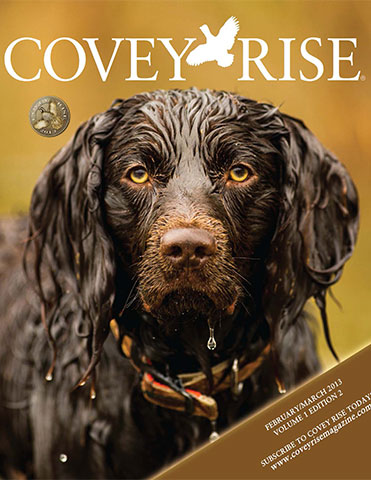
My heart skipped a beat when my wife told me she loved Albert. He was a young, muscular, good-looking tricolor setter of North Carolina quail stock, part of the field-dog rotation at The Webb Farm. Bill Webb owned him, Wade Meacham trained him and Kenny Rabb hunted him. One day, Albert tore a ligament, and despite surgery he would never get back to the rigorous hunting schedule required of him at the farm.
Bill knew the setter still had a lot more bird-chasing years in him. If Albert were worked out regularly and hunted for shorter periods of time, he’d be just fine. And so it came to be during our annual winter hunt at The Webb Farm. Bill could think of no better fit for Albert since we work our dogs regularly and each of our coverts takes about an hour to hunt. We were shoeins for the Adopt Albert program, and everyone wanted the dog to find a home in our kennel – except for me.
How do you take a big running dog whelped on fields full of wiregrass, lovegrass, milo and bicolor lespedeza and get him to like the tight, harsh New England coverts? The term “exercise in futility” came to mind, and I was concerned that I could take the dog out of the South but that I wouldn’t be able to take the South out of the dog.
Any protest I may have had was over by the time my daughter met Albert. She liked the tan and black patches around his eyes, and she smiled when he flopped into her lap. I folded like a house of cards, and we picked up Albert on an 85-degree, Carolina-blue spring day. Love was in the air.
The dog adjusted just fine to his new life above the Mason-Dixon Line. I ran him in the woods, we did casting two-a-days to shorten his range and he showed a lot of promise. He was a smart, experienced, well-trained gun dog, and it helped that our summers reminded him of his days on the piedmont. Albert proved that you can teach an old dog new tricks.
There was just one hitch. As horses balk at jumping fences, field dogs usually reject thick cover. Unless it’s in their blood, hat dog – or for that matter, what hunter – would trade the softness of wheat, milo, and barley fields for the impenetrable white birch runs, the stabbing Hawthorne tines, the shrouds of bull briars, and the snarling tangles of raspberry vines? Dogs usually don’t volunteer to run through that kind of mess, and Albert was no exception.
Anything done in moderation shows a lack of interest, so I tried a mentorship program. I ran Albert with one of my cover dogs, which made about as much sense as socks on a rooster. I had one dog in the cover and one dog in the field, and I was in the middle. If you’re wondering about that patch of gray hair on my head, it blossomed on that day.
I like to build on successes, and Albert’s came slowly. His first win came in the Ed Gray covert. The covert was one of Ed’s favorites, and it is a delightful old farm with a hillside slope that was chock-a-block with apples, high-bush cranberries and haws so thick you could barely see daylight on the other side. A river runs through the bottom, and alder and white birch are everywhere. On a good day, you could shoot grouse on your way down to the bottom, and on a great day you’d find a few woodcock. A tremendous field separated the two sections, and that was where Albert flash-pointed his first grouse. Later on I shot a pair of timberdoodles over his points, and my friend Cabe shot a few woodcock over Albert in the King’s Covert, too. But when we were slow to find birds, Albert headed straight for the nearest field.
Albert didn’t much care to get shredded and stabbed by the bush and briars. When it’s hot and the birds are tucked away in the shade and the moisture of the thickest of thick coverts, you’ve got to have the patience of Job to work your way through. At the end of a season, my double-faced chaps are shredded and I’ve got scars on my face and wrists, but my scrapes pale in comparison to a dog on the ground. Albert wanted no part of the jungle, and the only way I could get him into the coverts was to show him a benefit. That magic arrived when the woodcock flights were heavy.
I looked forward to the full moon at the end October. The temperatures would be lower, and a killing frost would open up the woods. The heavy west-northwest winds would knock down the leaves from the trees, and there would be more chalk on the ground than on a teacher’s blackboard. I decided to put him in Freight Train, my best covert, and hoped that a flight of woodcock had dropped in for a visit.
Albert was cranked and ran over the first few before he settled down and got to work. It helped that the woodcock were spread perfectly throughout the covert. His casting tightened up to a 30- to 35-yard range on the whistle, he figured out the difference between ground and body scent and he found the birds where they always are – right in the thickness. Repetition makes the master, and after 24 birds in under an hour, Albert was well on his way to becoming a New England cover dog.
Birds make a bird dog, and for the rest of the season old Albert ran as good as my other setters, Ocracoke and Rowdy. Sometimes he ranges a little too far, and when he does he stands back off the bird a ways to let me catch up. When I get done zigzagging through the woods, he’ll reposition closer toward the bird; when I find a space open enough to take a shot, he’ll lock right up. Albert has added grouse and woodcock to his repertoire, but he’ll forever be a Southern gentleman, just the way we love him.
FISH PATTERNING IS a modern term for a very old methodology. It is a reasonable, deliberate and highly effective way of fishing. It depends on understanding the dynamic relationship between predator and prey in their environment. The phrase describes the essential survival approach to fishing that enabled commercial and professional fisherman to succeed in their day-to-day quest for a good catch that would ensure their livelihood.
Patterning fish behavior is similar to hunting. With all methods of hunting, you must study your quarry to understand their behavior. Many modern sport anglers simply arrive at a familiar spot and hope to catch fish. Their fishing strategy is limited to chance occurrence. Anglers who fish that way are dependent on happenstance alone rather than observed, fact-based knowledge. Fish, like all successful predators, base their feeding routines on the habits of their prey. Fish do not starve to death because of poor luck. They have an intimate knowledge of how to find food. Like these fish, the best fishermen are familiar with their quarry’s routines and use this knowledge to form strategies that enhance their chance of success. Learning how fish find bait in their environment is fundamental to becoming a consistently successful angler.
Develop a Plan
The fast lane to learning how to pattern fish is to study the flats. Flats have finite borders that are filled with classic structures like bars and channels, coves and points, rips, basins, and various bottom types (mud, sand, cobble and grass). And fish are restricted in their ability to move. They are subject to the boundaries of the environment. Flats are first and foremost laboratories for observing fish behavior. The first task is to develop a plan or a strategy that you can use to find fish. Simplicity is the order of the day. Start by heading to a flat at slack low tide so you can study its structure. Fish move along structure lines, and it is critical to note where the bars drop into channels, where one bar ends and another begins, where there are grass beds and where there is higher ground. The bait will follow those edges when the tide floods, and larger fish will follow the bait.
Then start at the shallowest edge that you can get to and move along, and head into the current, parallel to the flow. This will do several things for you in short order. It will eliminate water that is not holding fish in a matter of minutes. Using a depth line as a guide and following it allows you to observe and quantify the life on the flat. This is the most important skill you can master. If you cover an edge thoroughly and find no baitfish, move to a slightly deeper edge. You should spend at least 45 minutes to an hour scouting out the depth line before wetting a line. Resist the urge to cast, even if you see fish. After several passes, you will begin to notice the baitfish moving along an edge, and you will see their relationship to the water’s surface or the bottom. You’ll see how they move along the edges of current seams created by bottom structure and moving water. You’ll notice their depth and whether they are high in the water column (closer to the surface), low in the water column (closer to the bottom) or somewhere in between.
As you move along the depth line, you will come upon shallow bars and edges that focus the current, consolidating the bait into dense schools. These schools will pause and gather together to move over a bar or through a small rip as they move into the current. Observing the patterns of how individual schools of baitfish move is significant; this determines how the predators locate bait in order to feed easily. The patterns of bait change daily, depending on water temperature, light levels, wind velocity and wind direction. Once you locate the bait and register their patterns, it is natural to look up-current and notice where the water flow provides an easy place for predators to ambush them. Use your GPS to mark spots, or do it the old-fashioned way and take ranges (line up two vertical landmarks, one behind the other, like in a rifle sight, such as a house chimney in the back and a flagpole in front of it). Once you have identified the baitfish’s patterns, repeat the same steps, with the focus turned toward predators. Return to the shallowest water you can get into, and this time move quickly along the edges and start looking for your quarry. Move along an edge until you have eliminated it, and then move incrementally into deeper water until you find the depth that the fish are moving in. The difference between your shallow-depth runs and your deeper-water runs will probably be only a matter of inches. Note the depth in which you find fish, for they will stay at that depth as the tide rises. That means if you find them at 21/4 feet, they will constantly move in a depth of 21/4 feet, regardless of their physical location on the flat as the tide rises. If the depths are uneven, then the fish will reposition to move at a depth of 21;4 feet. They will mill at a bar and only pass over it when the water rises to their preferred depth of 21/4 feet for that day. They may go around the bar rather than wait, but that type of movement is not hard to notice. Once they go over the bar, they will continue to move at their preferred depth and search out baitfish as they go along. This depth orientation is one of the most amazingly consistent patterns fish display on flats and an important one for you to know.
Here’s the tough part: To learn how to pattern fish, you’ll need to leave fish in order to find fish. Now is the time to see if the pattern you observed is correct. If you find fish on the southeast corner of a point bar at 2 1/4 feet, go to the next southeast corner of a point bar at 2 l/4 feet and see if they are there. They probably will be. As the tide rises, the bait and the bass will also move up the bar in that 2 1/4-foot zone. They will follow the structure line until it ends. Then they will use a current line to bridge their move to an adjoining structure, always maintaining the same amount of water over their head. Leapfrog your way across the flat, and observe as you go.
Pay Attention to Subtleties
If you have a pattern that is producing consistently and you find a similar structure or current that does not produce fish, do not assume that the pattern has changed. So why is this area barren of fish? Try to discern a difference. You’ll likely notice something, like the current has changed or your pattern was for offshore bars and this one is an onshore bar. Perhaps there is a point bar forming an uptide rip current that pushes the flow into deeper water. Remember that bar, because it may fit into a different pattern that you learn about later on. While that bar did not contain fish on the flood tide, it may be an escape route for the fish once the tide ebbs.
Now you can make your first cast. Because you patterned the fish, you can station your boat or yourself so that you can catch them consistently. You’ll know where they are coming from and where they are moving to. You can deliberately position yourself above them to make a proper presentation. You will not spook them because you are waiting for them, not chasing them.
By patterning fish, you will notice the different mannerisms of fish. You will become aware of whether fish are positive, neutral or negative. Positive fish are easy to catch. Negative fish are spooky fish, jittered by even a sea-gull shadow. Neutral fish are inquisitive and can be caught if you make them interested enough to strike. Hunger governs positive fish, wariness governs negative fish, and indifference governs neutral fish. Positive and neutral fish can be caught through patterning. Negative fish can be caught if you use patterning to intercept them with stealth.
When the tide drops, the direction of the current reverses, and fish will slowly drop back off the flat, always facing into the current. They will move off the flat at the same depth in which they came onto the flat. To learn to pattern fish, you must get rid of your preconceptions. Just go to the water and observe. Avoid routines. If you return to the same spots you always fish, you won’t broaden your skill set. Instead, notice the current, examine the wind, and note how the two interact. Watch how the current and the wind move on structure and form edges and pathways for fish. Look for those edges, and look for bait. If you incorporate observations like these into your fishing, you’ll be able to read water and understand the structure of every flat you encounter.
Fishing is much more than just catching fish. If it were passive, then we might as well go and watch a spectator sport. Sometimes when we go fishing, we spend the entire day and make only a handful of casts. Our day is spent studying the baitfish, the environment and then the fish to see how they interact. When we do make a cast, we hook the fish deliberately. As you spend time patterning fish, test out all hunches, no matter how irrational they seem. If you are wrong about a current or a location today, you may find that it is useful tomorrow. When you are right, log the pattern. You’ll quickly become a savvy angler.
Current Events
When the water begins to move, study the current to see which direction it is going. The fish will move into the current. Note if the current is moving to the left or to the right. Observe how the wind interacts with the current. An onshore wind will push the current and the fish closer to the structure, while an offshore wind will push the current and the fish farther out. A wind that blows into the current slows it down, and a wind that moves with the current increases its speed. If the wind is faster than the current, it will form a surface current that predatory species might move into. Notice what speed of current the fish prefer. See if they favor the hard currents around the end of a point bar or if they prefer the softer current in the middle of a shoal. Look for edges where currents meet and join or where they separate and split. Cardinal points are critical; use these compass directions to note how fish approach bars and which side of the humps they use to move into the current. These behaviors may seem random, but they are patterns that are predictable and consistent.
This article originally appeared in the September/October 2012 issue of Fly Fishing in Salt Waters.