Conservation & Legacy
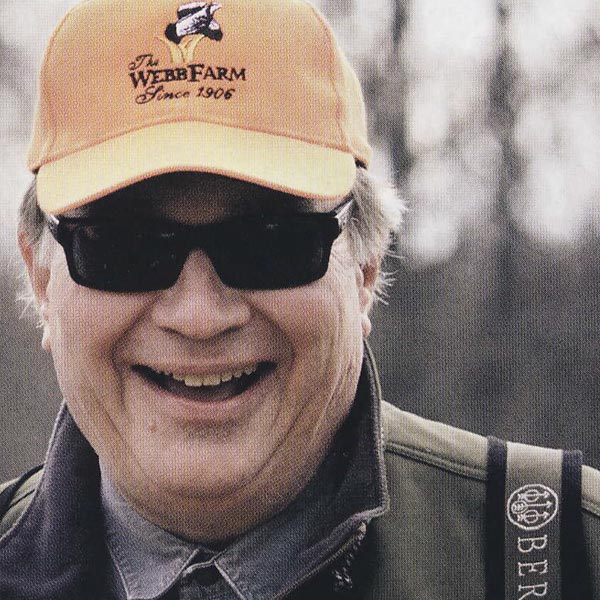
In the sun-drenched days of my youth, I had to prove that I was a safe and responsible hunter before my parents would let me hunt alone. But once I earned their trust, I would grab a 20 gauge from the gun rack, fill a pocket with shells, and call our Irish setter.
Earning their respect took some effort, but finding a place to hunt was a matter of walking out the door. I had worked a deal with a neighboring farmer, and in exchange for bailing hay in the August heat he granted me access to his property. This arrangement allowed me to spend many afternoons chasing pheasant, grouse, and woodcock.
As time passed and I grew old enough to drive, my reach expanded to other farms. I worked a variety of deals with several farmers-one wanted fish filets in the spring, another demanded a few birds in the fall, and others would call if they needed a hand with random tasks. Those deals, negotiated with men who were looking for creative ways to help a kid who was willing to work, led to some of the best days of my life.
Sadly, the hunting grounds of my youth exist primarily in memory-most of it has been developed. One farm is now a subdivision, another a cemetery, and a third is home to a shopping mall. If conservation easements had existed in those days, perhaps those lands could have been preserved.
Conservation easements create a perfect blend of public preservation and private ownership with agreements that are quite a bit more formal than swapping hunting rights for bailing hay. At their core, easements protect land from certain types of development. The protection of the resource-be it wildlife, clean water, or open space-is accomplished when a landowner relinquishes development rights in exchange for permanent preservation and a significant reduction in state and federal taxes.
Once a conservation easement is enacted, it becomes part of the chain of title and is passed along when the property is sold or willed to someone else.
Read more by clicking on the image above.
Sporting Travel
A FEW YEARS AGO, MY WIFE surprised me with a copy of Partridge Shortenin’, by Gorham “Grampa Grouse” Cross. In 1949, Grampa Grouse printed
only 100 copies for his friends, thereby making an original copy about as scarce as hen’s teeth. Two subsequent printings have added 600 additional copies to the
sporting world for a grand tally of 700 editions. Thanks to my wife, I have one of them in my collection.
I was in awe of the outstanding shooting chronicled in the chapter “All Full at Noon,” which tells the story of three men shooting a limit of four grouse each by noon. Cross estimates that about 10 percent of flushed birds are killed, so at that rate it means for every bird killed he saw ten more, for every limit reached he saw 40 birds, and for a three-man limit their shooting party caught at least
a fleeting glimpse 120. Today, any grouse hunter who sees 20 birds in a day has hit a magical benchmark. The same is true of bobwhite quail down South, trout in the Rockies, waterfowl in the Central Flyway, and so on. These days, it seems that finding game takes far more time than actually hunting it.
The lack of quality hunting or fishing opportunities is a leading factor in why die-hard sportsmen take matters into their own hands. Whether purchasing a 25-acre farm or a 250,000-acre ranch, the ultimate goal is to capture their own little slice of heaven-and perhaps re-create an experience that resembles Gorham Cross’s.
Read more by clicking on the image above…
Sporting Travel
At High Lonesome Ranch, after a few busy days of gunning birds and catching trout, you’ll probably need a vacation from your vacation.
Dinner at the High Lonesome Ranch in Debeque, Colorado, is typically served following a brief wine-tasting. Lucky for me, I arrived at the ranch just when a selection of cabernets, red zinfandels and merlots were being poured, each produced and bottled from one of the 18 Grand Junction-area vineyards.
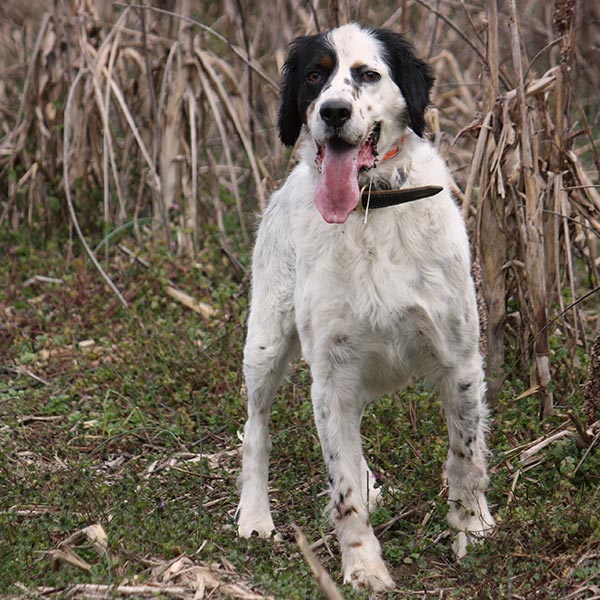
While savoring a vintage wine, I learned that two men from a group of Texans had opted to hunt some fields of wheat, sudan grass and milo, where they gunned a mixed bag of pheasants, chukars and Huns, along with scaled and Gambel’s quail. Midway through a milo field one of the ranch’s pointers locked up, and as the hunters moved into position, three pheasants and a single quail flushed at the same time. A pheasant/quail double doesn’t happen all that often.
Their companions, meanwhile, headed to more rugged terrain covered in scraggly sagebrush where they pursued native sage grouse. But before the dogs found any grouse, they pointed two coveys of chukars and two of the gunners doubled on the hard-flying birds.
The stories continued when we sat down for dinner prepared by Chef Jordan Asher. He was an up-and coming chef in Houston when he decided to scrap big city life for the opportunity to refine the ranch’s culinary program. Asher favors locally grown ingredients, many of which are harvested from the ranch’sVictoryGarden. From wood-fired, cowboy ribeyes with red chili steak butter, to oak-roasted pheasant breast with habanero-peach chutney, Asher’s presentations are extraordinary.
I had timed my visit in October so I could run a full day of both hunting and fishing. Hunting season at the ranch runs from September 1-March 31, and the fishing is good through the end of November. The western slope of Colorado doesn’t get nearly as much snow as the rest of the state and December through February is a perfect time if you don’t get enough bird hunting during your local season.
My second choice would have been September. Afternoon temperatures can be quite warm, so the guides run their hunts in the morning and take clients fishing in the afternoon. The cooler morning temperatures make for better scenting conditions and the dogs don’t overheat. After lunch, an afternoon breeze typically shakes hoppers from the hay and grass into the water. There are so many hoppers that after a strong gust of wind the fish will start rising aggressively.
The Texans had filled up both the Guest House and Pond House, so I stayed in a cabin at the upper end of Dry Fork Valley. On my drive up the mesa I could see the cabin tucked into the mountainside where it overlooked three big ponds. With a trout pond in my front yard and a bull elk bugling in back, falling asleep was becoming increasingly difficult.
My wake-up call came in the form of high-pitched yelps from a flock of Merriam’s turkeys, and it wasn’t long before the sun’s yellow and purple hues washed over the valley. From the living room I could see a few trout rising, and despite my lack of sleep, I was tempted to sneak in a few casts before heading down to breakfast.
I made a strong pot of coffee, then sat back to survey my digs. The ranch staff refers to the authentic log cabin as the Homestead House, which I assumed was in honor of the original settlers. I doubt they had a three-bed/three-bath cabin with a full kitchen, dining room and living room, but I’m sure they enjoyed the stellar views of the valley and the mountains embracing it.
I finished my coffee and headed down a graded dirt road through a series of smaller valleys. Scattered throughout the nearly 300-square-mile ranch are wild horses, elk, mule deer and untold numbers of gamebirds. A woman named Marty Felix is the Jane Goodall of wild mustangs that still survive in the Book Cliff mountains. Her search for the horses – buckskins, paints and duns – began in 1969, and she didn’t find them until 1973.
The normally ten-minute ride to the ranch headquarters took me nearly a half-hour, mostly because I kept stopping to gaze at either the breathtaking scenery or the wildlife. At one point I watched a pair of bald eagles riding the air currents above the mountaintops. Then, rounding a sharp curve I came upon several brightly colored pheasants busily pecking for gravel.
Finally, I pulled up in front of the second pioneer homestead, complete with a long porch, hitching post and tin roof. I wondered what Aunt Linda had in store for breakfast. The Louisiana native can whip up a Southern breakfast of biscuits and gravy just as easy as she can make French toast, blueberry pancakes, homemade muffins and pastries, all from scratch, of course. Top off the wonderful breakfast with a cup of High Lonesome’s special-blend coffee and you’ll be set until lunch.
If you love to shoot clays like I do, a quick warm-up is definitely in order before your hunt, and the 5-stand course at High Lonesome is possibly the prettiest I’ve seen. The clays ranged from high-incomers launched from the top of the ridge to crossing pairs that exploded from the sagebrush. It’s a great combination of technical and hunting shots, and odds are that once you’ve shot a round, you’ll want to do it again.
We continued on to the Quail and Pheasant Walk, which replicates a walk-up hunt. A report double that broke to my right made me want to get the dogs and head straight to the bird fields, but we still had to shoot the Flurry. This series of high overhead shots is launched from a hilltop trap. Between 20 and 60 clays per minute come off the hill, just like a driven pheasant hunt. By the time you’re done with the Flurry, you’ll be as sharp as you’re going to get.
After lunch I joined Brett Arnold of High Lonesome Ranch Kennels, who drove me to the Schoolhouse Cover, just a stone’s throw from the breakfast table. The field comes by its name honestly as it’s situated by the remains of an old school.
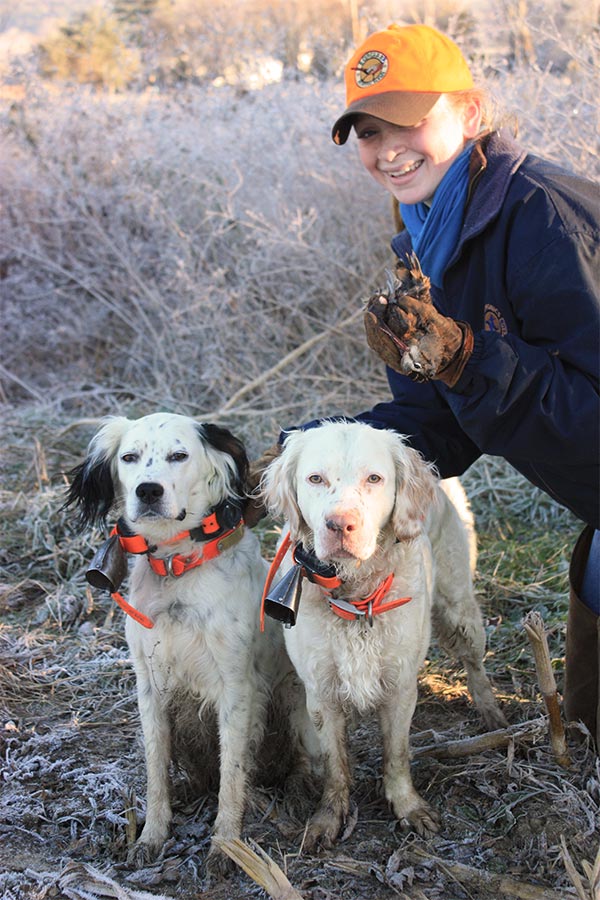
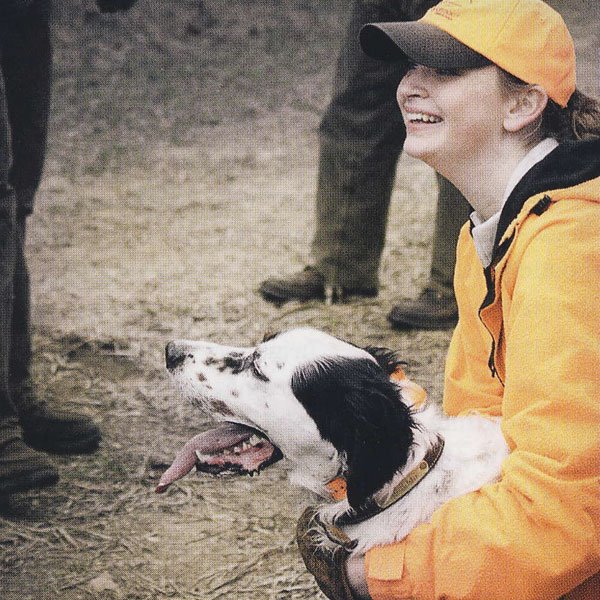
Brett began working a pair of pointers named Cool and Parker When a pointer gets a snootful of feathers and locks up, it’s always a pretty sight. When a second one backs, it’s picture perfect. The two gundogs did exactly that, time after time.
As we stepped in front of Cool, two chukars flushed. I swung on the first bird and dropped him with the snow-capped mountains as a backdrop. Brett released Cool and he fetched up the dead bird, then went on point with the chukar still in his mouth. Parker repositioned and backed, and as I walked forward a cock pheasant erupted and I took him going straight away. Cool dropped the chukar and fetched the ringneck. All was good with the world.
We hunted a wide variety of bird cover that day – grassy fields, oak and aspen stands, and creek bottoms. Some of the bottomlands were open, but much of our shooting was in tight cover. The fall colors were just starting to pop, and if you didn’t snap-shoot quickly, then you’d wind up cussin’.
After my hunt I went back to the cabin for a shower. There was a good brown rising under a willow tree overhanging the pond and I couldn’t resist throwing a Goddard Caddis his way. When he rose to the fly, I thought of a comment I’d read in the guest book. Sandy Moret, permit angler extraordinaire and owner of Florida Keys Outfitters in Islamorada, had written: “Over-fished and over-fed to perfection.”
At breakfast the next morning, I sat down with Buzz Cox, my fishing guide and manager of the K-T Ranch, and he suggested we try a few of the 18 ponds scattered throughout the ranch, each with a different feel, but all addictive. There were plenty of blow-downs, weedbeds and overhangs to challenge even the most experienced angler.
My favorite was an O-shaped pond cut in half by a dirt bank. In mornings and evenings trout would move out of the darker water and into the shallows adjacent to the bank. These fish, mostly rainbows but some browns, were big, and when they rolled I could see the sun flashing off their sides. For a moment I thought they were bonefish.
While we were rigging up, Buzz spotted a big rainbow cruising the bank. “I think that’s a two-footer,” he said. “That’s a nice fish,” I agreed. “Yeah, but look at the brown just underneath him!”
I could easily see the brown’s kipe, a good indication of an old fish. He had broad shoulders laced with bright
red spots that looked as big as silver dollars. It’s tough to guesstimate a fish’s size when it’s underwater, but this brown looked all of 28, maybe even 30 inches.
I tied on a small bead-head damselfly nymph, waited for the brown to get ahead of the rainbow, then dropped the fly about four feet ahead of him. But it was the rainbow who darted ahead, picked up the nymph and headed for a fallen pine. The water was so clear I could see his every move, which enabled me to keep him out of the branches. About the time he came to hand, the big brown started to feed.
On my third day I was scheduled to fish the White River, about an hour away in Meeker, where I’d be staying at the High Lonesome’s sister property, the K-T. Situated a few hundred yards from the river, the K-T is an 1880’s ranch house that can accommodate eight anglers. Some say fall is the best time to visit Meeker and to fish the White because dramatic temperature changes cause a thick mist to rise from the water. More than a century ago the Ute Indians called this misty stretch the “Smoking Earth River.”
Lots of seeps in the fields made for perfect haying and grazing, but it was too wet to get a truck through. Instead, Buzz and guide Ted Relihan pulled up in a 4-wheeler to zip me to the river. It would have been enough to start fishing the White, for there were rising trout in nearly every feeding lane. Instead, we violated the “never leave fish to find fish” rule and waded past them. We hiked through a cottonwood grove for about 20 minutes before arriving at a medium-sized spring creek, where big browns and rainbows were drifting in and out of the watercress. Trout in the spring creek were big and bold. I suppose they knew winter was approaching and they were rising all across the surface to feed. When the wind gusted, hoppers would drop into the river, drift downstream a bit, and the trout would rise to eat them. The water was so slow-moving the trout would create big wakes as they inhaled the insects.
With all eyes on one huge brown and the pressure on, I got lucky and floated a good-enough cast into range. The brown veered away when it landed, but quickly came back and hit the fly like a percussionist crashes a cymbal.
Hooking fish was easy on this spring creek, but landing them . . . well, that was a different matter. The brown made a snook-like beeline for the weeds. If he got in them, I’d probably have so much lettuce on my leader that either the hook would come out or I’d break him off. I pulled as hard as I dared on the 6-pound tippet and gradually steered him into deeper water. He thrashed wildly on the surface, then turned and ripped right at me. I stepped backward to keep the hook in his mouth, but then he darted toward the bank where I couldn’t see him.
Ted called out the next series of moves: “Rod to the left, less pressure, rod up, more pressure.” It was like driving while blind, but soon enough we got the 26-inch fish in the net.
I didn’t know how I could possibly upstage a fight that dramatic, so we returned to the main river. There, I worked the foam-lines along back-eddies fringing small pools. I drifted a Stimulator in the faster riffles, with the aspens along the edge and the mountains behind. Soon, maybe only a month from now, it would all be frozen and cold. The trout would still feed, but not aggressively.
For now, I’d savor the green hayfields and listen to the geese honking as they landed in the winter rye. I’d catch a few more fish and then get ready for another day of bird hunting. I’d probably need a vacation from my vacation, but getting over-fished and over-fed? Add hot upland hunting and you get perfection. Just as Sandy Moret said.
Fishing
Fall beach fishing is like a good short story you can’t put down. There is the rising action, the climax, the falling action and the end. Some times it’s fast, other times it’s measured, but at all times it’s a page-turner.
When fall actually starts depends on who you ask. My calendar tells me that fall begins on the Autumnal Equinox, the 22d of September. The significance of that day is that the day and the night photo periods are nearly identical in length. Yet for most, Labor Day triggers the beginning of fall. During this pivotal weekend, summer beach shacks get boarded up, Tevas get traded in for textbooks, and vacationers reluctantly return home. Seasonal hotels and restaurants respond by shortening their work week and their hours. It gets progressively harder to get a cup of coffee, but I take comfort in my quiet town without bumper-to-bumper traffic.
I am a fisherman and for me fall begins with the Striper Moon, the first full moon in September. It’s the first major push of the striped bass migration. Some front-runners trickle south sooner, but the first big body of bass moves on the Striper Moon. Some years it is early, some years it is late. Regardless, one thing is for sure: the biggest shore-caught bass of the year are landed around the Striper Moon. I used to think that there were three phases of fall: early, middle and late.
I used to think that the early phase was warm, the middle phase was cooler, and the late phase was the coldest. I no longer think that way because there are too many nuances to keep track of.
On some days the winds blows WSW. Winds from that direction are summer winds, warm and welcoming, a little Southern hospitality coming from far below the Mason-Dixon line. The cloud ceiling is high, and the eggshell-blue sky is dappled with puffy, white cotton balls. Sometimes when the winds shift around you’ll see mares tails splashed around the blue like a painter gone mad. On other days the wind blows WNW. Winds from that direction bring the Canadian chill. They’re the winds that move ducks and geese and woodcock down the Eastern Flyway, and they are the culprits that change the color of the sea from green to gray. On a few days, northerly winds make swells and flotsam clutters the beaches. I never know what the day will hold until it is upon me and I look out my window.
Somewhere in the middle of the ever changing winds is an oasis known many centuries ago in Europe as Saint Luke’s Summer. In our modern day we call it Indian Summer, the time in October when the fall feels like summer. History alleges that this two-week warm spell was the time when American Indians harvested the bulk of their crops. The first person to coin the phrase Indian Summer was a Frenchman writing in 1778 in rural New York named St. John de Crevecoeur. As I walk around the beaches once inhabited by Wampanoags, I wonder when the tribe marked the beginning of fall?
Fishing a beach in the fall is as much a part of fishing as catching a fish itself, I like how hazy, hot and humid becomes clear, cool and dry. I like the sand under my feet. I like the solace of the beach, my only companion being the birds. And I watch them; big flocks spread out for what seems like miles. I watch the terns repeatedly dive on small bait, the gulls shriek and pick up scraps, and the gannets plunge-dive 50 feet from the sky to grab a herring. When I learned that gannets have air sacks to cushion them from the impact with the surface I lost respect for them. I regained it when I considered that they swim with their long wings to catch a meal. They’re tough birds, even with air bags.
Fall on a beach means lots of bait that stages and gathers on the various moons. Silversides, sandeels, glass minnows, herring, peanut bunker, anchovies, mullet and butterfish pack up their bags and start heading south for the winter. Their cycle predicts good fishing. I follow the advice of anglers who came before me: “Fish the points on full and new moons, and fish coves on the quarters.” Bait stages in coves during half moons and moves on full moons. Bass and blues lie in wait to corral them against structure, on the surface, or wherever they can. Every living thing needs to store fat for the winter and the fish are no exception. Plus they need some gas for the long swim home.
A beach serves as a corridor for migratory fish, and so I love fishing the bars the best. My favorites are the offshore bars that run parallel to the beach. Offshore bars are not connected to land, and have hard-running currents blowing through on both sides. They are like small islands, with fish on both sides. Sometimes I find that the stretch between the beach and the bar is chock-a-block full of bass. Other times the fish are on the outside edge of the bar. Regardless, there is something wild about standing on a bar with water all around and the promise of big schools of stripers at my feet. On a calm day I’ll paddle a kayak out to the bar and get out and wade. On a rough day I’ll pass. Swimming back to shore in the fall isn’t too appealing.
I like onshore bars, but they are more civilized. Onshore bars connect with the beach and wading out is easy. They typically run at an angle based on the dominant current. I start to work my way out to the point an hour or two before low tide and keep going as far as I can. The fish may be up current from the bar, they may be at the point of the bar, or they may be down current from it. I never know until I fish them. Once the tide turns, I’ll work my way back toward shore. I’m comforted knowing that Land Ho isn’t faraway, but I always out longer than I should . . . just because.
Bull-nose bars are rounded and look like an upside-down letter U. I find them easy to fish, as they typically don’t go very far out into the ocean. Sometimes the fish hold in the lee, other times they feast on the windward side. I smile when I see the trough where the rounded edge of the bar connects with the beach. I always make my first cast onto the bar and let my fly sweep over the edge into the hole. I catch enough fish there to make it worth a cast, but I really like the sweep of the fly over the sand and into the deeper water. And when the fish are tight to the beach, I don’t have to cast much further than my feet.
I find it incredibly frustrating when a large school offish is a few hundred yards offshore. I feel stranded on my beach. I lose my mind when they are ten feet beyond my furthest cast. On those days the sparkling water or having the beach to myself isn’t much of a consolation prize. All that is left for me to do is wait for the wind to blow the fish closer or to look for washed up lobster buoys and nail them to a tree in my front yard.
With the bad comes the good, and some anglers are fortunate enough to encounter pelagic species on the beach in the fall. Anywhere the Gulf Stream pushes close to shore, fast fish like bonito, false albacore, bluefish and Spanish mackerel appear. When I see a school of blues or albies racing down a beach spraying silversides all around I feel like I’m in Vegas. And when I land a fish with my feet planted on terra firma, I feel like I hit the jackpot.
An oddity happened on a Massachusetts South Shore beach a few years ago when the water was warm and there were lots of school bluefin tuna around. A fellow was casting when he got a tug on his 1ine. A fish made a long-as in 300 yard or more-run down the beach, past rocks, kelp and mussel beds before it tired. After the fight he rolled the fish on its side, moved it into a cresting wave and walked backward up the beach. As he surfed it onto the sand, he saw a tuna laying at his feet. I’d have hoped it were an 80-pound bass on steroids.
In the fall it’s easy to get caught up in the action as the fishing heats up. And then suddenly, like the good short story it ends. The ice that formed overnight on my boat deck no longer melts in minutes after the sun clears the horizon, and the fish have moved on.