
Every Dog Has His Day, Sometimes Two

P arts of our country are a natural fit for game birds and bird dogs. Richmond County, North Carolina, is one of them. Robert Ruark, widely known for a career of outstanding writing including The Old Man and the Boy, worked as a newspaper stringer in the town of Hamlet. The nearby town of Hoffman is the home of the J. Robert Gordon Sandhills Field Trial Grounds, a 58,000 acre tract of longleaf pines, lovegrass, and a bobwhite quail course.

For decades, some of the most famous bird dogs have run the course, and many a young pup has come into his own here. Even New Englander Corey Ford headed to North Carolina in the winter when his grouse and woodcock coverts were frozen solid. Richmond County is more coastal plains than Piedmont which makes it to birds and bird dogs as George’s Bank is to fish and fishermen.

I had come to the town of Ellerbe to visit my wife’s family, which is big enough for me to wish that they all wore numbered jerseys and that I had a team roster. On this February trip we kept dinner to a short list of Uncle Herbert, Aunt Annette, and Pastor Wayne, another uncle. After dinner we headed across town to visit with our good friend Bill Webb, who was going to let us run our setters on his farm.
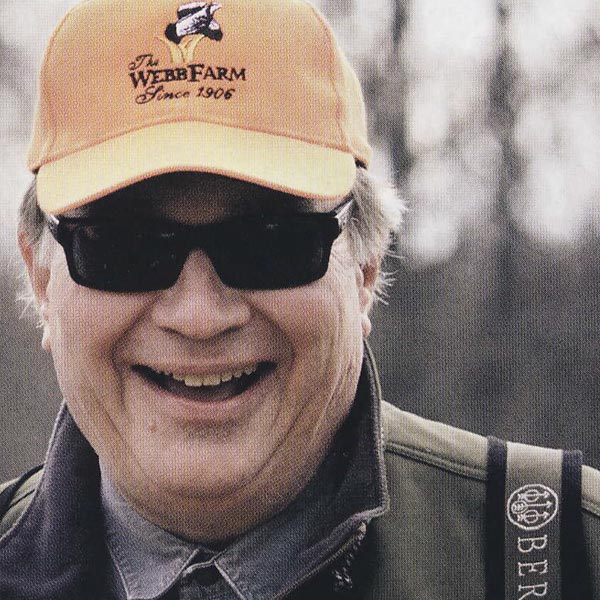
Bill Webb of The Webb Farm

The best way to describe Bill Webb is to borrow the description usually reserved for Mark Twain; ”known to everyone, liked by all.” He’s a lawyer by trade. A long time ago, Bill’s grandparents raised peaches, tobacco and a wide variety of crops that ranged from sweet potatoes to peanuts. Through traditional farming practices Bill has transformed the farm, and created a quail Valhalla in the process. There are coveys of wild birds scattered throughout the fields of Egyptian wheat, milo, wiregrass, broomsedge, Johnsongrass, and bicolor lespedeza. The Webb Farm is so perfect it causes the heart of even the most discriminating quail hunter to flutter.

At the Webb Farm there are dogs, lots of dogs. Most are muscular pointers but there are setters, too. Head guide and dog trainer Wade Meachum trains them all, and he comes by his love of bird dogs honestly. His father, in addition to being the pastor of the Methodist Church was a renowned bird dog man. That meant when Pastor Meachum stepped into the pulpit on Sunday mornings it was common for parishioners to hear a sermon liberally sprinkled with bird dog, quail, and gunning references.

When W.H. Auden said, “in times of joy, all of us wished we possessed a tail we could wag,” I am positive he was describing my wife perfectly when she met Albert, an English setter, during our visit. Albert was Bill’s stately five-year-old tricolor, and he could barely walk. A torn ligament in his front leg confined him to hobbling about in a knee-to-foot cast. It’s always a difficult decision of what to do when a working dog comes up lame, but in this case Albert was well cared for by Bill and Wade.

“It’s a good thing my wife doesn’t play poker because she’d lose every hand she was dealt. It was all over but the shouting when she laid eyes on old Albert. There are points in life that just stand out from all others, and this was one of them. Angela was smitten.”

That feeling is probably what prompted Bill to recommend that we bring Albert home to Massachusetts, and expose him to a softer, gentler life. Bill thought it might be good if Albert enjoyed the cool ocean breezes in the summer, and became part of a covert rotation for grouse in the uplands and for woodcock in the lowlands. We could return in the winter for bobwhite. Compared to the long days that he’d become accustomed to, Albert would be a dog of leisure.

I was flattered by Bill’s generosity. What a kind thing to offer, and it made some sense. Then I ran some quick numbers. Two female setters, two heat cycles each per year, three weeks at a clip and it all adds up to 12 weeks of madness. With a busy career and two kids in middle school the last thing I needed was to spend a Friday night apologizing to the neighbors for a dog barking non-stop. It’d be easier to breed our dogs with someone else’s male and forgo the stress and strain. Call me a stick in the mud, but I said no. We went on with the hunt and had a great time. And while nobody said boo about my decision, I could tell that there was a pall in the air.
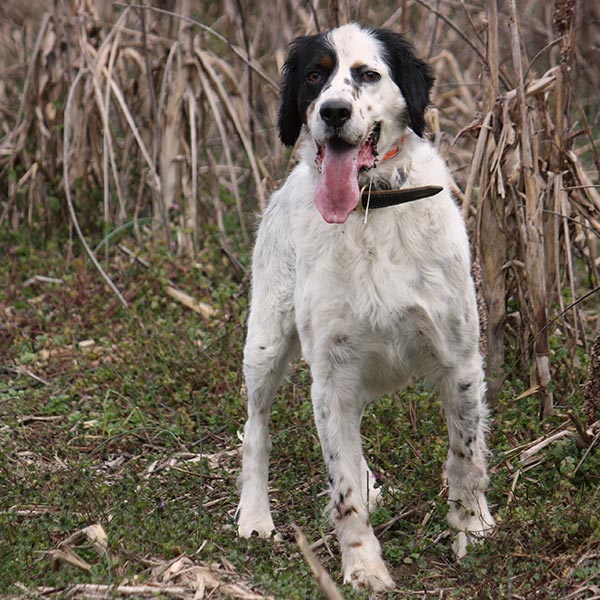
Bill Webb of The Webb Farm

A few months passed and Bill called with an update. The vet had given Albert a clean bill of health. His cast was removed and the new project for Bill and Wade was to rehabilitate old Albert. The setter was six years old now and, since he was hobbling, they started with short conditioning sessions which involved a lot of swimming in the ponds. Bringing him back was a slow project, but after being cooped up with a cast in the kennel Albert was a good student and happy to be liberated.

While Albert was rehabilitating in Ellerbe, North Carolina, there was a parallel change and development going on in our Massachusetts home. My daughter Morgan had taken quite a liking to bird hunting. Her interest piqued in the summer when I began working out the dogs for the upcoming season. Morgan was fourteen, a perfect time to get fully involved. She joined me in working them out three times a day, cooling them off in the ponds, and feeding and grooming them. Our dogs were seasoned veterans, and it was a good place for her to start learning.

In October we went to our New Hampshire grouse and woodcock coverts. Every weekend, Morgan was awake and ready in the predawn darkness way before her alarm clock rang. She neither complained about the challenges of a grouse and woodcock covert, nor bemoaned water going over the top of her boots while fording a seep. She remembered her riding gloves for when the temperatures dropped, and an extra pair of socks when her feet got wet. She fit her hunters’ safety course in after soccer practice and before homework, and by the end of the season she had borrowed one of her mom’s shotguns to carry unloaded through the woods. Some more practice on a skeet field and she was good to go.

All the while there was something that kept nagging at me. Truth be told, I liked Albert too. He was growing on me. I wouldn’t say that I was sold on the idea, but I wasn’t as closed off to it either. Maybe that’s all it took, seeing him one time. Maybe Albert was just that kind of dog.

Well, grouse and woodcock season ended up north and in December we were ready to head back to North Carolina. We decided that Morgan was going to accompany us on her first quail hunt. I thought she’d enjoy hunting with Bill and Wade, and take special comfort in hunting an area where her family grew up. She’d get to see a professional kennel with dozens of dogs, and different breeds, too. I figured she’d enjoy hunting without getting all tangled up, and bombing around in a quail wagon is always great fun. Within a half hour of arriving she asked to see the famous Albert that her mom raved about.
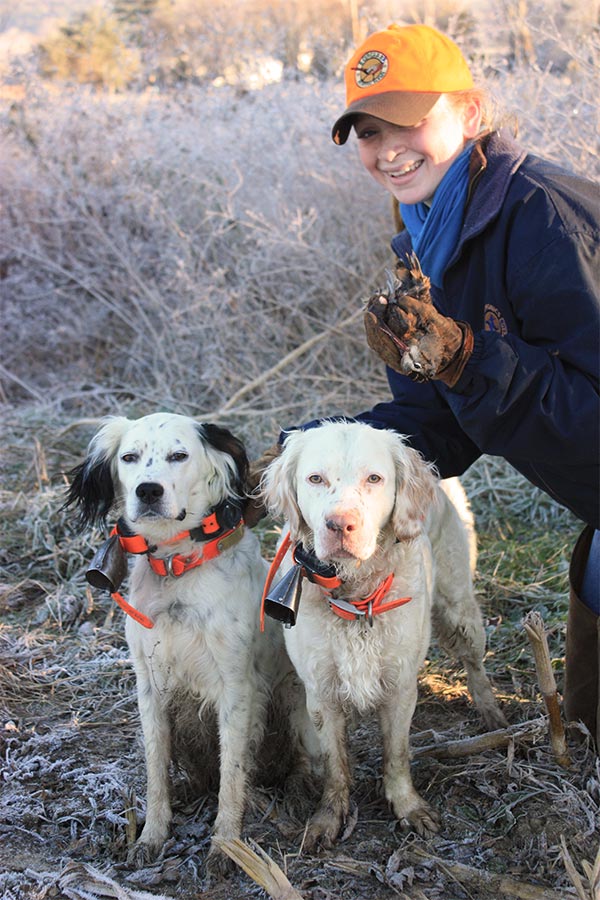
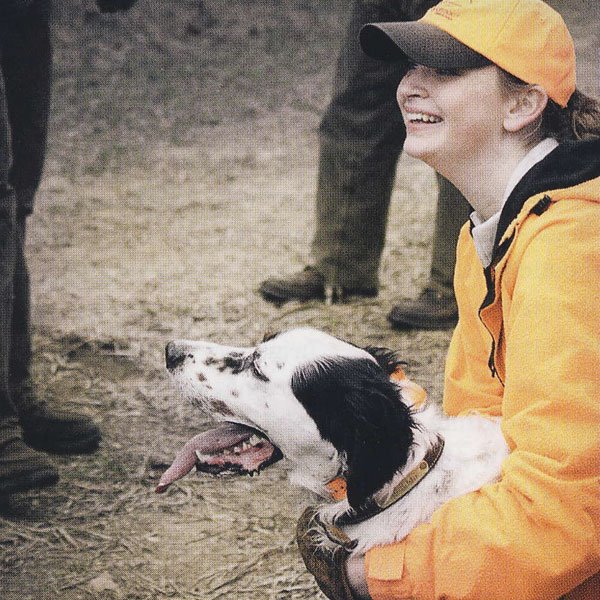
Bill Webb of The Webb Farm

Bill and Wade introduced Morgan to Albert. He was fit and trim, moving all around and wagging his tail. Setters as a breed are biddable dogs, and he was happy to get a pat. Maybe he was thinking that he was going to load up and go hunting. Or maybe he had a good sense about Morgan.

Like bees and honey, peas and carrots, and cookies and milk, so it was with Morgan and Albert. Morgan loves dogs, but there was something about old Albert that just clicked. It was love at first sight, just like it had been with Angela.

A little time passed fussing over the dog before we regrouped to hunt some birds. I had loaded our dogs into the kennels on the mule and Wade added a few of his pointers and his favorite Irish lab, Finn. Then I surprised even myself and said, “I’d love to see Albert work. Can we take him out this morning?” “Albert? He’s already loaded up. It’s his day to work.”

When Wade smiled I laughed. What are the odds of our arriving on a day when it was Albert’s turn to run? Clearly it was my lucky day, and I vowed to buy a lottery ticket on the way home. I just knew I would win big.

Bill let us put our dogs down first. They found and pointed a bunch of birds. The heat was about 45 degrees warmer than what they were used to, and after an hour they started to tire. We watered them, and it was Albert’s turn. He was paired with a good looking all white setter named Bubba. They worked well as a team, and I watched closely as Albert worked the fields. His focus was sharp, his drive was intact, and he put on a half dozen miles of running without so much as a limp. I liked the way he quartered, he was patient around birds, and his points were staunch. All of Bill and Wade’s dogs are good, and Albert was really good.
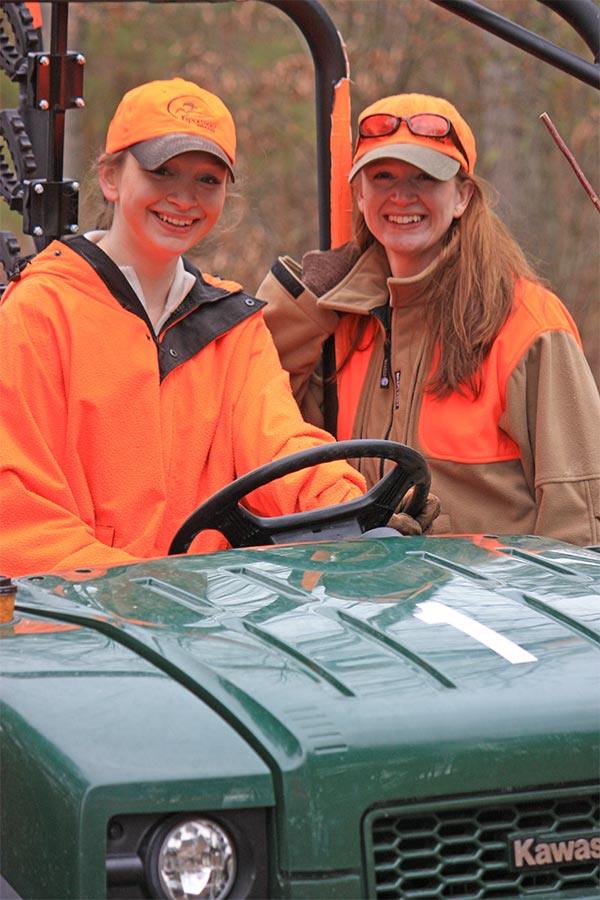
After our hunt, Bill pulled me aside and asked again if I would like to take Albert home. It was a cause for celebration when I said yes.

I had changed my mind for a variety of reasons. A third dog, and a male, would make life around two un-spayed females a ruckus for a few times a year. Retooling vehicles to accommodate additional dogs would be a shift, too. Expanding a kennel would require time that we didn’t have, but we would make it.

What made the decision finally is that faith, hope, and charity overruled logic and practicality. I had faith that when Morgan told me she was going to rise to the challenge and take total care of Albert that she would follow through. She was like her mom, committed, and for me that was a conviction without fact.

I had hope. I tossed out any of the doubts or worries that come from another dog because I knew that after the initial adjustment everything would work out just fine. People don’t always get what they want, but they get what they need. The magic is when what you get is what you need and also what you want. That was the case with Albert.

And that charity didn’t just come from Bill giving Albert to us. It came from his understanding that there was a much bigger purpose at hand. It came from feeling that it wasn’t just the right thing to do – for a girl just getting into bird hunting it was about as warm, generous and joyful a gift as a gift could be. I’m just glad Albert wasn’t a Tennessee walker.

I know I’m not the guy to try and work with old Albert. He’s got a way of doing business, just as I have a way of doing business. I don’t have the aptitude to change the old boy from a professional hunting dog who runs 13 miles a day into a house dog who lives in a kennel and hunts aggressively for a few months of the year. That job is best done at the hands of someone far more capable than me, I can think of no one better suited to the task than Morgan.

We left Bill Webb and the farm, and Albert for that matter, too. Not for good, just for a while. We had some prep work to do before bringing Albert home. There was a yard to clear and some land to level. A concrete foundation needed to be poured. We’d need to re-engineer the truck with kennels so that we could accommodate all the dogs.

A dog box would go in Morgan’s room, and there would be new collars to buy. The owner’s name on the brass plate would not be mine. It would be Morgan’s. We’d be picking up Albert soon and I can’t wait.

This story originally appeared in the Summer 2012 issue of Ruffed Grouse Society. To see the original story as it appeared in the magazine, click on the image.

If you enjoyed this story about author Tom Keer’s English Setter Albert, be sure to check out other stories about him:

Behind the scenes of this story…

Take Your Show on the Road – Ruffed Grouse Society


Of all the activities I do in the outdoors, be it dog training, shooting, trout fishing, turkey hunting, waterfowling, striper fishing, horseback riding, or anything else, grouse and woodcock hunting ranks first. I count down every day until the season begins like a kid counts down days until summer vacation. I anticipate opening days, and cannot wait to get into the field.

Still, every year around the third week in October I begin to get mixed emotions about pursuing my favorite game birds in my coverts. Around that time I experience a profound change that slows me down. I don’t spring out of bed in the pre-dawn darkness. I walk through the alders and white birch runs more leisurely. Sometimes I take a break and just stop and sit a while.

At about that time my dogs wonder just what the heck is wrong with me. When I pull out a collar with a bell they claw at their kennel doors like caged lions, and to them my lack-luster condition is unbecoming. It’s really a simple thing that is my cross to bear: I’m sad.

I’m sad because I know that the end of the season is near. Think about it. A 45-day woodcock season is about 12% of the year. That means I have another 88% to go until opening day. To me that’s a long time. Don’t get me wrong, I totally enjoy my other sporting activities and the folks I share them with. But compared to grouse and woodcock hunting which occupies my top slot, the rest are sort of a consolation prize. I still enjoy an ice cream sundae even though I really want a piece of double-chocolate cake.

Initially I thought that I would follow the woodcock flights and hunt them along their southern route. For a while I hunted grouse in the winter but then decided they were having a hard enough time finding food in the snowy uplands. Upon closer reflection I felt that I had harassed the birds enough during October and November and that I would leave them alone. Instead, I’d pursue a species native to my home hunting grounds in coastal Massachusetts, the bobwhite quail.

Trading my beloved alder runs and poplar stands is something that is not done very easily. When we get used to bull briars, raspberry thickets, and thick cover with narrow shooting windows we can sometimes get lost in the wide open fields and the softness found in wiregrass, lovegrass, and broom sedge. Pines like loblollys, slash, and longleaf grow tall and majestically.

Most dyed-in-the-wool grouse and woodcock hunters need a few flights to adjust to the open space. At least I do. A snap shot in thick covert on a grouse contrasts sharply with the openness of the quail terrain. At first blush I count them all as gimmees. After a few easy misses I sharpen my focus and bear down to give the dogs a few feathers in their mouths.

I stumbled upon Southern quail hunting naturally. My Tennessee-born and North Carolina-raised wife has a family large enough to fill 15 long tables at an after-church bar-be-que. At the last gathering the count was about 100. Visiting family always made for a few easy sorties to the quail fields, and most of her family helped with introductions to landowners.

In recent history, populations of wild bobwhites have been impacted like many other of our favorite game birds. Southern quail hunting is an incredibly strong tradition no different than Northern ruffed grouse hunting. Long-time quail hunters remember the days that Robert Ruark chronicled in The Old Man and the Boy. Ruark believed that hunting bobs between Christmas and New Year’s was the ideal time. “By this time the birds are steadied down and the dogs have had a lot of practice and they’ve steadied down, too.”

When his New England uplands and lowlands were frozen solid, Corey Ford headed to North Carolina, and he gave pause to running his grouse dogs on quail. “Take a northern-trained setter out of his native alder coverts and put him down in a southern environment of sand and sedge and honeysuckle tangle, I wondered what would happen?” So, too was the fact that most grouse hunters run one dog at a time while quail dogs are run as a pack. Add to the mix the lack of bells on a Southern dog and you’ve got some more differences. Ford goes on to talk about a dog’s thick, winter coat being a handicap with the heat, and combined with pulling a wad of hitchhikers from a long-haired setter you’ll know why pointers are so well received.

My easy acceptance of hunting quail in the winter was unique to me, but it wasn’t new to the world. The Red Hills region in South Georgia and North Florida has attracted New Englanders and Midwesterners for over a century. I wasn’t creating a new movement by any stretch of the imagination. Instead, I was just falling into line with the great ideas that were set forth ahead of me.

I no longer get sad in the third week of October. As I’ve had a goal of hunting grouse and woodcock in all of their reaches, I’ve now added a goal of hunting bobwhites in all of their native lands. Their terrain is expansive and the environments diverse. For now I’ll focus on Virginia, North and South Carolina, Georgia, and Florida. Once I get a flavor for those areas I’ll gradually head further west. Nowadays I look forward to the winter. And my wait until grouse and woodcock season reopens at home is far shorter because of it.

This article originally appeared in the Winter 2012 edition of Ruffed Grouse Society.

Opening Day – Ruffed Grouse Society


Opening day is the one of the days we await all year long. Its the time when we gather family, friends, dogs, favorite shotguns, and trade in our everyday lives for the woods. If we’re lucky the day falls on a weekend and, we don’t need to make special arrangements; but if it’s during the week, many of us succumb to unforeseen illnesses. The country’s gross national product might drop a bit, but it’ll rebound. If we miss the opener, though, there is a good chance that our spirits won’t.

Belling the dogs and walking through our coverts is the start of something special. Bird hunting ain’t all that it’s cracked up to be; it’s much, much more.

As school kids count down the days until summer vacation, bird hunters count down the days until our seasons begin. Reloading shells is a great way to kill a few long winter days. We’ll make sure that we’ve got enough l ounce #9’s in 20-gauge to get us through even the worst string of misses that we’ve ever encountered. Then we’ll load a few more to pass around to our friends who haven’t yet tried them.

If we don’t have time to reload, then we’ll order a couple of flats of our favorite shells from an ammunition company. The nice thing about making a call like that is we usually engage in conversation with a fellow bird hunter. If you don’t know what I mean, then try having a meaningful conversation with someone at the end of the phone line when you order some kitchen glasses or a new pair of pants.

Dog work is a year-round endeavor. Like us, bird hunting runs in their blood. After the season ends we’ll give our dogs a well-earned break. But when mud season draws to a close we’ll start conditioning programs. Whether it’s running through coverts, field trialing, or roading them behind a 4-wheeler – we’re looking to help shake off their extra winter weight. Training seminars are great for dogs that have picked up bad habits that seem impossible to break. We pour through dog supply company catalogs and magazines for replacement gear, for new products, and for tips and tricks.

On a hot summer day we’ll place our waxed cotton jackets, vests, and chaps in the direct sun and let them heat up to perfection. While we’re waiting we’ll boil a can of reproofing in a pot of water. When the wax is soft and fluid we’ll buff the fabric to a nice finish. Well-worn areas get extra attention, and while we’re at it, it’s also a great time to waterproof our boots.

Some time around the middle of August we’ll see a new development in our own routines, and it’s oftentimes a reduction of food. To our family’s surprise we pass on the extra helping of dry-rub ribs and limit the number of scoops of ice cream at a backyard barbecue. Add, or increase, exercise programs and by the time opening day rolls around hopefully we’ll more closely resemble a running back than the Pillsbury Dough Boy. Dropping a few pounds and getting strong means only one thing: we can hunt longer without fatigue.

Fine-tuning our reflexes comes by popping caps at the skeet, trap, and sporting clays courses. Except for the first few rounds where we miss a bunch of gimmes, breaking clay is far more fun than pull-ups. After a round or two our reflexes come back. Shooting is like riding a bicycle, and in no time flat we’re back on track. When backyard songbirds flush from the bird bath in a left-to-right flight pattern we sometimes swing our empty hands to our cheeks. My family used to chuckle when they hear me say, “bang” but they understand. They’re even starting to do it, too.

My first day in the woods is always in Canada in mid-September, and on that day time stands still. I don’t sleep much the night before, and I awake without an alarm clock. A day without bird hunting is a gloomy day indeed, but on opening day the sky is the limit. I wonder how the dogs will work, if there are birds in my favorite coverts, if the new coverts are as good as they look. Dogs always seem to know that difference between opening day and general field work. They know it’s their turn to shine, and they willingly rise to the challenge.

It’s been a long time since I missed an opening day. Indian summer rules the roost on most opening days, and the best part is during the morning or later in the afternoon. Midday temperatures are often hot, and when combined with high humidity even the fittest hunters bog down. Dogs that normally shy away from water flop down in any stream, seep, pond, or mud hole. Just before I complain about the heat, I think about my quail hunting friends down south and my pheasant hunting compadres out west. They know what heat is all about more than me, but that doesn’t stop them from getting in a few licks. Tropical storms or hurricanes sometimes drop tremendous amounts of water, downed trees, or silt in the coverts. I’ve never seen a first frost before opening day, and the woods are chockablock with foliage. I’ll only get a glimpse of a flushing grouse as my friends and I break up a brood from the spring. Young of the year are not as wily as the elder statesmen, but the leaves and the branches keep us from getting off many quality shots. Woodcock are a bit more predictable, and if we move our shotgun through the tree tops after the bird has disappeared we’ll drop enough birds to make the dogs happy. I’ve never come close to filling a bag limit on opening day. Come to think of it, I’ve never much cared.

Opening day is about something quite different. It’s about the tremendous feeling of possibility. It’s the start of a magical season, one full of hope, opportunity, and certainly redemption. We trade in work clothes for brush pants and boots. There are no offices where we go, just coverts and fields. Meetings with colleagues are replaced by a day spent with family and friends. The lunch room is no longer on the second floor; it’s by the river or on the tailgate of a muddy truck loaded with dog boxes. Folks might be late for meetings, but they’re never late for opening day. And it’s coming up. Like you, I can hardly wait.

This article originally appeared in the Fall 2012 edition of Ruffed Grouse Society.

Summer 2012 Flushes & Noteworthy Points – The Upland Almanac

Humane Society for Shelter Pets

The National Shooting Sports Foundation reports that Richard Berman has established a group called The Humane Society for Shelter Pets (HSSP). Berman, a longtime opponent of the Humane Society of the United States (HSUS), an anti-hunting group that erroneously claims to support local animal shelters, established his group to counter the efforts of the HSUS. While working at an animal shelter in California, Berman states he tried to enlist the support of the HSUS to put an end to national groups whose TV ads were confusing individual donors who thought their money would be used for their local shelters.

“Instead, the powers that be at HSUS decided to copy the TV ads. So, here I am, years later, still convinced that the confusion needs to be addressed,” Berman says.

The HSSP will work to educate Americans about the need to support local pet shelters as well as address the misperception that national animal charities work locally. The HSSP is a non-profit charitable organization dedicated to fostering a broad base of support for America’s local pet shelters and humane societies.

For more information: www.humaneforpets.com.

Speaking of the HSUS …

In an odd twist of trying to gain control ofAmerica’s stomachs, the Humane Society of the U.S.has purchased stock in the Hardee’s and Carl’s Jr. restaurant chains. It appears the country’s leading animal rights organization purchased the shares to leverage and promote its animal welfare agenda … and again try to force its agenda onto all Americans.

According to a story on the HSUS website, they purchased stock in Apollo Global (Hardee’s parent company) with the hope of forcing CKE Restaurants, operator of the Hardee’s and Carl’s Jr. restaurant chains, to meet HSUS animal treatment standards in its supply chain. There are more than 3,000 Hardee’s and Carl’s Jr. restaurants across America.

HSUS intends to stop Hardees from purchasing eggs from caged hens and pork from systems that confine breeding pigs to gestation crates.

Odd Birds

The Rolling Plains Quail Research Ranch (RPQRR) is asking quail hunters to keep their eyes open for any “weird quail” that may offer clues as to what’s going on with Texas’ quail population.

“We’re asking hunters to report any observations of strange acting quail, or ideally any recent carcasses of sick or dead quail,” says Dr. Dale Rollins, RPQRR’s Director. “Several specimens have been submitted, and these samples may indeed be ‘witnesses to the crime,’ so we’re acutely interested in having such birds examined.”

Hunters who encounter sick quail are asked to contact Dr. Rollins at 325-650-0311, or e-mail him at d-rollins@tamu.edu.

Calling All Women Hunters

The NRA Women on Target Hunt will be held from Oct. 19-21 , 2012, at the Oak Creek Sporting Club in Brainard, Neb. The hunt will be limited to 24 participants for ladies of all levels of experience, with a focus on providing new shooters with a safe and informative experience.

The cost for the event is $350 and includes safety orientation, sporting clays, five-stand, and trap warm-ups; two half-days of hunting for pheasant and chukars; licenses, bird cleaning and packaging; and all meals. What better way to spend a weekend than working pointers and retrievers across 1,500 acres of prime habitat? For more information contact NRA Field Hunt Coordinator Barb Kolodge at Bkolodge627@msn.com or 218-729-5448.

Michiganders to the Rescue

With help from grants received from the Ruffed Grouse Society (RGS), members of the society’s Robert J. Lytle Chapter are embarking on a three-year habitat improvement project that is designed to improve the Deford State Game Area in Tuscola County, Mich.

According to chapter spokesman John Paige, the project seeks to improve the quality of the area’s woodcock singing grounds. “In year one, we propose to mow up to 21.8 acres; in year two, approximately 15.2 acres; and in year three, 22.3 acres. Once cleared, these openings can provide quality singing and roosting habitat for breeding woodcock for years to come if they are mowed on a rotational basis at least every three years.”

The Cass City Field Office of Michigan’s Department of Natural Resources (DNR) is a large proponent of the plan. After the initial mowing, the DNR will work with RGS to maintain the openings. For more information, contact John Paige at jhpaige@chartermi.net.

Both participants in and guides for a recent bird hunt at Primland Lodge in Virginia had a chance to see an intriguing gun in action and to test shoot it if they wanted. Steve Comus, Director of Publications for Safari Club International, unsheathed his 12-gauge French-made Darne shotgun with its unique sliding breech action. In 1897, Regis Darne, a gunsmith from St. Etienne started producing guns with this action. Comus figured his gun was about 100 years old. (Photo/Tailfeather Communications, LLC.)

Strong Holiday Gun Sales Continue Well into the New Year

Reports from around the globe reflect an increase in gun sales. According to USA Today, gun dealers submitted nearly half a million names for background checks in the six days prior to Christmas. From January through November 2011, the FBI processed 14.6 million checks, an increase of 70 percent over 2003 numbers.

According to the National Shooting Sports Foundation (NSSF), 180,000 Americans are employed in the firearms and ammunition industry, which does $4 billion of business per year. Of importance is the fact that contrary to other business sectors that are struggling, the demand for fund has continued growing since 2008.

At the January 2012 Shooting, Hunting, and Outdoor Trade Show (SHOT), overall attendance records were set. NSSF reports more than 61,000 attendees, of which 36,383 were buyers and 2,466 were media, gathered at the Sands Expo and Convention Center in Las Vegas. Industry professionals represented 50 states and 100 countries.

While many hunters and shooters welcome firearms as presents, some critics add a level of caution. “I’m bothered by, especially at the holiday time, how many people think that these things (guns) ought to be holiday gifts, said Toby Hoover, executive direct of the Ohio Coalition Against Gun Violence. “Firearms and weapons don’t seem to go with holidays and peacefulness to me. I think we have a problem.”

“L.L.Bean Bootmobile” Hits the Road in Celebration of 100 Years in the Outdoors

As part of the celebration of its lOOth anniversary, outdoor retailer L.L.Bean introduced the “L.L.Bean Bootmobile” – a larger-than-life embodiment of its most iconic product. The vehicle was revealed to employees at the Brunswick, Maine, manufacturing facility where the popular Bean boots are made, stopping at the L.L.Bean flagship store in Freeport before embarking on a tour of major cities in the U.S. Throughout 2012, the Bootmobile will surprise people in various locations throughout the country, inspiring them to get outside and providing an opportunity to try a new outdoor activity with the help of L.L.Bean’s expert Outdoor Discovery Schools guides.

Leon Leonwood (L.L.) Bean founded his company 100 years ago with a single product, the Maine Hunting Shoe. Having returned from a hunting trip with cold, wet feet, he had a revolutionary idea for a boot design. This innovative “Bean Boot” changed outdoor footwear forever and began one of the most successful family-run businesses in the country. The success of the company is due in part to L.L.Bean’s legendary quality guarantee, which began with L.L.’s first product. Of the first 100 boots be created, 92 were defective, and he refunded the cost to each customer. From there, he went back to the drawing board and re-engineered his boot, which has since stood the rest of time and become the company’s most popular product.

Today, as always, L.L.Bean Boots are manufactured by hand in Maine. In honor of its lOOth anniversary, L.L.Bean will re-introduce a special-edition version of the Maine Hunting Shoe. Designed to closely replicate the very first pair built by L.L., they even feature the red brick-colored bottom found on the original pair.

Recently, the duck boot has become a youthful fashion statement. According to L.L.Bean’s Senior Public Relations Representative Mac McKeever, sales in the past four years have increased from 150,000 pairs per year to about 400,000, with 2012 projections calling for another increase to half a million pairs. “The increase in boot sales has been tremendous,” said McKeever. “We’ve created over 125 new jobs to fulfill the demand, a welcome addition in this challenging economy.”

The newly unveiled Bootmobile is also true in likeness to the original L.L. Bean Boot, yet sports a tan rubber sole found on contemporary versions. The Bootmobile is true to scale, 20.5 times larger that a traditional 12-inch tall boot. A few fun facts about the Bootmobile:

–If the Bootmobile were an actual boot, it would be size 747.

–The Bootmobile is 13 feet tall; 20 feet, 6 inches long; and 7 feet, 6 inches wide.

–The Bootmible generates 0 percent CO2 emissions thanks to a diesel engine with urea tank and particulate filter.

–If an actual person were to wear the Bootmobile, the person would be 143 feet tall, 32 feet taller than the Statue of Liberty.

–The Bootmobile laces are made of 12-strand braided mooring rope, capable of towing 106,000 pounds.

–The driver enters and exits through the heel.

–A camera provides visibility for the rear and top of the Bootmobile.

SportDOG gives back to Sportsmen

SportDOG, a leading manufacturer of remote dog training products, has announced the recipients of five conservation grants totaling $21 ,000. The annual grant program is part of the company’s SportDOG Brand Conservation Fund.

“It’s rewarding to see this program continue to grow,” said Eleanor Marshall, the program’s director. “We’ve seen an increase in the number of applicants for these grants every year. The program generates a tremendous amount of internal support because we believe in supporting conservation initiatives that our employees and customers care about. Over the years, SportDOG has taken part in several great projects, and we look forward to even more in the future.”

The 2011 winners were selected with game birds in mind. The North Dakota Game and Fish Department grant will study sharp-tailed grouse nesting outside of oil and gas development areas in western North Dakota. Down South, the Mississippi Department of Wildlife, Fisheries and Parks will use its funding to assist with the state ‘s prescribed-bum program to improve bobwhite quail habitat. In Iowa, the Marion County Pheasants Forever is in the process of launching a conservation and habitat education program for kids. Delta Waterfowl will support a study of more than 10,000 waterfowl nests for use in future management efforts, and Pheasants Forever will purchase a no-till native grass drill for habitat improvements in North Dakota’s Prairie Pothole region.

To donate to the SportDOG Brand Conservation Fund or to propose a project for grant consideration, visit www.sportdog.com and click on the Conservation Fund in the “About” tab.

This article originally appeared in the Summer 2012 Flushes & Noteworthy Points column of The Upland Almanac.