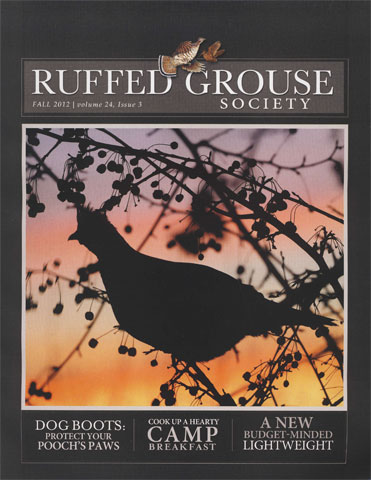
Opening day is the one of the days we await all year long. Its the time when we gather family, friends, dogs, favorite shotguns, and trade in our everyday lives for the woods. If we’re lucky the day falls on a weekend and, we don’t need to make special arrangements; but if it’s during the week, many of us succumb to unforeseen illnesses. The country’s gross national product might drop a bit, but it’ll rebound. If we miss the opener, though, there is a good chance that our spirits won’t.
Belling the dogs and walking through our coverts is the start of something special. Bird hunting ain’t all that it’s cracked up to be; it’s much, much more.
As school kids count down the days until summer vacation, bird hunters count down the days until our seasons begin. Reloading shells is a great way to kill a few long winter days. We’ll make sure that we’ve got enough l ounce #9’s in 20-gauge to get us through even the worst string of misses that we’ve ever encountered. Then we’ll load a few more to pass around to our friends who haven’t yet tried them.
If we don’t have time to reload, then we’ll order a couple of flats of our favorite shells from an ammunition company. The nice thing about making a call like that is we usually engage in conversation with a fellow bird hunter. If you don’t know what I mean, then try having a meaningful conversation with someone at the end of the phone line when you order some kitchen glasses or a new pair of pants.
Dog work is a year-round endeavor. Like us, bird hunting runs in their blood. After the season ends we’ll give our dogs a well-earned break. But when mud season draws to a close we’ll start conditioning programs. Whether it’s running through coverts, field trialing, or roading them behind a 4-wheeler – we’re looking to help shake off their extra winter weight. Training seminars are great for dogs that have picked up bad habits that seem impossible to break. We pour through dog supply company catalogs and magazines for replacement gear, for new products, and for tips and tricks.
On a hot summer day we’ll place our waxed cotton jackets, vests, and chaps in the direct sun and let them heat up to perfection. While we’re waiting we’ll boil a can of reproofing in a pot of water. When the wax is soft and fluid we’ll buff the fabric to a nice finish. Well-worn areas get extra attention, and while we’re at it, it’s also a great time to waterproof our boots.
Some time around the middle of August we’ll see a new development in our own routines, and it’s oftentimes a reduction of food. To our family’s surprise we pass on the extra helping of dry-rub ribs and limit the number of scoops of ice cream at a backyard barbecue. Add, or increase, exercise programs and by the time opening day rolls around hopefully we’ll more closely resemble a running back than the Pillsbury Dough Boy. Dropping a few pounds and getting strong means only one thing: we can hunt longer without fatigue.
Fine-tuning our reflexes comes by popping caps at the skeet, trap, and sporting clays courses. Except for the first few rounds where we miss a bunch of gimmes, breaking clay is far more fun than pull-ups. After a round or two our reflexes come back. Shooting is like riding a bicycle, and in no time flat we’re back on track. When backyard songbirds flush from the bird bath in a left-to-right flight pattern we sometimes swing our empty hands to our cheeks. My family used to chuckle when they hear me say, “bang” but they understand. They’re even starting to do it, too.
My first day in the woods is always in Canada in mid-September, and on that day time stands still. I don’t sleep much the night before, and I awake without an alarm clock. A day without bird hunting is a gloomy day indeed, but on opening day the sky is the limit. I wonder how the dogs will work, if there are birds in my favorite coverts, if the new coverts are as good as they look. Dogs always seem to know that difference between opening day and general field work. They know it’s their turn to shine, and they willingly rise to the challenge.
It’s been a long time since I missed an opening day. Indian summer rules the roost on most opening days, and the best part is during the morning or later in the afternoon. Midday temperatures are often hot, and when combined with high humidity even the fittest hunters bog down. Dogs that normally shy away from water flop down in any stream, seep, pond, or mud hole. Just before I complain about the heat, I think about my quail hunting friends down south and my pheasant hunting compadres out west. They know what heat is all about more than me, but that doesn’t stop them from getting in a few licks. Tropical storms or hurricanes sometimes drop tremendous amounts of water, downed trees, or silt in the coverts. I’ve never seen a first frost before opening day, and the woods are chockablock with foliage. I’ll only get a glimpse of a flushing grouse as my friends and I break up a brood from the spring. Young of the year are not as wily as the elder statesmen, but the leaves and the branches keep us from getting off many quality shots. Woodcock are a bit more predictable, and if we move our shotgun through the tree tops after the bird has disappeared we’ll drop enough birds to make the dogs happy. I’ve never come close to filling a bag limit on opening day. Come to think of it, I’ve never much cared.
Opening day is about something quite different. It’s about the tremendous feeling of possibility. It’s the start of a magical season, one full of hope, opportunity, and certainly redemption. We trade in work clothes for brush pants and boots. There are no offices where we go, just coverts and fields. Meetings with colleagues are replaced by a day spent with family and friends. The lunch room is no longer on the second floor; it’s by the river or on the tailgate of a muddy truck loaded with dog boxes. Folks might be late for meetings, but they’re never late for opening day. And it’s coming up. Like you, I can hardly wait.
This article originally appeared in the Fall 2012 edition of Ruffed Grouse Society.
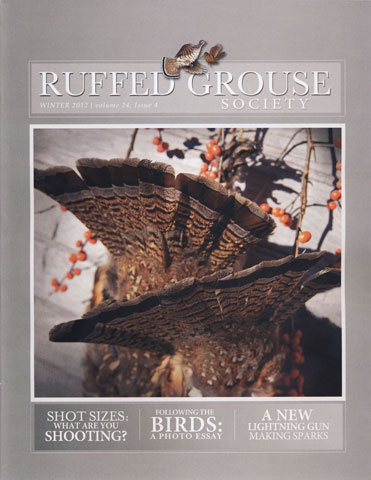
Of all the activities I do in the outdoors, be it dog training, shooting, trout fishing, turkey hunting, waterfowling, striper fishing, horseback riding, or anything else, grouse and woodcock hunting ranks first. I count down every day until the season begins like a kid counts down days until summer vacation. I anticipate opening days, and cannot wait to get into the field.
Still, every year around the third week in October I begin to get mixed emotions about pursuing my favorite game birds in my coverts. Around that time I experience a profound change that slows me down. I don’t spring out of bed in the pre-dawn darkness. I walk through the alders and white birch runs more leisurely. Sometimes I take a break and just stop and sit a while.
At about that time my dogs wonder just what the heck is wrong with me. When I pull out a collar with a bell they claw at their kennel doors like caged lions, and to them my lack-luster condition is unbecoming. It’s really a simple thing that is my cross to bear: I’m sad.
I’m sad because I know that the end of the season is near. Think about it. A 45-day woodcock season is about 12% of the year. That means I have another 88% to go until opening day. To me that’s a long time. Don’t get me wrong, I totally enjoy my other sporting activities and the folks I share them with. But compared to grouse and woodcock hunting which occupies my top slot, the rest are sort of a consolation prize. I still enjoy an ice cream sundae even though I really want a piece of double-chocolate cake.
Initially I thought that I would follow the woodcock flights and hunt them along their southern route. For a while I hunted grouse in the winter but then decided they were having a hard enough time finding food in the snowy uplands. Upon closer reflection I felt that I had harassed the birds enough during October and November and that I would leave them alone. Instead, I’d pursue a species native to my home hunting grounds in coastal Massachusetts, the bobwhite quail.
Trading my beloved alder runs and poplar stands is something that is not done very easily. When we get used to bull briars, raspberry thickets, and thick cover with narrow shooting windows we can sometimes get lost in the wide open fields and the softness found in wiregrass, lovegrass, and broom sedge. Pines like loblollys, slash, and longleaf grow tall and majestically.
Most dyed-in-the-wool grouse and woodcock hunters need a few flights to adjust to the open space. At least I do. A snap shot in thick covert on a grouse contrasts sharply with the openness of the quail terrain. At first blush I count them all as gimmees. After a few easy misses I sharpen my focus and bear down to give the dogs a few feathers in their mouths.
I stumbled upon Southern quail hunting naturally. My Tennessee-born and North Carolina-raised wife has a family large enough to fill 15 long tables at an after-church bar-be-que. At the last gathering the count was about 100. Visiting family always made for a few easy sorties to the quail fields, and most of her family helped with introductions to landowners.
In recent history, populations of wild bobwhites have been impacted like many other of our favorite game birds. Southern quail hunting is an incredibly strong tradition no different than Northern ruffed grouse hunting. Long-time quail hunters remember the days that Robert Ruark chronicled in The Old Man and the Boy. Ruark believed that hunting bobs between Christmas and New Year’s was the ideal time. “By this time the birds are steadied down and the dogs have had a lot of practice and they’ve steadied down, too.”
When his New England uplands and lowlands were frozen solid, Corey Ford headed to North Carolina, and he gave pause to running his grouse dogs on quail. “Take a northern-trained setter out of his native alder coverts and put him down in a southern environment of sand and sedge and honeysuckle tangle, I wondered what would happen?” So, too was the fact that most grouse hunters run one dog at a time while quail dogs are run as a pack. Add to the mix the lack of bells on a Southern dog and you’ve got some more differences. Ford goes on to talk about a dog’s thick, winter coat being a handicap with the heat, and combined with pulling a wad of hitchhikers from a long-haired setter you’ll know why pointers are so well received.
My easy acceptance of hunting quail in the winter was unique to me, but it wasn’t new to the world. The Red Hills region in South Georgia and North Florida has attracted New Englanders and Midwesterners for over a century. I wasn’t creating a new movement by any stretch of the imagination. Instead, I was just falling into line with the great ideas that were set forth ahead of me.
I no longer get sad in the third week of October. As I’ve had a goal of hunting grouse and woodcock in all of their reaches, I’ve now added a goal of hunting bobwhites in all of their native lands. Their terrain is expansive and the environments diverse. For now I’ll focus on Virginia, North and South Carolina, Georgia, and Florida. Once I get a flavor for those areas I’ll gradually head further west. Nowadays I look forward to the winter. And my wait until grouse and woodcock season reopens at home is far shorter because of it.
This article originally appeared in the Winter 2012 edition of Ruffed Grouse Society.
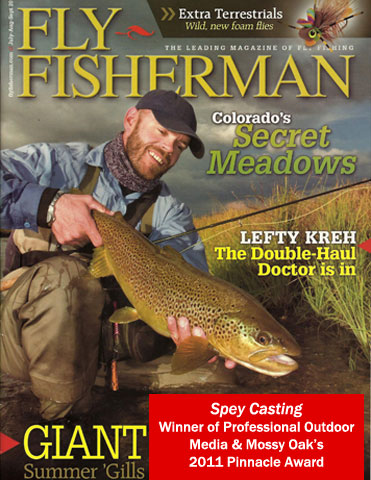
It was as perfect a September as ever.
The temperature at night was cold enough to ice the deck of my boat, and hot enough during the day to make me sweat. Indian Summer as it’s known here in the Pilgrim State of Bassachusetts. Before the sun was up I walked into my driveway and stared at the ice on the boat. Instead of slip-sliding my way around the deck until the frost melted, I decided to grab a pair of boots and head for the beach.
Lots of fish were around because it was fall and time for them to migrate. The coves and bowls were full of silversides, sand eels, and small menhaden, and several species of predators took their seat at the table. The striped bass ranged from schoolies to 35-pounders, there were pods of late-run shad, and a mix of bluefish, bonito, Spanish mackerel, and false albacore. Anywhere you looked there were fish. They were on the flats, on the beaches, in the rips, at the mouths of the salt ponds, and on the reefs. Labor Day was well behind us and the crowds were thin. I tossed my kit in my truck, fishtailed out of the driveway, and headed up Cape.
I turned left down an overgrown dirt road to the back of a salt pond. The brush slapped the truck, and somewhere not far away a covey of quail sang whoooo–whit, whoooo–whit. I tucked into a small opening, pulled on my waders, grabbed my rod, and trudged toward the cove, flushing several mallards from a nearby mosquito ditch. I marked the quail and the ducks, and in a few weeks when hunting season opened I would return with my setter and my 20-gauge. And if at that time I were lucky with the birds I might also pick ripe beach plums and rose hips for chutney and see if I could swap a mallard for a bag of cranberries freshly harvested from the bogs.
I chose a salt pond that would have bass and blues inside, and bonito, shad, and albies at the mouth. It was a large pond, the kind that would take an entire day to walk around, and it was protected from the wind. I would start fishing at the mouth, and as the tide flooded I would work my way back to the truck.
I first saw him from a distance. He was a tall, thin kid standing on the jetty. The rocks had shifted from decades of pounding storms and L?-foot tides, and they were slick with kelp, mussels, and barnacles.
The jetty terrain is second nature for most fishermen, I thought, but he moved awkwardly. I chalked it up to his youth. He wore a tattered T-shirt, a pair of swim trunks, and Tevas. Why anyone would walk on a jetty without Korkers was beyond me. In his hands was a rod about three times his height. It looked like a fall-run surf stick, the kind long enough to toss a Goo Goo Eyes Big Daddy with a trio of trebles all the way into next week. Most of the kids on the jetty had shorter sticks, usually around 7 or 8 feet long.
It was odd. It was odd that this kid had such a long rod before the fall run had even begun. Odder still when I scanned the water and saw a long yellow floating fly line on the water.
He must have heard my cleats crunching the shells at the waters edge, because he turned, and I saw a large fly reel mounted on the grip. I looked back at his fly line and it extended to just about the other side of the channel. This wasn’t a particularly large breachway, but it had to be all of about 250 feet wide. If he had a nine or ten-foot leader it would have meant that this kid cranked out a 235-foot cast. I watched him knurl his line slowly, and when a big school of false albacore blew up near my feet, I didn’t cast.
Instead, I studied the sand. There were cracked quahog shells mixed in with some razor clams and bay scallops. They were colorful shards of calcium with bright reds, lavenders, yellows, and oranges all mixed together. I don’t think I ever noticed the beauty and texture of these ordinary shells. The scallops had their rippled surfaces, the razors were sharp and shiny, and the quahogs were blunt with their purple and black trim. I thought I would remember this moment for the rest of my life; I was about to meet the first kid who could cast farther than me, and a lot farther at that.
When I surf, I prefer a following tide. I look for a wave’s steadiness and its consistency. I like the wave to grow, crest, roll, and run hard. I like it to roll over an offshore bar and go way up onto the sand. As I looked at that long line on the water, I bore witness to a rite of passage. This next generation, like the water, was passing through my previous one. It never much mattered to me before. Then again, the generation surpassed was never mine.
The water was flat, the sun grew increasingly warmer, the tide was running, and a pod of albies shredded anchovies and sand eels a rod’s length away. I did not dare cast. Instead, I thought about the first trout I caught on a Squirrel Tail I tied when I was ten. And the first 20-pound Atlantic salmon I landed. The first bonefish that inhaled my Gotcha. Having my butt kicked by a kid would be just another memory that I would store in a closet with my sweatshirts, fly rods, and shotguns.
Perhaps I should learn from this master? He strip-struck twice, and raised his rod for the fight. The amount of line in the air resembled a tightrope in a circus act. I sat back down.
I thought about a fishing trip with my father decades ago off of Napatree Point. There weren’t many bass in those days, and when the tide turned. an enormous school of bluefish moved in. I caught a fish and my dad didn’t. Then I caught another and he still didn’t. It went on like that all afternoon. We had a quiet ride back to the dock and a quiet time hauling the boat. We drove home in silence. Now, I just scratched my head.
I stood up, brushed the sand off my waders and walked out on the jetty. The kid’s fly line was tangled in the rocks, and there was a small striper flopping at the water’s edge. “Need a hand?” I asked.
“Sure,” he said. His hook pulled before I got down to the fish, and the schoolie dropped in the water. “I like it when that happens,” he said. “It’s hard to release the fish with all this line out.”
“Yeah,” I said, “You’re casting halfway to Falmouth.” “It’s not hard,” he said. “Sometimes it’s tough dealing with the line, but the casting is a cinch.”
I never suffered the woes of having 235 feet of fly line bunged up. I was happy with a 100 feet, and this kid more than doubled my best. He sought empathy from me, not sympathy, because his miles of fly line had tangled in the rocks.
I surveyed his outfit. “That’s an expensive rig you’ve got,” I said. “It’s not mine,” he said. “It’s my dad’s. He never uses it. He bought it a few years ago but he can’t figure out how to cast it so it just hangs in the basement. This reel is sweet, but it’s expensive, too.”
“That’s nice that he let’s you use it,” I said.
“Let me use it? If he knew I had this rod out here, he’d kill me. It’d be easier to land fish if I could set it down, but I don’t want to get a scratch on it. This is my lucky rod. I catch all my fish on it.”
“I don’t know how to cast a Spey rod that well,” I said.
“A what?”
“The rod you are using.”
“What did you call it?”
“A Spey rod. They’re used for salmon fishing. Named after the River Spey in Scotland.”
“Oh. I didn’t know that’s what it was called. Why don’t you use one?”
“I don’t cast them well. Anyway, not like you. Why don’t you show me how to do it?” I asked.
“Sure. It’s really simple. I see that you keep waving your rod back and forth, but I just cast once. Just pull it back, wait for a minute, and let it rip.”
“Let it rip,” I said. “Please.”
The kid pulled the rod back over his head and paused for a few seconds until the line quieted down and then he pushed the rod forward as hard as he could and stopped when the tip-top was at eye level. The entire line and much of his backing whizzed out through the guides and kerplunked nearly on the other side of the bank.
“That’s all there is to it,” he said.
“That was my best cast today.”
“Why is it splashing so much at the end?” I asked. “A piled leader doesn’t make that much of a splash.”
“It’s the sinker. I can’t go any lighter than a three-ounce pyramid with the current. The clam belly adds weight, too. Besides, the fish don’t care about the splash.”
A pyramid sinker and a clam belly.
“That’s great,” I said. “That’s really great. Your dad would be proud of you.”
“Thanks,” he said. “I just have to be careful how much I tell him.”
“Well, if I see you guys on the beach together some time I’ll make sure I don’t bring it up.”
“That’d be awesome,” he said. “l don’t want to get in trouble.”
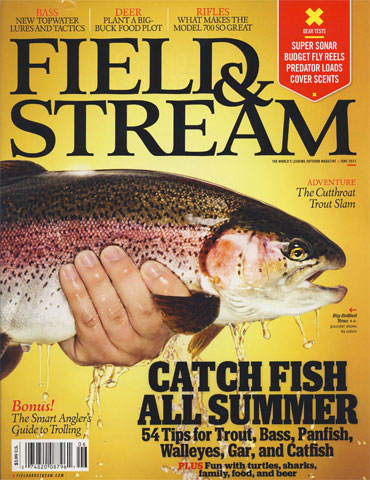
Hey, I found the deep spot. During the short window for wadefishing the bayside flats near Wellfleet, Mass., one cloudy June afternoon, Tom Keer chased a striped bass off the edge of a sandbar into a neck-deep channel. “The 12-foot tides drop to less than 2 feet for just a few hours,:” Keer says. He had been sight-fishing a spot where stripers often go after sand eels when he hooked one on the fly. “It ran into deeper water where the current started to drag it, and I had to follow or risk losing all my backing.” Eventually the striper broke off.
Keer adds that there are ways to pass the time between wading opportunities on the Cape. “At slack tide, it’s all sand and we amuse ourselves digging for littleneck clams until the tide comes back up.”
Photographer: Barry and Cathy Beck
Location: Cape Cod, Massachusetts
Fall beach fishing is like a good short story you can’t put down. There is the rising action, the climax, the falling action and the end. Some times it’s fast, other times it’s measured, but at all times it’s a page-turner.
When fall actually starts depends on who you ask. My calendar tells me that fall begins on the Autumnal Equinox, the 22d of September. The significance of that day is that the day and the night photo periods are nearly identical in length. Yet for most, Labor Day triggers the beginning of fall. During this pivotal weekend, summer beach shacks get boarded up, Tevas get traded in for textbooks, and vacationers reluctantly return home. Seasonal hotels and restaurants respond by shortening their work week and their hours. It gets progressively harder to get a cup of coffee, but I take comfort in my quiet town without bumper-to-bumper traffic.
I am a fisherman and for me fall begins with the Striper Moon, the first full moon in September. It’s the first major push of the striped bass migration. Some front-runners trickle south sooner, but the first big body of bass moves on the Striper Moon. Some years it is early, some years it is late. Regardless, one thing is for sure: the biggest shore-caught bass of the year are landed around the Striper Moon. I used to think that there were three phases of fall: early, middle and late.
I used to think that the early phase was warm, the middle phase was cooler, and the late phase was the coldest. I no longer think that way because there are too many nuances to keep track of.
On some days the winds blows WSW. Winds from that direction are summer winds, warm and welcoming, a little Southern hospitality coming from far below the Mason-Dixon line. The cloud ceiling is high, and the eggshell-blue sky is dappled with puffy, white cotton balls. Sometimes when the winds shift around you’ll see mares tails splashed around the blue like a painter gone mad. On other days the wind blows WNW. Winds from that direction bring the Canadian chill. They’re the winds that move ducks and geese and woodcock down the Eastern Flyway, and they are the culprits that change the color of the sea from green to gray. On a few days, northerly winds make swells and flotsam clutters the beaches. I never know what the day will hold until it is upon me and I look out my window.
Somewhere in the middle of the ever changing winds is an oasis known many centuries ago in Europe as Saint Luke’s Summer. In our modern day we call it Indian Summer, the time in October when the fall feels like summer. History alleges that this two-week warm spell was the time when American Indians harvested the bulk of their crops. The first person to coin the phrase Indian Summer was a Frenchman writing in 1778 in rural New York named St. John de Crevecoeur. As I walk around the beaches once inhabited by Wampanoags, I wonder when the tribe marked the beginning of fall?
Fishing a beach in the fall is as much a part of fishing as catching a fish itself, I like how hazy, hot and humid becomes clear, cool and dry. I like the sand under my feet. I like the solace of the beach, my only companion being the birds. And I watch them; big flocks spread out for what seems like miles. I watch the terns repeatedly dive on small bait, the gulls shriek and pick up scraps, and the gannets plunge-dive 50 feet from the sky to grab a herring. When I learned that gannets have air sacks to cushion them from the impact with the surface I lost respect for them. I regained it when I considered that they swim with their long wings to catch a meal. They’re tough birds, even with air bags.
Fall on a beach means lots of bait that stages and gathers on the various moons. Silversides, sandeels, glass minnows, herring, peanut bunker, anchovies, mullet and butterfish pack up their bags and start heading south for the winter. Their cycle predicts good fishing. I follow the advice of anglers who came before me: “Fish the points on full and new moons, and fish coves on the quarters.” Bait stages in coves during half moons and moves on full moons. Bass and blues lie in wait to corral them against structure, on the surface, or wherever they can. Every living thing needs to store fat for the winter and the fish are no exception. Plus they need some gas for the long swim home.
A beach serves as a corridor for migratory fish, and so I love fishing the bars the best. My favorites are the offshore bars that run parallel to the beach. Offshore bars are not connected to land, and have hard-running currents blowing through on both sides. They are like small islands, with fish on both sides. Sometimes I find that the stretch between the beach and the bar is chock-a-block full of bass. Other times the fish are on the outside edge of the bar. Regardless, there is something wild about standing on a bar with water all around and the promise of big schools of stripers at my feet. On a calm day I’ll paddle a kayak out to the bar and get out and wade. On a rough day I’ll pass. Swimming back to shore in the fall isn’t too appealing.
I like onshore bars, but they are more civilized. Onshore bars connect with the beach and wading out is easy. They typically run at an angle based on the dominant current. I start to work my way out to the point an hour or two before low tide and keep going as far as I can. The fish may be up current from the bar, they may be at the point of the bar, or they may be down current from it. I never know until I fish them. Once the tide turns, I’ll work my way back toward shore. I’m comforted knowing that Land Ho isn’t faraway, but I always out longer than I should . . . just because.
Bull-nose bars are rounded and look like an upside-down letter U. I find them easy to fish, as they typically don’t go very far out into the ocean. Sometimes the fish hold in the lee, other times they feast on the windward side. I smile when I see the trough where the rounded edge of the bar connects with the beach. I always make my first cast onto the bar and let my fly sweep over the edge into the hole. I catch enough fish there to make it worth a cast, but I really like the sweep of the fly over the sand and into the deeper water. And when the fish are tight to the beach, I don’t have to cast much further than my feet.
I find it incredibly frustrating when a large school offish is a few hundred yards offshore. I feel stranded on my beach. I lose my mind when they are ten feet beyond my furthest cast. On those days the sparkling water or having the beach to myself isn’t much of a consolation prize. All that is left for me to do is wait for the wind to blow the fish closer or to look for washed up lobster buoys and nail them to a tree in my front yard.
With the bad comes the good, and some anglers are fortunate enough to encounter pelagic species on the beach in the fall. Anywhere the Gulf Stream pushes close to shore, fast fish like bonito, false albacore, bluefish and Spanish mackerel appear. When I see a school of blues or albies racing down a beach spraying silversides all around I feel like I’m in Vegas. And when I land a fish with my feet planted on terra firma, I feel like I hit the jackpot.
An oddity happened on a Massachusetts South Shore beach a few years ago when the water was warm and there were lots of school bluefin tuna around. A fellow was casting when he got a tug on his 1ine. A fish made a long-as in 300 yard or more-run down the beach, past rocks, kelp and mussel beds before it tired. After the fight he rolled the fish on its side, moved it into a cresting wave and walked backward up the beach. As he surfed it onto the sand, he saw a tuna laying at his feet. I’d have hoped it were an 80-pound bass on steroids.
In the fall it’s easy to get caught up in the action as the fishing heats up. And then suddenly, like the good short story it ends. The ice that formed overnight on my boat deck no longer melts in minutes after the sun clears the horizon, and the fish have moved on.